Wirehaired Vizsla exercise
Explore Wirehaired Vizsla exercise through outdoor activity, scent work, rally foundations and practical indoor searching games.
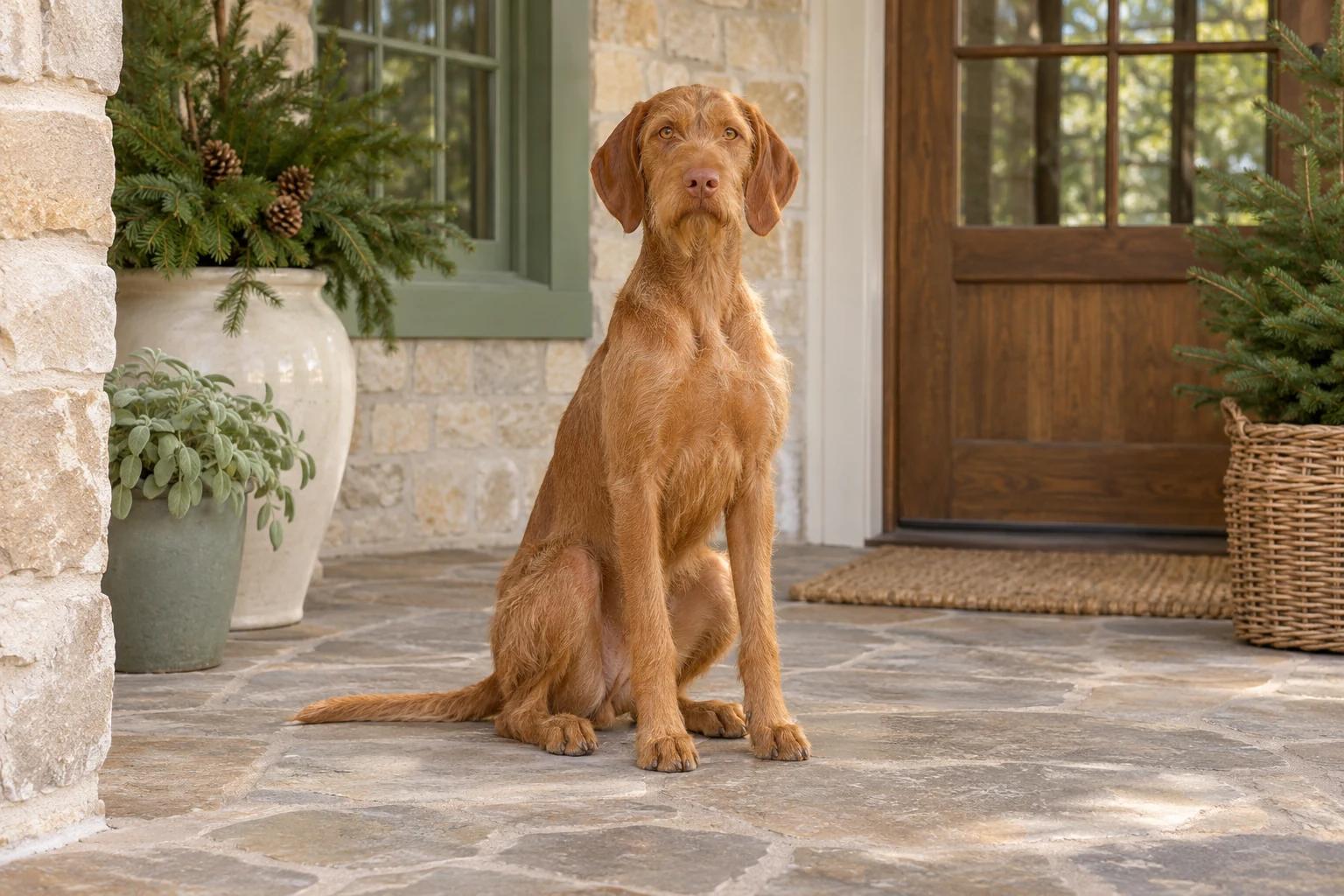
Wirehaired Vizsla exercise deserves more thought than choosing the longest available walking route. The current Wirehaired Vizsla profile describes a highly active companion with substantial interest in learning. A useful day can contain different kinds of engagement, rather than asking one repetitive activity to account for everything the dog enjoys.
Wirehaired Vizsla exercise: give the working interests a job
The Hungarian Wirehaired Vizsla Association's working account places hunting, pointing and retrieving within the breed's purpose. It also describes work in water and the use of scent. For a companion household, this background suggests activities that involve finding something and cooperating with a person, not simply covering ground beside them.
The association includes tracking, scent-related work and mantrailing among possible outlets. These are different activities with different teaching requirements. A beginner need not imitate a working test or invent a complicated trail alone. Seek an instructor who can explain the foundations and adapt the exercise to a novice dog and handler.
The association also points owners toward training opportunities through relevant clubs. A useful first lesson should show what the dog is being asked to discover and how the handler helps it succeed. The attraction is a shared task: the dog's interests become part of an understandable activity rather than a reason to let it pursue wildlife or disappear from view.
Include movement without making every outing a performance
The AKC breed account describes an enthusiastic land-and-water hunter that enjoys running, swimming and lively play. Those are possible interests, not a requirement to include all three every day or proof that every individual is prepared for them.
For a companion Wirehaired Vizsla, distinguish access to an activity from readiness to participate. A dog that enjoys moving freely still needs an appropriate place to do so. A dog interested in water does not make every shoreline an appropriate exercise site. Choose the setting and level of activity for the individual, with veterinary advice when you are unsure what is suitable.
Shared play can also be part of outdoor time rather than an endless demand for faster movement. The useful question is whether the activity suits the dog you have, not whether it resembles a dramatic sporting photograph. Breed enthusiasm gives you ideas to explore; it does not provide a training history, an endurance assessment or a reason to push through an unsuitable session.
Try rally foundations for attention while moving
The AKC introduction to rally describes a course of numbered stations where a dog and handler perform specified skills together. The emphasis is on communication and accurate teamwork rather than racing around the course. Novice work is on lead, making the foundations relevant before advanced off-lead performance becomes a goal.
For a Wirehaired Vizsla household, this offers a different sort of challenge from a long straight walk. The handler must notice the next instruction, maintain useful communication and guide the dog through changes of direction or position. It asks both members of the team to pay attention.
A beginner class can help you learn those foundations without buying a complete course of equipment. Start with skills you can understand and practise clearly, rather than copying a sequence whose signs are unfamiliar. You do not need to enter a competition to find value in learning how to move together. The reward is a shared vocabulary for ordinary movement as well as a possible route into a sport.
Use a small searching game indoors
The AKC indoor-games guide describes hiding a reward beneath one of several containers and letting the dog locate it. This gives a housebound session a clear purpose: investigate the available places, find the hidden item and receive the reward.
Keep the arrangement easy to understand at first. Use a few suitable containers in an uncluttered area and supervise the game. The point is searching, not persuading the dog to chew through packaging or race across a slippery room. Celebrate a successful find instead of immediately turning every attempt into a harder puzzle.
For a Wirehaired Vizsla, this is an example of giving an indoor activity a recognizable beginning and result. It can be a useful addition when an ordinary outing is interrupted, without pretending that a handful of hidden rewards replaces every other part of the dog's day. Judge the difficulty by the individual playing, not by how impressive the hiding place looks to a person watching from across the room.
How much exercise does a Wirehaired Vizsla need?
A breed-wide stopwatch answer would leave out too much. The current profile's high activity and mental-engagement descriptions are a warning against expecting an ornamental companion, but they do not establish a single daily prescription for every age and life stage. Ask your veterinarian about the appropriate physical workload for your individual dog.
A Wirehaired Vizsla daily walk is one part of the relationship, not a complete description of it. Consider what actually happens during that walk. Does the dog have a chance to investigate its surroundings? Are you spending the entire outing in a difficult urban environment? Is the route familiar, or does it require sustained attention around new distractions? Two outings of equal length can be very different experiences.
Wirehaired Vizsla activity level also matters when choosing the breed in the first place. Be honest about whether you want to take part in a dog's active life, rather than hoping that access to a yard will replace shared time. Our separate article on Wirehaired Vizsla balance and height explores structure; the dog quiz helps place activity alongside other ownership commitments.
FAQ
Is there one daily exercise duration for every Wirehaired Vizsla?
No. Age, experience and individual suitability matter. Use veterinary guidance for the physical workload of your dog rather than treating a breed description as a universal time target.
Does the length of a walk describe the whole outing?
No. A familiar quiet route and a demanding new environment can involve different experiences even when they take the same time. Consider the setting as well as duration.
Is a yard enough reason to choose this breed?
No. The current breed profile describes an active companion with a strong interest in shared engagement. Consider whether you want to participate in that life, not simply whether you have outdoor space.
Sources behind this article
Article source checked: November 16, 2026. Source checked 2026-11-16
Keep reading

Afghan Hound Exercise Needs: Build a Workable Active Day
Read article →