Wirehaired Vizsla vs Pudelpointer
Compare Wirehaired Vizsla vs Pudelpointer through their build, coat care, origins and current adult size references.
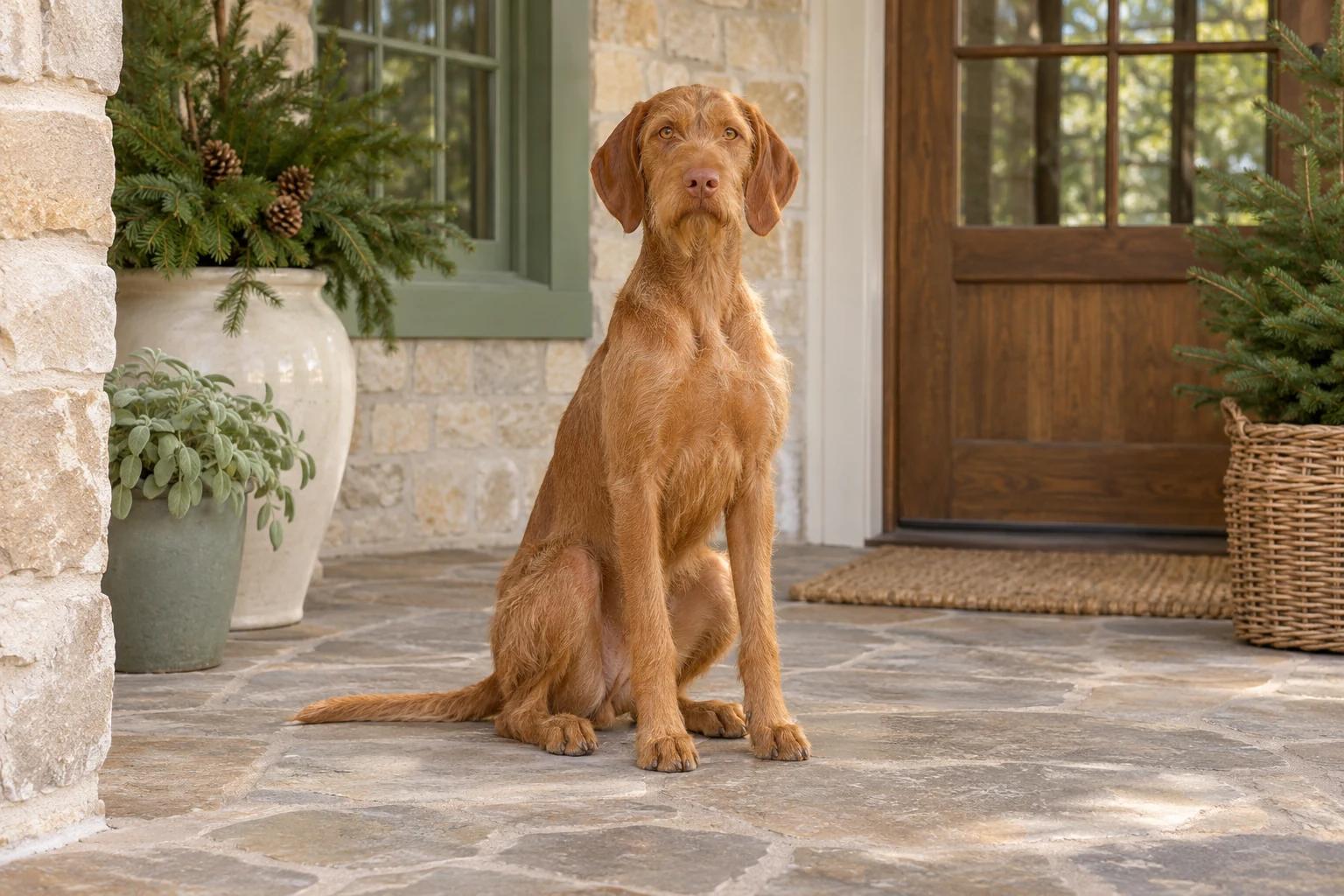
Wirehaired Vizsla vs Pudelpointer is a comparison between two established sporting breeds, not two names for the same shaggy dog. The current Wirehaired Vizsla profile and Pudelpointer profile provide useful starting points. Look beyond the beard: head shape, coat texture, background and the individual dog's existing experience can make the choice more concrete.
Wirehaired Vizsla vs Pudelpointer: read the head and body
The Wirehaired Vizsla Club of America's standard describes a moderately broad, deep chest and a strong muzzle that is slightly shorter than half the head. The skull is slightly domed. Rounded, V-shaped ears hang close to the cheeks. Together these features create a particular outline, rather than simply a smooth Vizsla wearing facial hair.
Its furnishings also have a defined shape. Eyebrows emphasize the expression, while the beard adds depth around the muzzle. The lower legs have shorter, softer hair; the head and ears have shorter, close-fitting hair. A photograph taken directly from the front can hide those transitions; a side view and a close look at the face are more informative.
For someone comparing adult dogs, examine the whole silhouette rather than making beard length the deciding feature. Notice how the head, chest and legs relate to one another. A strong-looking jaw or substantial chest describes anatomy, not how the dog will behave with a new person.
Recognize the Pudelpointer's different outline
The FCI Pudelpointer standard describes a skull and muzzle of equal length, a distinct stop and pronounced brows. The skull is flat with slightly rounded sides, rather than markedly domed. Ears are set high and lie flat. These details help distinguish the face even when both dogs have conspicuous eyebrows and a beard.
The body has a broad, deep chest with well-sprung ribs that should not become barrel-shaped. Its rough coat lies close over a dense undercoat. A beard and forelock complete the furnished head; the standard's colors include brown, dead-leaf and black, with small white markings permitted.
This makes color useful context, but not a substitute for identifying the dog. A brown, bearded animal is not automatically a Pudelpointer. When comparing photographs, ask for an unobstructed side view and an ordinary view of the head. Looking at ear placement, muzzle length and the coat together is more useful than matching one attractive facial feature to an online image.
Compare the coat you will actually maintain
The WVCA grooming account emphasizes substantial variation within Wirehaired Vizsla coats. Some are almost smooth; others are soft and woolly. A single grooming demonstration cannot represent every dog in the breed. Regular brushing and occasional bathing are part of the account, while removal of dead coat may be useful for some textures and inappropriate for others.
That distinction matters when choosing a puppy or meeting an adult. Ask to feel the actual coat and have its keeper explain the care it currently receives. “Wirehaired” is a breed name, not a complete set of instructions for selecting a tool or removing hair.
If specialist coat work is unfamiliar, ask a groomer experienced with the breed to assess the individual and demonstrate suitable care. Do not assume that a method used on one rough-coated breed transfers unchanged to another. The useful comparison is between the coat in front of you and the work you are prepared to learn, not between two grooming labels on a chart.
Understand why Pudelpointer is an established breed name
The Canadian Kennel Club's history traces the Pudelpointer's foundation to Sigismund Freiherr von Zedlitz und Neukirch and a deliberate Pointer–Poodle breeding project. It identifies an early mating between the Poodle Molly and the Pointer Tell, with the first litter born in 1881. Tell descended from the Prince of Wales's kennels and was owned by Friedrich III.
Those details place the name in a specific historical project. They do not describe a recently invented label for any contemporary Pointer–Poodle cross. For a prospective owner, the practical distinction is between learning about an established breed and trying to predict an individual cross from two parent names.
A historical origin also does not mean that a modern puppy can be divided into fixed portions of its founding breeds' personalities. Ask about the actual dog's parents, upbringing and present experience. The history explains why the name exists; it cannot supply the missing details of an individual dog's life or replace meeting dogs from the breeder's current lines.
Put current size and everyday companionship beside appearance
The current Wirehaired Vizsla profile lists adult females at 45–55 pounds and males at 55–65 pounds. The Pudelpointer profile gives a combined adult reference of 45–70 pounds, without separating the sexes. Those ranges overlap substantially. Pudelpointer vs Wirehaired Vizsla is therefore not a reliable shorthand for choosing a categorically smaller dog.
Both profiles describe dogs for people who want substantial shared activity and learning. Neither beard tells you whether an adult has practised walking through town, accompanying a familiar handler on country outings or resting during a working day. For an adult placement, discuss the life it already knows. For a puppy, discuss the experiences the breeder has begun rather than treating a sporting identity as finished training.
The difference between Wirehaired Vizsla and Pudelpointer is more useful when explored through these separate questions: physical appearance, actual coat care and the experience of the individual. Our Wirehaired Vizsla article on balance and height covers a separate structural topic. The dog quiz can help you consider broader ownership commitments.
FAQ
Should I choose a Wirehaired Vizsla or Pudelpointer by adult weight alone?
No. The current adult references overlap. Wirehaired Vizsla females are listed at 45–55 pounds and males at 55–65 pounds; the Pudelpointer's combined reference is 45–70 pounds. Size does not establish compatibility or training experience.
Does a beard tell me which breed I am meeting?
No. Confirm the dog's identity through its keeper and records rather than relying on one facial feature. Photographs can be useful illustrations, but a beard alone is not an identification test.
What should I ask when meeting an adult sporting dog?
Ask which everyday settings it already knows and what shared activities it currently enjoys. An account of its actual experience is more useful than assuming that breed identity supplies every skill needed in your home.
Sources behind this article
Article source checked: November 16, 2026. Source checked 2026-11-16
Keep reading

Affenpinscher vs Brussels Griffon: Everyday Differences
Read article →