Whippet exercise needs
Explore Whippet exercise needs through varied walks, secure activity, scent work and appropriate sporting introductions, not a race to exhaustion.
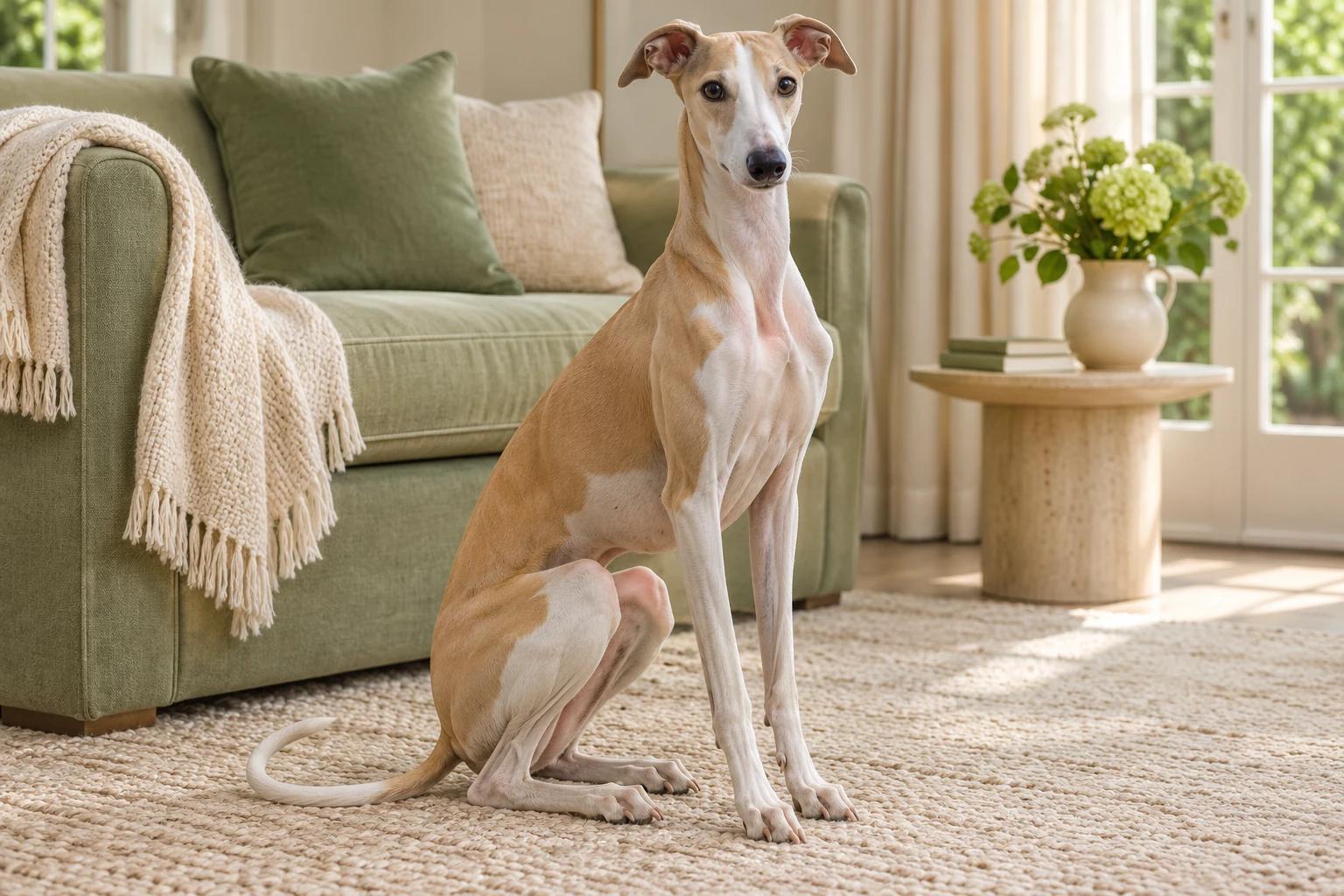
Whippet exercise needs are easier to meet when the day includes different kinds of engagement rather than one increasingly demanding outing. The current Whippet profile describes daily activity and learning as parts of ownership. Think about what the dog actually does during an outing, not just the time at which you leave and return.
Whippet exercise needs include more than running
PDSA's Whippet guidance describes a combination of walks, opportunities to sniff and explore, play and training. It recommends secure spaces for off-lead running and keeping the dog on lead elsewhere because an opportunity to chase can be compelling.
For a Whippet household, an ordinary walk and a secure running session are not interchangeable versions of the same task. One can provide shared movement and exploration; the other permits a different kind of activity in an appropriate setting. Check the space before allowing free movement rather than assuming an open-looking field is enclosed or suitable.
The useful principle is variety within safe limits, not escalating the distance until the dog has nothing left to give. PDSA also distinguishes a chance to play with the owner from simply having access to a garden. Include participation, not only availability of space. Ask your veterinarian what activity is appropriate for the individual dog's age and circumstances before introducing demanding exercise or substantially changing its routine.
Understand lure coursing before treating it as an ordinary game
The American Whippet Club's lure-coursing guide describes an organized sport in which dogs follow an artificial lure through a course. The route can include turns and changes in terrain. Performance is assessed across qualities such as following the lure, agility and endurance, not speed alone.
This matters for owners who picture any Whippet activity as a simple straight sprint. A dog that runs quickly in a familiar enclosure has not thereby demonstrated preparation for a full sporting course. The task, setting and handling arrangements are different.
If the sport interests you, watch an organized event and speak with an experienced club about appropriate introductions and conditioning. Ask how beginners learn the process and how suitability is assessed. Do not reconstruct a lure machine or assume that a full competitive distance is an introductory exercise. The breed's enthusiasm for pursuit can make the activity appealing, but enthusiasm is not the same as readiness for every level of physical demand or for running with unfamiliar dogs.
Give a sighthound opportunities to use its nose
The American Whippet Club's tracking and nosework guide makes clear that Whippets can participate in scent-based activities as well as visual pursuit. Tracking follows a human scent trail to an object; scentwork involves locating a designated target odour. They are different sports, not alternative names for sprinting toward something visible.
For a simple home introduction, the club describes hiding a treat under a cup where the dog can see the setup, then inviting a search. Begin with an understandable task before increasing difficulty. Supervise the game and use suitable objects that the dog will not chew or swallow.
Formal scentwork requires learning the particular search task with appropriate instruction. Do not assume that a dog investigating every interesting smell has already learned a target odour or an indication. The appeal is giving the Whippet a problem it can solve through searching. This broadens the activity menu without making speed the only measure of successful engagement or claiming that nosework replaces every other part of an exercise routine.
Let some walks be about investigation
The AKC's sniff-walk guidance distinguishes a scent-focused outing from a walk organized around reaching a destination. Choose a safe, quiet place and let the dog investigate at its own pace. A suitable harness and carefully managed line can maintain a connection while allowing room to explore.
For a Whippet, this gives the outing a different purpose from covering the greatest possible distance. A pause at a patch of grass need not be treated as a failure to keep the walk moving. You remain responsible for avoiding hazards, but the route can accommodate the dog's interest rather than following a strict human timetable.
Keep the distinction between enrichment and a universal exercise replacement clear. The guide notes that dogs may still need other activity appropriate to their circumstances. A slower exploratory walk can be one part of the day, not proof that every physical requirement has been met. Judge the experience by the dog's opportunity to investigate comfortably, rather than converting every pause into lost mileage.
Put Whippet activity level in a whole-day context
The current profile describes both physical activity and mental engagement. A household deciding whether it can meet those commitments should consider the actual opportunities available on an ordinary weekday, not only an unusually energetic weekend.
A Whippet daily walk is shared time as well as an appointment on the calendar. Think about who can accompany the dog, what environments are accessible and whether the routine is feasible throughout the year. If the only appealing version depends on ideal weather and an empty schedule, it is not yet a realistic account of daily ownership.
How much exercise does a Whippet need? Begin with the individual dog's established activity and discuss suitable changes with your veterinarian. Do not use a single breed number to override age, experience or professional advice. The question is whether the whole routine suits the animal, not whether you have accumulated a particular score.
Our guide to meeting a Whippet addresses the separate task of understanding its background. Use the dog quiz to consider daily activity alongside company, care and other ownership commitments.
FAQ
Should I judge Whippet exercise needs by a weekend outing alone?
No. Consider the activities you can provide on ordinary weekdays as well. An occasional ambitious outing does not describe the dog's usual experience or the household's continuing capacity to meet its needs.
Does adult weight tell me the right exercise routine?
No. Current female weights are 20–35 pounds and male weights 25–40 pounds. Those references describe size, not an activity prescription. Age, experience and individual circumstances also matter.
What should I do before making a major activity change?
Discuss the proposed change with your veterinarian and explain the dog's current routine. A breed-level description is background, not individual clearance for a demanding new activity.
Sources behind this article
- PDSA Whippet profile ↗
- American Whippet Club lure coursing ↗
- American Whippet Club tracking and nosework ↗
- AKC sniff walks ↗
Article source checked: November 16, 2026. Source checked 2026-11-16
Keep reading

Afghan Hound Exercise Needs: Build a Workable Active Day
Read article →