Wetterhoun temperament
Understand Wetterhoun temperament through patient teaching, outdoor interests, visitor preparation and the individual dog’s everyday experience.
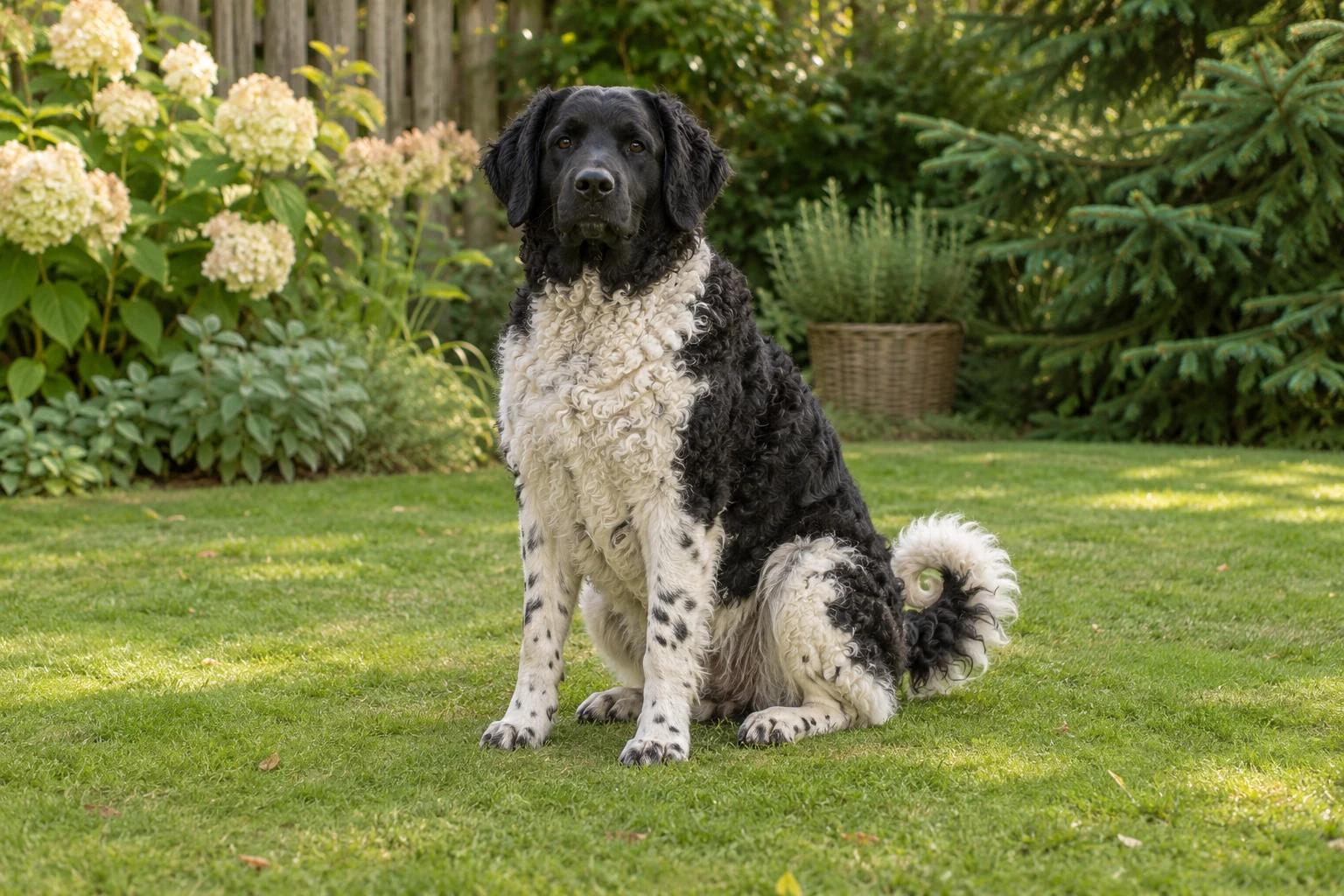
Wetterhoun temperament is best explored through everyday situations, not a single label attached to a photograph. The current Wetterhoun profile is a starting point for learning about the dog you may share your life with. Ask what happens during an ordinary outing, a familiar lesson and a quiet afternoon, rather than treating an introduction as a complete personality assessment.
Wetterhoun temperament: understand the outdoor companion
The breed-association account published by Raad van Beheer describes a dog that enjoys being outside with its person and appreciates long walks. It emphasizes persistence and the importance of patience and respect when working together. This is companionship that can include doing something alongside the dog, not simply expecting it to occupy itself in a garden.
The account also distinguishes learning obedience from becoming automatically compliant. A Wetterhoun can learn, but a trained dog is not a machine that instantly reproduces every instruction. For someone considering the breed, a useful meeting includes watching a familiar keeper teach or practise something the dog already understands.
Notice how that person begins the activity, maintains the dog's interest and ends it. Ask which outings the individual enjoys most and what a normal week actually contains. A description of outdoor enthusiasm is much more informative when accompanied by an example of the work and companionship it means in that dog's life.
Reward cooperation instead of competing with independence
The Danish Kennel Club's account recommends patient, kind, consistent teaching and specifically rewarding contact and cooperation. It describes retrieving interests and the possibility of learning tracking work. These are opportunities to build a shared activity, not reasons to assume that the dog arrives knowing how to work with you.
For a prospective Wetterhoun owner, the useful question is not whether a breed can be called stubborn. Ask what has already helped this dog engage with a person. A keeper might demonstrate a familiar retrieve or explain the first steps in a tracking lesson. Those examples show the relationship between an interest and a learned task.
Keep the distinction between enthusiasm and experience clear. Enjoying an activity does not establish polished performance, and an attractive account of working ability does not tell you what a particular youngster has practised. Look for a teacher who can explain the learning process rather than presenting firmness as a contest of wills. Consistency should make the task understandable, not make every interaction more confrontational.
Practise the sound of arrivals before hosting visitors
Dogs Trust's visitor-training guidance separates door sounds from the excitement of an actual arrival. It begins with a quiet knock on a surface indoors. If the dog reacts by barking or rushing off, make the sound quieter rather than repeating it at the same intensity.
Build gradually while the dog remains calm, then practise with a helper at the real door. Reward a calm response. The guide also teaches a separate bed cue through rewards placed on the bed, adding distance and duration gradually before connecting the cue to the knock.
For a Wetterhoun household, this is a practical alternative to trying to teach a new routine while a visitor waits in the doorway. The sound, the movement to a resting place and the arrival of a person are distinct parts. Work through them in manageable stages. If the dog struggles, return to an easier stage. The point is a familiar response to an ordinary event, not a test of whether the dog can tolerate a crowded entrance.
Give a puppy useful experiences without compulsory greetings
Battersea's socialisation guidance emphasizes short, positive experiences, opportunities to watch from a distance and freedom to move away. Socialisation is not a requirement to interact with every person or dog encountered.
For a Wetterhoun puppy, an ordinary outing can include watching a person with an umbrella or encountering a different walking surface without making either experience intense. Begin somewhere familiar and quiet, adding novelty gradually. Ask people not to lean over the puppy or reach into its space; let the puppy choose whether to approach.
The same principle applies to household objects. Introduce an object while it is still and quiet before adding movement or sound, and supervise exploration. A new experience need not combine unfamiliar people, a noisy appliance and a busy room at once.
Ask your veterinarian when ground-level outings and direct contact with other dogs are appropriate for your puppy. The goal is useful, comfortable familiarity with everyday life, not completing the largest possible number of encounters in a single trip.
Look at Wetterhoun personality in the actual household
The breed accounts above describe close companionship alongside an independent streak. That combination makes a simple question such as “Does this dog like people?” too broad to answer everything you need to know. Ask about shared time during different parts of the day: while someone works nearby, during a walk and when the household becomes quiet.
For an adult, request examples from its present home rather than relying only on the first meeting. What does it choose to do when its person sits down? Which activities does it initiate? What has it already learned about spending time apart? These questions address existing experience without assuming that being close to someone proves readiness for every change in routine.
Wetterhoun characteristics also include a substantial physical presence: the current adult weight reference is 50–75 pounds. Consider the practical reality of interacting with that individual, rather than equating a pleasant greeting with finished training. Our article on the Wetterhoun's distinctive ear covering explores a separate appearance detail. Use the dog quiz to consider the broader commitments of ownership.
FAQ
Does Wetterhoun behavior have one predictable pattern in every home?
No. Ask for examples of the individual dog's daily experience, including familiar activities and time apart. A breed description helps you choose questions; it does not replace information about the animal you are considering.
What should I ask about an adult Wetterhoun's existing routine?
Ask what it does during shared quiet time, which activities are already familiar and how changes in the household have been handled. Concrete examples are more useful than an unqualified promise that the dog will fit any routine.
Does the adult weight reference describe personality?
No. The current 50–75-pound reference describes physical scale, not sociability, training experience or compatibility. Meet the individual and ask about its history rather than using size as a shortcut to a temperament judgment.
Sources behind this article
- Raad van Beheer Wetterhoun ↗
- Danish Kennel Club Wetterhoun ↗
- Dogs Trust visitor training ↗
- Battersea puppy socialisation ↗
Article source checked: November 16, 2026. Source checked 2026-11-16
Keep reading
Wetterhoun size
Read article →