The Wetterhoun’s ear hair changes length from base to tip
The Wetterhoun’s FCI standard describes longer curled hair near the ear base and short hair over its lower third. An evenly fringed ear is not the stated pattern.
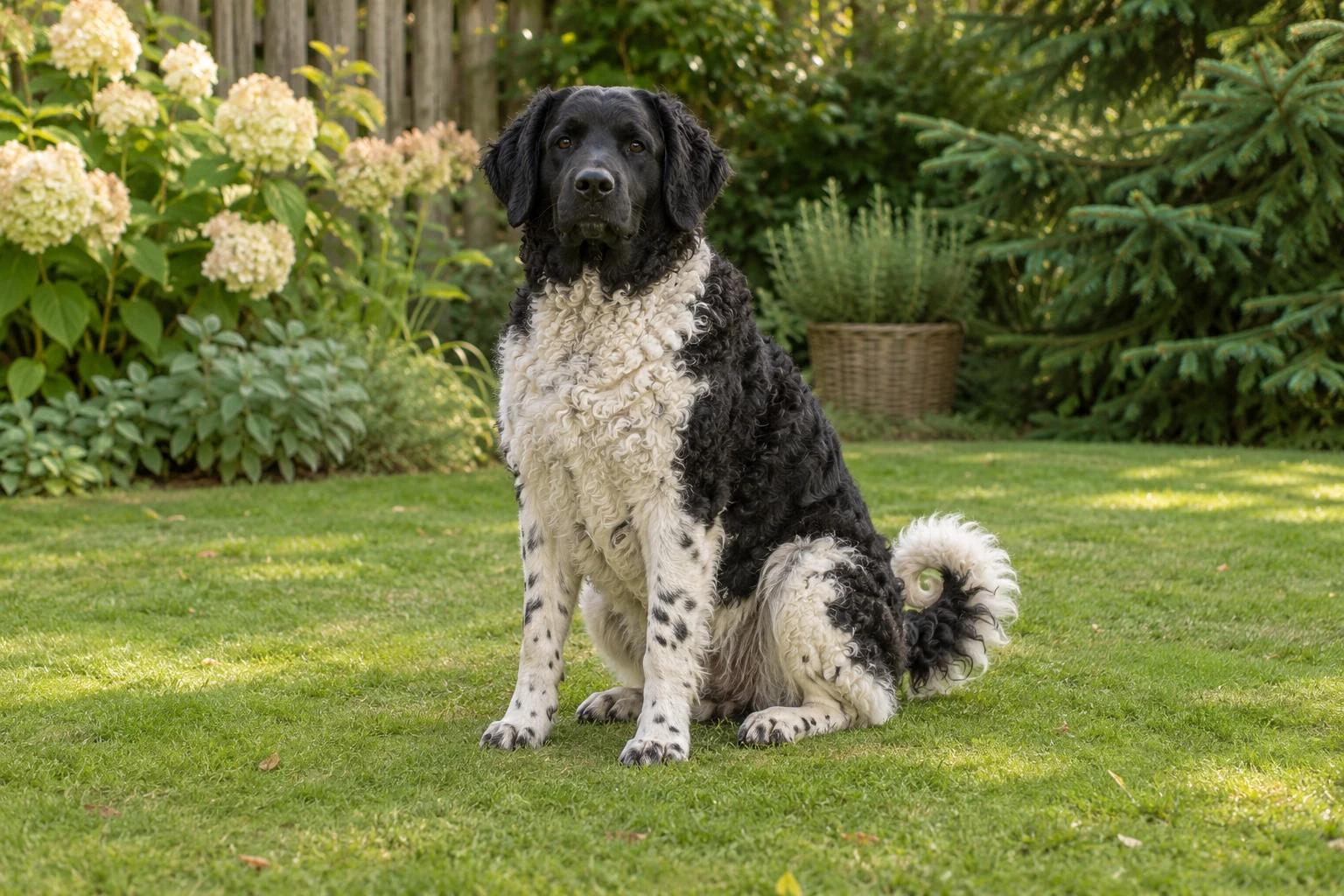
Notice the change within one ear
The FCI Wetterhoun standard identifies the ear hair as a characteristic feature. It describes curls that are relatively long near the base, becoming shorter toward the lower third, where the covering is short. The description is a gradient along the ear, rather than one uniform length from top to bottom.
Choose a reference that shows more than the curls
For an illustrated introduction, use a calm view showing the whole ear instead of a close-up of its longest hair. Keep the attachment and tip visible so a reader can follow the change in covering. Record any known grooming context with the photograph.
At a handover, ask the keeper to explain the dog’s existing care routine and demonstrate how it accepts handling. A distinctive coat description does not tell you how much cooperation this particular dog has learned or which tools its keeper uses.
Avoid manufacturing a standard from a photograph
Do not infer a trimming instruction from the described length change. The passage explains appearance; it does not prescribe a haircut, treatment or fixed care schedule.
If the coat looks different from a reference, ask for context before assigning a cause. For a profile, the useful detail is the progression from longer curls to a shorter tip covering, presented without diagnosing the dog or promising maintenance needs from its breed name alone.
Sources behind this article
Article source checked: October 20, 2026. Source checked 2026-10-20
Keep reading
Wetterhoun temperament
Read article →