Wetterhoun size
Explore Wetterhoun size with current adult weight and sex-qualified height references, body proportions, development and practical measurements.
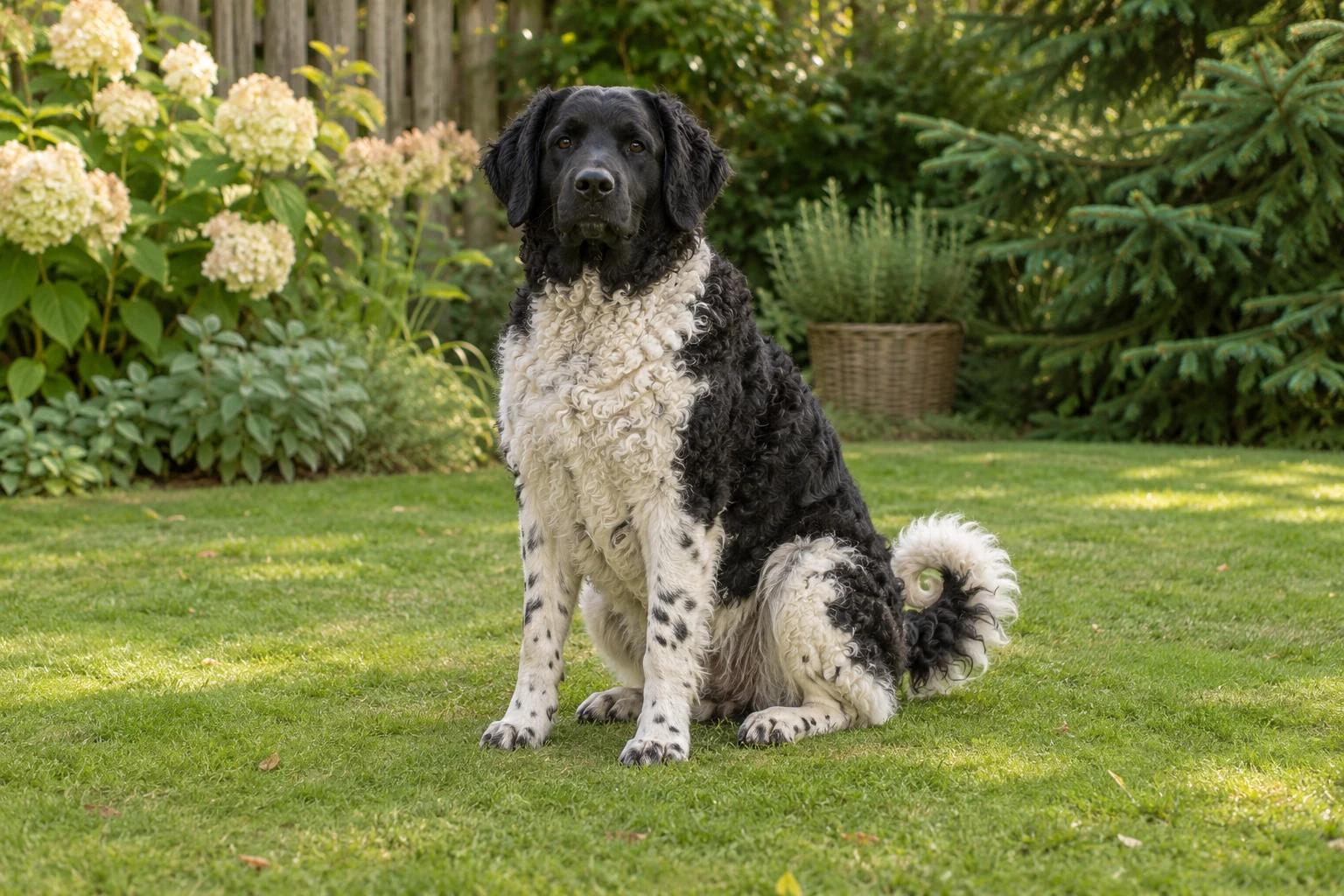
Wetterhoun size has two useful starting measurements: the current adult weight reference is 50–75 pounds, and the height reference is 23 inches for males and 21.5 inches for females. The Wetterhoun profile does not divide that weight range by sex. Keep those distinctions intact when comparing dogs, rather than treating the lower weight as a female figure and the upper weight as a male figure.
Wetterhoun size: look beyond the scale
The FCI standard describes a powerful, compact dog with a square overall outline. Its specified body length, measured from the front of the breastbone to the point of the buttock, matches shoulder height. This does not include the head or the curled tail.
The chest is broad, the forelegs stand relatively far apart and the feet are substantial and rounded. The back is short and straight, while the neck is powerful and the head is carried comparatively low in movement. Together these details explain why a Wetterhoun should not be imagined as simply a tall column beneath a curly coat.
Use a side view and a front view to understand the animal's outline. The two views reveal different proportions.
Understand development without assigning a birthday deadline
VCA's puppy growth guide explains that growth timing varies with breed and anticipated adult size. Larger dogs generally take longer to reach adult size than small dogs. It also distinguishes the end of rapid puppy growth from a universal calendar date that applies to every dog.
For a young Wetterhoun, that means an adult reference should not become a deadline. Reaching a particular weight does not by itself establish that development has finished, and being below an adult reference while growing does not provide a complete assessment of the puppy.
Ask your veterinarian to interpret the individual dog's progress. Bring its age and previous measurements rather than using a single comparison with an adult photograph. That conversation can address the animal actually in front of you without creating a breed-wide month-by-month prediction.
Keep development and training experience separate as well. An increasingly adult-looking dog is still learning. Physical scale does not tell you which everyday skills have been taught or which situations are familiar.
Use overall dimensions when choosing a resting enclosure
The AKC's crate guide says a dog needs room to stand, sit and lie down comfortably. It recommends measuring the actual animal rather than selecting solely by breed name. Its height measurement runs from the floor to the top of the standing dog's head, not merely to its shoulders.
This is an important distinction when looking at a Wetterhoun's published height. A crate whose internal ceiling simply matches the shoulder-height reference does not account for the rest of the dog above that point. Check the manufacturer's usable internal dimensions and the dog's ability to adopt ordinary resting positions.
The guide also discusses adjustable dividers for puppies and matching construction to the intended use and the individual dog's behaviour. A size label alone is not enough information. Compare the space actually available inside the enclosure, including the effect of bedding, rather than assuming the outside dimensions describe the room the dog will have. Size selection and comfortable introduction to the enclosure are separate tasks.
Teach a voluntary stand for practical handling
Battersea's stand lesson provides a useful foundation for ordinary handling. Start from a familiar sit or down. Hold a suitable treat near the dog's nose, then move it horizontally away so the dog follows into a stand. Praise and reward as soon as the dog reaches that position.
Repeat until the movement is familiar before introducing a hand signal and a spoken cue. Progress toward the hand movement without food in that hand, rewarding from the other hand. The lesson should explain the position rather than require you to move the dog's body into place.
For a Wetterhoun, a voluntary stand gives you a practical starting point for learning about its dimensions. Do not combine the first successful stand with a demand for a lengthy measuring session. Becoming comfortable with the activity is a separate learning step. If the dog cannot comfortably participate, ask for professional help rather than turning a size check into a physical contest. Veterinary concerns belong with your veterinarian.
Put Wetterhoun weight and Wetterhoun height in perspective
The 50–75-pound adult reference spans 25 pounds. That is a meaningful difference in physical scale, even though both ends belong to the same breed reference. A sixty-pound adult and a seventy-pound adult can both fall within it; the range alone does not explain their proportions or identify either as the correct model for every Wetterhoun.
The current male and female height references differ by 1.5 inches. Those sex-qualified figures should remain separate from the unqualified weight range. Do not calculate a supposed female weight by reducing the male height proportionally: the reference provides no such formula.
How big do Wetterhouns get? For initial planning, use the current adult figures. For an adult already under consideration, ask for that dog's measurements. For a puppy, treat the adult figures as context rather than a guaranteed final result. Our Wetterhoun ear-covering article considers a separate appearance feature, while the dog quiz helps place size alongside other ownership commitments.
FAQ
What is the current adult Wetterhoun weight reference?
It is 50–75 pounds, without a separate male and female breakdown. Do not turn the endpoints into sex-specific figures or assume every individual will match a particular point within the range.
How tall is a Wetterhoun in the current breed reference?
The listed height is 23 inches for males and 21.5 inches for females. Retain those qualifiers when describing the reference; they are not two ends of a single sex-neutral height range.
Does a weight within the reference settle every size question?
No. It tells you where a measurement sits relative to the published range. It does not establish the dog's exact dimensions, explain its individual history or replace professional advice about its condition and development.
Sources behind this article
- FCI Wetterhoun standard ↗
- VCA puppy growth and maturity ↗
- AKC crate sizing ↗
- Battersea stand training ↗
Article source checked: November 16, 2026. Source checked 2026-11-16
Keep reading
Wetterhoun temperament
Read article →