Welsh Terrier training
Make Welsh Terrier training practical with individual rewards, leave-it and drop-it lessons, plus a voluntary chin rest for handling practice.
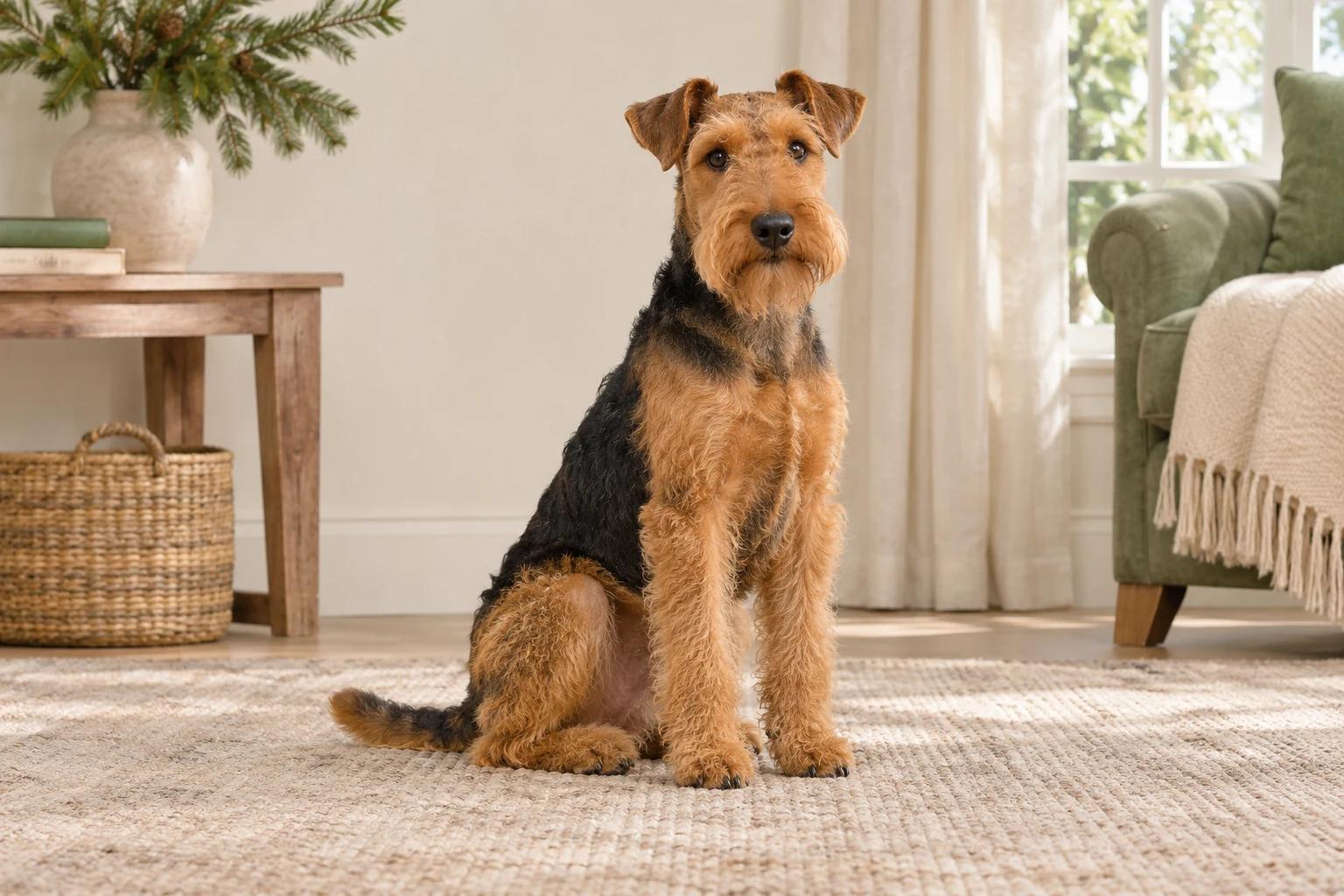
Welsh Terrier training should be an active conversation with the dog in front of you, not an argument with a stereotype about terriers. The current Welsh Terrier profile describes a responsive learner that benefits from daily learning games. A useful starting point is to identify what the dog understands now and which everyday skills you want to add.
Welsh Terrier training: reward the individual
In Diane Orange's terrier-training essay, published by the Welsh Terrier Club of America, reward preferences differ even among closely related dogs. One may value a toy game while another is more interested in food. Preferences can also change over time, so a previously successful reward is not automatically the best choice forever.
The essay recommends breaks before repetition exhausts the dog's interest. For a Welsh Terrier owner, that means looking at participation rather than assuming that completing another identical round is always useful. A dog doing a familiar exercise well does not necessarily benefit from being asked to demonstrate it endlessly.
Try a reward the individual actually values and preserve the sense of a shared activity. This is not a claim that a terrier is incapable of learning or that the owner should abandon every difficult lesson. It is a reminder that motivation belongs to the learner, and that understanding it is part of the handler's work.
Teach leaving an item before it is picked up
Dogs Trust's leave-it guidance begins with a relatively uninteresting item in one hand and a more appealing reward in the other. Let the dog investigate the first hand, then mark and reward looking or moving away from it. The reward comes from the other hand, not from the object you wanted left alone.
When turning away becomes reliable, say the cue before presenting the item. Gradually practice in other places and add easier versions of movement, such as placing the item on the floor. Increase difficulty only as the dog understands the exercise.
For a Welsh Terrier, this gives an inquisitive moment a clear alternative action. Start with safe training objects rather than using a genuinely hazardous discovery as the first lesson. Keep unsuitable items out of reach in ordinary life; a developing cue is not a substitute for managing access. The point is choosing to disengage before taking something, not physically wrestling an object out afterward.
Teach a separate release for something already held
Battersea's drop-it lesson explains why chasing a dog with an object can become a game of running away. Its food-based approach first pairs the word with food placed on the floor. When that association is familiar, introduce a toy the dog enjoys but does not value most highly.
Say the cue and offer the food exchange, allowing the dog to choose to release. As understanding develops, wait for the release before putting the food down. Work toward more valued toys gradually rather than beginning with the favorite possession.
If the dog does not release, do not grab the toy. Make the exercise easier and revisit it later. For dogs who prefer toys, Battersea also describes exchanges between two similarly valued toys. In either version, the useful lesson is that cooperating with the person brings another worthwhile opportunity. The release should not become a contest over who can hold on most firmly.
Add a voluntary chin rest for handling practice
The AKC chin-rest lesson starts with a dog comfortable approaching hands and taking food from them. Offer an upward-facing palm and use a treat in the other hand to guide the chin over it. Reward that early position before expecting firm contact or a long hold.
Gradually guide the chin onto the palm, then replace the food lure with an empty-hand movement and deliver the reward afterward. Once the dog responds reliably, add a word before presenting the hand. Build duration in small increments and include a release cue.
The dog chooses the position; the hand is not a clamp around the muzzle. For a Welsh Terrier receiving regular coat care, voluntary cooperation is a useful separate skill to investigate before combining it with handling. Learn the position first rather than introducing unfamiliar equipment and a new behavior simultaneously. Comfortable participation matters more than completing a long hold on the first attempt.
How to train a Welsh Terrier in an ordinary home
The current breed profile describes strong family involvement and a sociable tendency with new people. These references do not mean every visitor automatically understands the dog's cues or every dog wants identical interaction. Explain familiar words and gestures to anyone who regularly takes part in teaching.
Welsh Terrier obedience also needs a realistic definition. It is not the dog reading a person's intention before a recognizable instruction has been given. If one family member says a word while another uses a different gesture for the same action, establish what the dog has actually learned before calling its responses inconsistent.
Welsh Terrier socialization is a separate consideration from knowing household cues. The current reference says other-dog compatibility is individual, even though the breed can be socially interested in people. Do not turn one kind of social success into a guarantee about another animal. Ask the current caregiver about actual experience rather than assuming every introduction will feel familiar.
The adult is physically small enough to be underestimated: the current reference gives 20–21 pounds for both sexes. That scale should not make education optional. Think about the communication you want throughout the dog's life, not only what seems easy to manage by hand while it is young.
Our Welsh Terrier origin article discusses a different historical question. Use the dog quiz to consider whether you enjoy the involved learning relationship described in the breed's current profile.
FAQ
Does the breed's responsiveness mean a new dog already knows my rules?
No. The current profile describes a tendency to respond to training, not knowledge of a particular household. Find out which cues are familiar and how they are given before assuming that your own words carry the same meaning.
Does sociability with people predict compatibility with every dog?
No. The current profile treats other-dog compatibility as individual. Experience with people and experience with other dogs are different parts of a dog's background. Ask about actual interactions rather than extending one broad description to every situation.
Is teaching less important because a Welsh Terrier is relatively small?
No. The current adult weight reference is 20–21 pounds for both sexes, but physical manageability is not the same as mutual understanding. Education supports everyday communication with the adult dog as well as with a puppy.
Sources behind this article
- Diane Orange terrier-training essay ↗
- Dogs Trust leave training ↗
- Battersea drop-it lesson ↗
- AKC chin-rest lesson ↗
Article source checked: November 16, 2026. Source checked 2026-11-16
Keep reading

Affenpinscher Training: Build Useful Everyday Habits
Read article →