Toyger Cat Temperament: Easygoing Descriptions Still Need Individual Context
Explore Toyger cat temperament, activity and chosen contact without turning an easygoing description into a health or household compatibility promise.
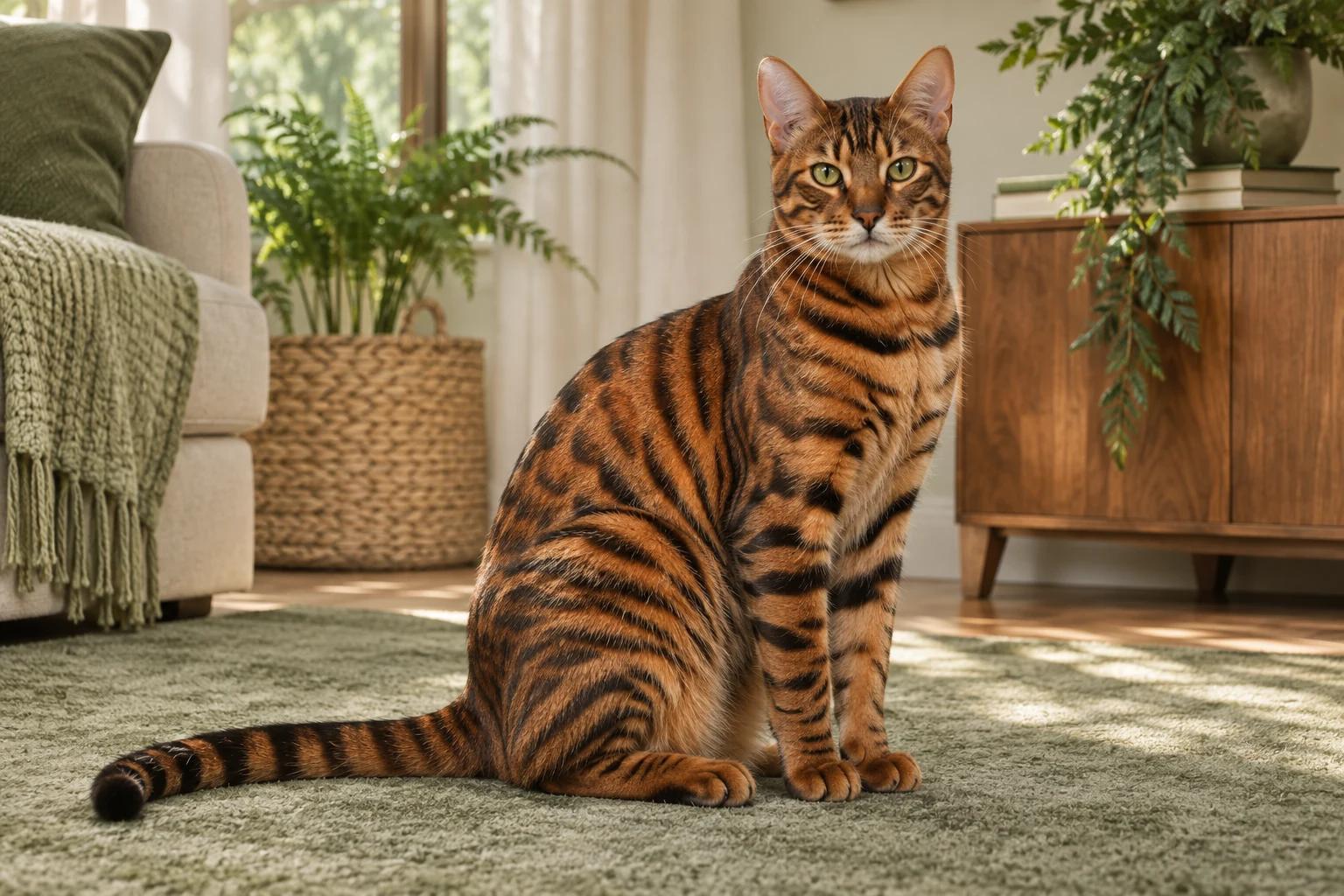
Toyger cat temperament is often described by TICA as outgoing and relatively easygoing. Those words can make the breed sound simple to accommodate, but they should lead to questions about the individual rather than a promise of effortless care. A companion can enjoy company, investigate a room and still want a pause from touch or an undisturbed place to rest.
This guide explores toyger cat personality beyond the striking striped coat. It focuses on ordinary interaction and a realistic household routine, keeping scratching-resource placement to the separate existing article.
Toyger cat temperament: ask what easygoing looks like
The Toyger profile retains outgoing tendencies without guaranteeing acceptance of every pet or child. Ask the caregiver about familiar situations rather than accepting a single adjective as a complete account.
What happens when someone works quietly, a guest arrives or a game ends? Learn how the animal moves between involvement and rest. Those examples help explain a relationship without asking it to perform calmness during a short visit.
TICA's account describes interest in people, but a registry ideal is not a measured outcome for every cat. Ask whether the setting and response you observe are typical. One relaxed encounter cannot answer every future situation in your home.
A striking coat does not invite constant touch
Visitors may want to examine the stripes or feel the coat. That interest belongs to the person, not necessarily the cat. Ask about accepted contact and allow an approach without reaching automatically.
Pause to see whether the animal chooses to remain. If it leaves, protect that departure instead of bringing it back for someone else's turn. Nearby company, petting and being carried are different experiences.
Adults should supervise children and explain resting-place boundaries. A friendly reputation cannot make the cat responsible for tolerating every approach. Observation or a suitable familiar game can be enjoyable participation without repeated handling.
Give engagement a practical outlet
The profile supports puzzles, interactive opportunities and reward-based games. Ask what the individual already understands and returns to. A cat choosing a simple invitation rather than a complex device has not failed an intelligence test.
FelineVMA's indoor-cat guidance combines play with safe places, resources and positive contact. Consider whether the animal can use those choices during ordinary busy periods. A collection of objects is not the same as an environment with manageable access.
Keep activity voluntary and let it finish. Do not make exhaustion the goal or assume an easygoing description means no play is needed. Seek advice about a new loss of interest instead of automatically increasing the challenge.
Curiosity needs ordinary household preparation
Ask which spaces the cat investigates and what is securely stored. Keep hazardous materials, exterior exits and fragile items appropriately managed rather than relying only on a cue or a reputation for trainability.
Follow installation and load instructions for furniture. An athletic description cannot establish that a particular shelf is suitable or that every movement is comfortable. Essential resources should not require a difficult route.
The existing Toyger scratch-friendly-room guide addresses a specific arrangement for a normal feline need. Its practical placement questions remain useful even when an animal looks calm. This temperament guide does not replace that task or prescribe a deterrent.
Introductions require actual history
Ask about previous experience with other animals and unfamiliar people, including how encounters were managed. A social account cannot guarantee acceptance of your resident cat or dog. Obtain suitable guidance and prepare separation, resources and retreat before contact.
Do not let an enthusiastic resident control the entire pace. The Toyger still needs an option to withdraw, and one peaceful meeting does not establish that every management arrangement can be removed.
Visitors need clear instructions too. Waiting, giving space and observing without touch can make a meeting manageable. The animal should not have to greet everyone immediately to demonstrate that it belongs to an outgoing breed.
Keep care tasks distinct from company
Toyger cat characteristics include a short coat with a maintenance reference that changes during shedding periods. Ask what routine the animal accepts and who helps if it becomes difficult. Enjoying ordinary petting does not establish comfort with every tool or position.
If handling changes or an area seems uncomfortable, contact the veterinary team. Do not describe the response solely as attitude or continue because a breed is supposed to be easygoing. A familiar change deserves its own attention.
This guide provides no treatment, medication or grooming procedure. It keeps necessary care visible in the companionship discussion without pretending that affection makes every task automatically simple.
Discuss the schedule you can actually maintain
Explain absences and busy periods before adoption. Ask how the cat is currently supported and what backup arrangements are available. Another pet is not an automatic substitute for dependable care or a guaranteed social match.
Keep observations specific if a concern develops. The cat stopped joining an activity, changed its route or left when touched is more useful than deciding it is lazy or unfriendly. Seek appropriate advice without provoking a repeat to make the account convincing.
Use the cat quiz to organize wider preferences, then compare them with the actual animal's history. Ask which responsibility a new household is most likely to underestimate. An honest answer about a limit or task needing help can be more valuable than a perfect-sounding description.
A sustainable relationship includes chosen participation, rest and withdrawal. The stripes may draw your attention; understanding the individual should guide the commitment that follows.
Frequently asked questions
Does easygoing mean a Toyger needs little interaction?
No. The current profile supports engaged daily opportunities. Ask about the individual rather than translating calmness into an absence of needs.
Can every visitor touch the coat?
No. Learn accepted contact and let the cat choose distance. An unusual pattern is not permission for repeated handling.
Is compatibility with children or pets guaranteed?
No. Assess the actual individuals and plan introductions and supervision with appropriate resources and retreat.
Should a changed response be dismissed as temperament?
No. Seek veterinary advice about a new or concerning change and describe ordinary observations without staging another test.
Sources behind this article
Article source checked: November 20, 2026. Source checked 2026-11-20
Keep reading

American Bobtail cat temperament
Read article →