Tonkinese Cat Temperament: An Involved Companion With a Voice
Explore Tonkinese cat temperament through vocal interaction, chosen contact and realistic daily support rather than a universal friendliness promise.
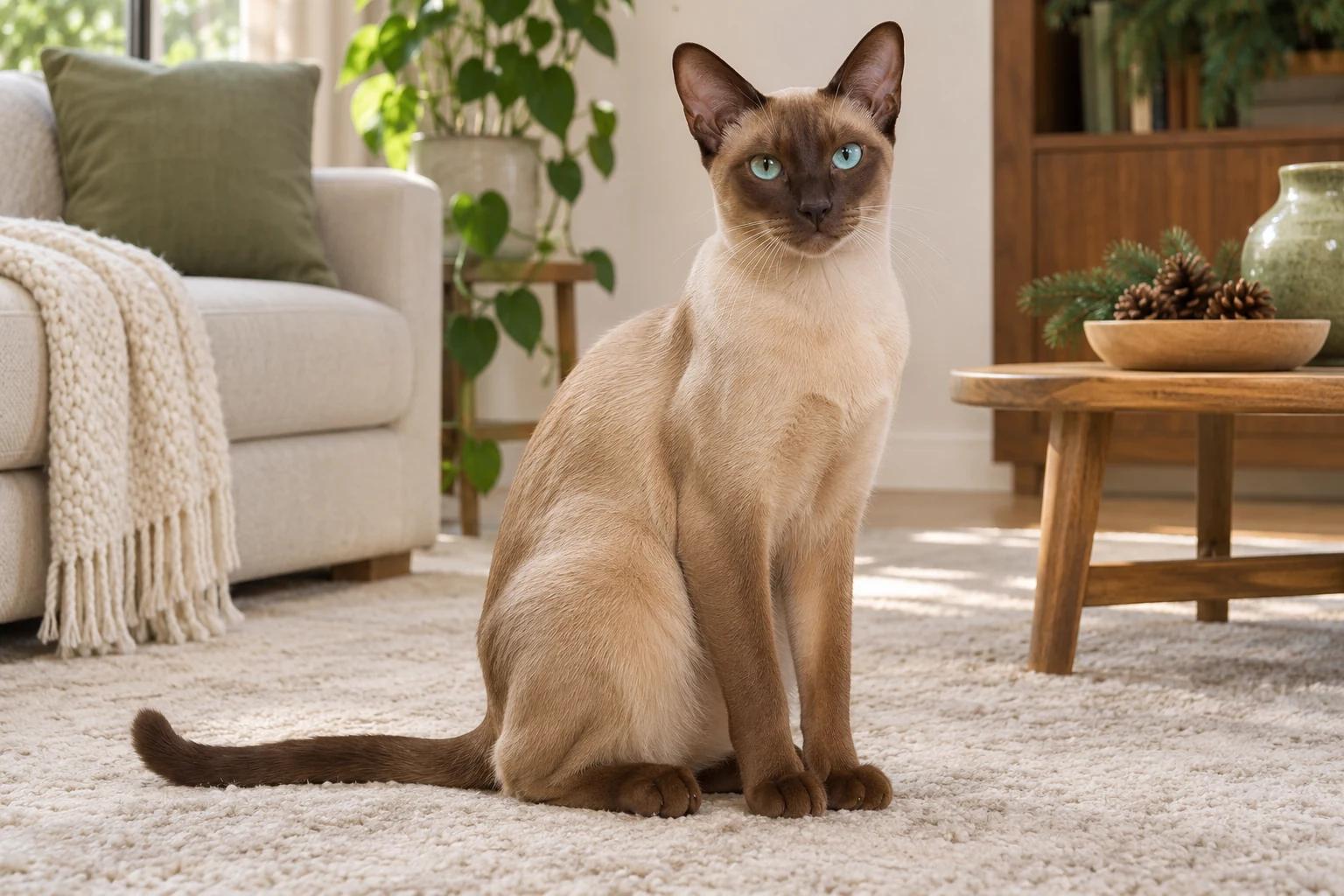
Tonkinese cat temperament is described by CFA through outgoing interest, companionship and vocal communication. Those tendencies can appeal to a household wanting an engaged cat, but they need to be translated into daily responsibilities. An animal joining a task may want attention, observation or play without wanting to be held, and a quiet first visit cannot promise future silence.
This guide explores tonkinese cat personality through ordinary interaction. It stays separate from the existing toy-storage guide and avoids turning an affectionate reputation into guaranteed compatibility with every visitor, child or resident pet.
Tonkinese cat temperament: ask what involvement looks like
The Tonkinese profile retains sociable, talkative tendencies alongside individual introductions. Ask the caregiver what happens while a familiar person works, reads or prepares to leave. A concrete example is more useful than selecting the adjective you most want to hear.
CFA describes a cat interested in household activity. That can mean watching nearby or following between rooms; it does not mean every individual will participate in the same way. Ask where the animal chooses to rest when interaction pauses.
During a meeting, let it approach without an immediate demand for touch. Ask whether the setting and response are familiar. One sample can inform a conversation while leaving room for behavior in a different home or routine.
Talk about sound before commitment
Vocal communication is a reason for an honest household discussion. Explain work calls, sleep patterns and other people's preferences rather than assuming a cat can be adjusted to a desired volume. Ask how calling fits the animal's familiar day.
Keep the context attached to an observation. Calling when someone returns differs from a new sound during rest, and one recording does not represent every future situation. Avoid a promise that another pet or a particular toy automatically resolves unwanted sound.
If the pattern changes suddenly or raises concern, contact the veterinary team. A talkative reputation cannot establish the cause. This article gives no suppression method or treatment plan for a vocal behavior problem.
Let affection include a pause
A cat may enjoy a lap or shoulder in familiar circumstances and still decline lifting by a guest. Nearby company, touch and carrying remain different experiences. Ask how the individual requests contact and signals that it wants a break.
Respect departure instead of bringing the animal back for another person's turn. Adults should explain resting-place boundaries to children and visitors. The cat should not need to tolerate repeated handling to prove it is a friendly companion.
A meeting without touch can still be useful. Observe how the animal investigates and settles, and learn the caregiver's account of accepted contact. An outgoing breed description should make the questions clearer, not remove the individual's choices.
Give active interest a suitable environment
The profile supports climbing, puzzles and reward-based games. Ask which opportunities the cat understands and returns to. A complicated device is not automatically more meaningful than a familiar game with a person.
FelineVMA's indoor-cat guidance joins activity with retreat and resources. Review access around the room, including whether another pet can block the only desirable viewpoint or resting route. The number of toys purchased is less useful than the choices the animal can actually use.
Follow installation and load instructions for furniture. Keep essentials accessible without a difficult physical challenge, and seek advice about changed movement. An intelligent reputation does not certify equipment or justify a performance test.
Plan for the ordinary working week
Discuss how company and care are provided when household members are busy. Ask what the current routine looks like during absences and who can offer backup. A plan built only around an unusually free weekend may not describe what you can maintain.
Another animal is not an automatic solution to companionship needs. Learn the actual histories and seek guidance about introductions before arranging contact. Both residents need usable resources and retreat while the relationship is assessed.
If the household routine creates persistent difficulty, obtain appropriate veterinary or qualified behavior advice. A general temperament guide cannot diagnose a problem or promise that a new purchase will solve it.
Include necessary care in the relationship
Tonkinese cat characteristics include a short, close coat, but care still involves handling. Ask which tool is familiar and where help is available. Enjoying ordinary petting does not establish acceptance of every grooming position or caregiver.
If a familiar response changes, describe what happened and seek advice where appropriate. Avoid labels such as stubborn or ungrateful. A new difficulty with a tool should not redefine the whole personality or be dismissed because the animal usually seeks company.
Keep observations available to everyone helping. When different people see separate parts of a change, an agreed way to communicate can prevent each part being explained away in isolation. The purpose is appropriate care, not a home diagnosis.
Keep expectations grounded in the individual
The existing Tonkinese toy-safety article addresses supervision and storage of equipment. It can support an activity discussion but cannot establish that a playful cat will remain occupied whenever the household is unavailable.
Use the cat quiz to organize broader preferences. Bring those answers back to the actual animal's routine, accepted contact and support needs. Ask which responsibility a new household is most likely to underestimate.
An honest account can include limits and inconvenient work alongside affection. That information helps you decide responsibly without requiring the animal to perform a permanently sociable role. The useful relationship gives both involvement and withdrawal a place in ordinary life.
Frequently asked questions
Are all Tonkinese equally vocal?
No individual volume or pattern is guaranteed. Ask about familiar daily circumstances and seek advice about a new or concerning change.
Does a social reputation mean carrying is welcome?
Not automatically. Proximity, petting and lifting are different experiences. Learn the actual preference and protect the option to leave.
Will another pet automatically meet company needs?
No. The individuals, support schedule and introduction arrangements need assessment. A breed description cannot promise compatibility.
Should a changed handling response be called temperament?
Not automatically. Describe the change and seek appropriate veterinary advice rather than persisting through difficulty or assigning a personality label.
Sources behind this article
Article source checked: November 20, 2026. Source checked 2026-11-20
Keep reading

American Bobtail cat temperament
Read article →