Standard Schnauzer Training: Skills for Daily Life
Explore Standard Schnauzer training through reward markers, leave it, backward movement and thoughtful socialization, with practical starting steps.
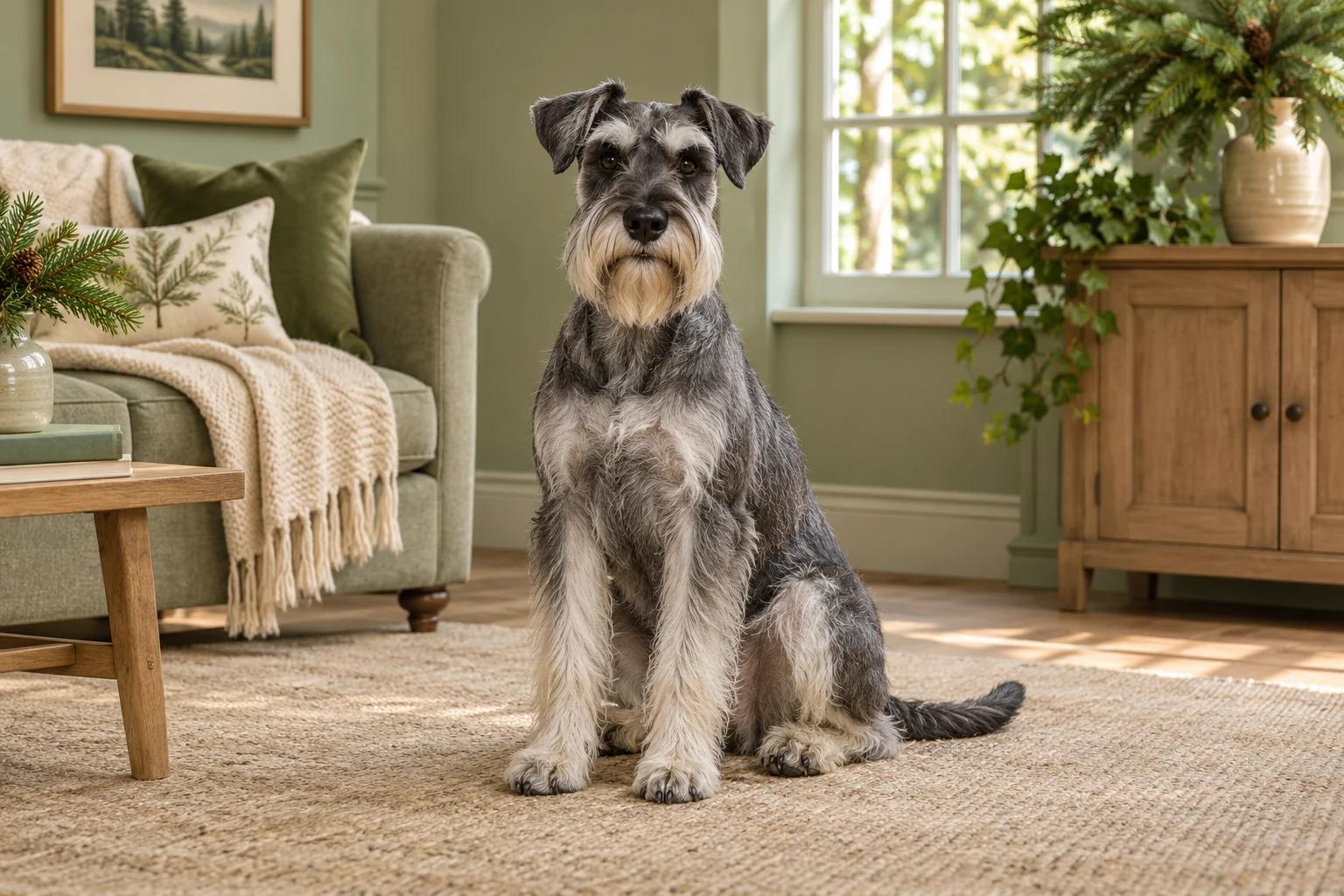
Standard schnauzer training is part of choosing this breed, not an optional addition to its appearance. The Standard Schnauzer profile places mental engagement at 5/5, family affection at 5/5 and activity at 3/5. Those references describe different commitments. A household attracted to a medium-sized companion should consider the mental component alongside the physical one. The following lessons offer concrete starting points rather than a promise that every individual will learn at the same speed.
Standard Schnauzer training with a clear reward marker
Battersea explains that a clicker marks the precise action that earns a reward. First pair the sound with food in a quiet setting. Once the dog anticipates the reward, use the click during a familiar action before attempting a new skill. Battersea: clicker training.
Practice your timing away from the Schnauzer first. For example, click as a dropped ball touches the floor. With the dog, mark the action you actually want, not a later bark or bounce. Follow every click with a reward, including an accidental click; the sound must retain its meaning.
For a new mat exercise, reward looking toward the mat, then approaching it, then placing paws on it. Increase the requirement in small steps instead of waiting silently for the complete finished position. Keep the clicker beside you rather than pointing it at the dog's face. If its sound worries your dog, try muffling it; use a marker word instead if the sound remains uncomfortable. This makes timing and communication more important than the particular gadget in your hand.
Teach disengagement before testing tempting objects
The AKC first teaches waiting for permission around food in the hand. Its leave-it exercise then puts safe food on the floor beneath a covering hand. Reward the moment the dog stops investigating with a different treat, not the protected practice item. AKC: teaching leave it.
Gradually uncover the practice food, ready to cover it again if necessary. Continue rewarding disengagement from your other hand. Add the verbal cue once the response is becoming predictable. Do not begin beside discarded food on a busy pavement.
For a Schnauzer learning around household distractions, separate the protected practice item from the reward it can actually receive. Later, rehearse in different places and with other safe objects. A leash can prevent access during controlled practice without becoming a means of dragging the dog away. If the distraction is too difficult, make the lesson easier rather than repeating the cue. Training does not make genuinely dangerous objects suitable practice equipment; keep those inaccessible. Disengagement is a learned response, not permission to stop managing hazards.
Build backward movement one foot at a time
The AKC describes teaching backward movement beside a wall or fence, using a food lure near the nose to encourage a small movement backward. Reward a foot moving in the desired direction before asking for a whole step. AKC: teaching back up.
For a Standard Schnauzer, choose a comfortable, unobstructed space with secure footing. Work alongside the dog rather than marching into it. Move the lure only slightly; this is an invitation to shift weight, not pressure against the muzzle. Once one step is repeatable, gradually ask for two and then three. Introduce the verbal cue after the movement is understood.
A nearby boundary helps explain straight movement, but it should not trap the dog. Avoid squeezing it into a gap or using your body to force retreat. The useful challenge is awareness of where the feet are going. Backing beside you also differs from backing while facing you, so do not assume that success in one position automatically transfers to the other. Keep the first attempts small enough that the dog can find the answer without being crowded.
Standard Schnauzer socialization is broader than greetings
AVSAB describes socialization as positive exposure to people, animals, places and varied experiences, without overwhelming the puppy. Its position statement emphasizes early opportunities while also encouraging continued exposure beyond the earliest developmental period. Discuss appropriate outings and class health requirements with your veterinarian. AVSAB: puppy socialization.
A Schnauzer puppy's learning can include investigating a different safe surface, hearing an unfamiliar everyday sound at a comfortable level, or exploring a new setting without having to greet everyone in it. Exploration and contact are not the same requirement. Withdrawal or excessive fear is a reason to reduce the challenge, not to hold the puppy in place until it gives up.
Choose reward-based classes with suitable hygiene arrangements rather than substituting uncontrolled contact with unknown dogs. The statement also includes opportunities for independent play and rest, not an uninterrupted stream of encounters. If your puppy shows fear, seek veterinary guidance. Early experience matters, but a birthday does not mark the end of learning or justify rushing through a frightening encounter to complete a checklist.
Match the commitment to the actual Schnauzer
When considering how to train a standard schnauzer, distinguish adult size from ownership demands. The profile lists females at 30–45 pounds and males at 35–50 pounds. That is not a tiny companion, but neither weight range tells you how much interest an individual will take in working with you. Mental engagement and physical bulk answer different questions.
The profile also places playfulness at 4/5 and watchfulness at 5/5. Someone drawn mainly to the beard and eyebrows should consider those behavioral references before choosing the breed. Standard schnauzer obedience is only one part of living with the whole dog; appearance does not describe the daily relationship.
Use the breed quiz to consider that broader fit. For a distinct sporting question, read the Barn Hunt and Earthdog guide, rather than assuming all activities with similar names have the same eligibility.
Frequently asked questions
Is adult weight a measure of training commitment?
No. The profile's female range is 30–45 pounds and male range 35–50 pounds. Weight describes size, while the separate mental-engagement reference is 5/5. One cannot substitute for the other.
Does moderate activity mean little interest in mental work?
No. The profile lists activity at 3/5 and mental engagement at 5/5. A household should consider both categories rather than judging the breed from physical activity alone.
Is the breed's appearance enough to judge its fit?
No. Alongside its distinctive appearance, the profile describes family affection at 5/5, playfulness at 4/5 and watchfulness at 5/5. Those references make the relationship and behavioral commitment important parts of the decision.
Sources behind this article
- Battersea: clicker training ↗
- AKC: teaching leave it ↗
- AKC: teaching back up ↗
- AVSAB: puppy socialization ↗
Article source checked: November 16, 2026. Source checked 2026-11-16
Keep reading

Affenpinscher Training: Build Useful Everyday Habits
Read article →