Sphynx Cat Training: Teach a Voluntary Move Between Familiar Places
Plan Sphynx cat training with manageable movement, appropriate rewards and consistent signals while keeping skin care and safety separate.
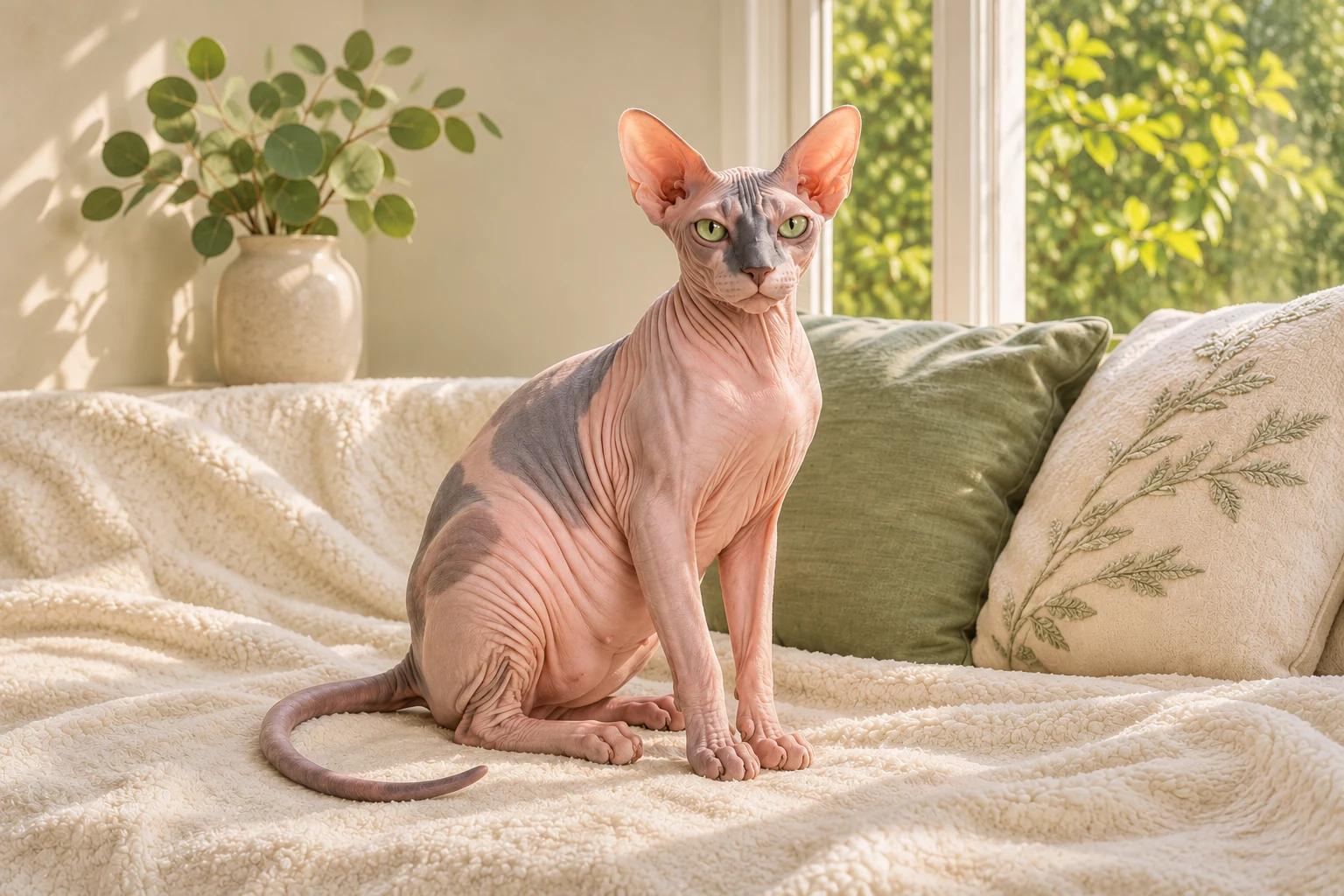
Sphynx cat training can help make an everyday invitation clearer without turning an active, social animal into a performer. One useful idea is a voluntary move between two familiar, suitable places in a quiet room. The task should be easy to understand, with essential resources and physical safety independent of whether the cat responds.
This guide considers how to train a sphynx cat using manageable steps and appropriate rewards. It provides no jumping challenge, skin-care procedure or treatment plan, and it does not make a successful cue proof that a particular environment is comfortable.
Sphynx cat training: choose places the cat already uses
Begin by identifying two ordinary positions in the same suitable space. They need not be elevated or far apart. Ask whether the cat already moves between them willingly, and seek veterinary advice if movement or comfort is uncertain.
The Sphynx profile supports small, reward-based tasks. FelineVMA's training guidance explains breaking learning into manageable parts. Apply that to an understandable voluntary movement rather than a vague demand to behave or come whenever called.
Keep the first goal modest. A step toward the destination may be enough to recognize initially. The animal should not have to complete a difficult route before you acknowledge that it is beginning to understand.
Prepare the setting and the person
Choose a quiet opportunity when the cat is awake and comfortable. Keep competing animals away from the exercise and make sure retreat remains usable. Ordinary food, water, litter and rest should not depend on completing the invitation.
Have a suitable reward ready. Food, if used, needs to fit the current care plan; ask the veterinary team about restrictions or concerns. Touch is only an appropriate reward when the individual welcomes it in that setting.
Prepare your own timing before presenting several signals. If you are finding supplies while the cat moves, it becomes easier to acknowledge an unintended action. A simple setup helps keep the information clear without requiring a formal-looking training session.
Build the movement from a voluntary choice
Notice the animal orienting or taking an ordinary step toward the familiar destination. Acknowledge the intended response promptly rather than physically placing it there. Being carried into position is not the same as choosing the action.
FelineVMA describes shaping through small steps. Keep changes manageable and seek qualified help if you are unsure how to progress. A longer distance, a new surface and an unfamiliar person are separate demands; adding all of them after one success can make the next attempt confusing.
Let the animal finish. An opportunity can end without a final repetition or a completed route. Do not fetch the cat from a resting place to obtain a tidy conclusion for the person keeping notes.
Give the signal one meaning
Once the response is becoming understandable, agree on a consistent invitation with anyone helping. At this stage it concerns a particular voluntary move in a particular setting. It does not mean being lifted, staying for cleaning or following through every room.
Keep a short note of what was actually learned. That might be a step toward a nearby familiar surface with a particular caregiver. Such a note is more informative than writing trained, which can lead another person to expect much more.
Avoid having several people call at once to test attachment or obedience. The exercise is communication with the individual, not a contest over whom it loves most. New caregivers need their own suitable introduction.
Keep skin contact out of an unrelated learning step
Sphynx care includes an individual skin routine. A cat approaching a place or person has not automatically accepted a product, wiping or bathing. Those tasks need appropriate professional guidance and should not be added unexpectedly after a movement cue.
Ask the veterinary team about cooperative care if a necessary task is difficult. This guide supplies no restraint method or cleaning technique. Do not use a reward to continue through a response that raises a concern about comfort.
The existing Sphynx room-temperature article addresses another practical responsibility. A completed movement cannot establish that a warming product, sunny surface or room arrangement is suitable. Assess those questions separately.
Do not make reliability the only safety arrangement
A cue should not be the sole protection around an exterior door, uncertain structure or hazardous material. Maintain appropriate physical boundaries even when the animal responds consistently in a quiet room. Do not create danger as a test of training success.
TICA describes curiosity and activity in the breed, but that reputation cannot predict behavior during a distraction. A familiar invitation may support ordinary communication while still having practical limits.
If the cat does not respond, review the task, setting and reward instead of escalating pressure. FelineVMA advises against training animals that are frightened, unwell or painful. Seek relevant advice about a new limitation or persistent difficulty rather than treating every refusal as disobedience.
Keep learning alongside rest and social choice
Sphynx cat socialization is not achieved by requiring every visitor to give a cue. Let the animal choose distance from new people. Adults should guide children and protect resting places instead of arranging repeated performances.
Use the cat quiz to consider the wider interaction commitment. A workable routine includes play and contact the cat chooses as well as optional learning, with appropriate help for care that cannot wait.
Sphynx cat obedience should mean clearer everyday signals within those limits. It does not remove feline needs, establish a fixed learning speed or entitle a household to participation whenever somebody wants a demonstration.
Frequently asked questions
Does this task require jumping between platforms?
No. Choose familiar suitable places and ordinary comfortable movement. Seek veterinary advice where movement is uncertain; this is not an agility or endurance test.
Does approaching a person give permission for skin care?
No. A movement invitation and a care procedure are different tasks. Learn appropriate cooperative care with the relevant professional.
Can a learned cue replace a secure exterior door?
No. Keep physical safety arrangements independent. Do not create a hazardous situation to test reliability.
Should an unsuccessful attempt end with physical placement?
No. Let the opportunity end and review clarity, reward and setting. A person-created position is not a voluntary learned response.
Sources behind this article
Article source checked: November 20, 2026. Source checked 2026-11-20
Keep reading

Abyssinian Cat Training: Useful Skills for an Active Cat
Read article →