Somali Exercise: Build a Play Routine Around the Individual
Plan Somali exercise with familiar play, suitable climbing and individual choice, without quotas, exhaustion goals or promises about behavior.
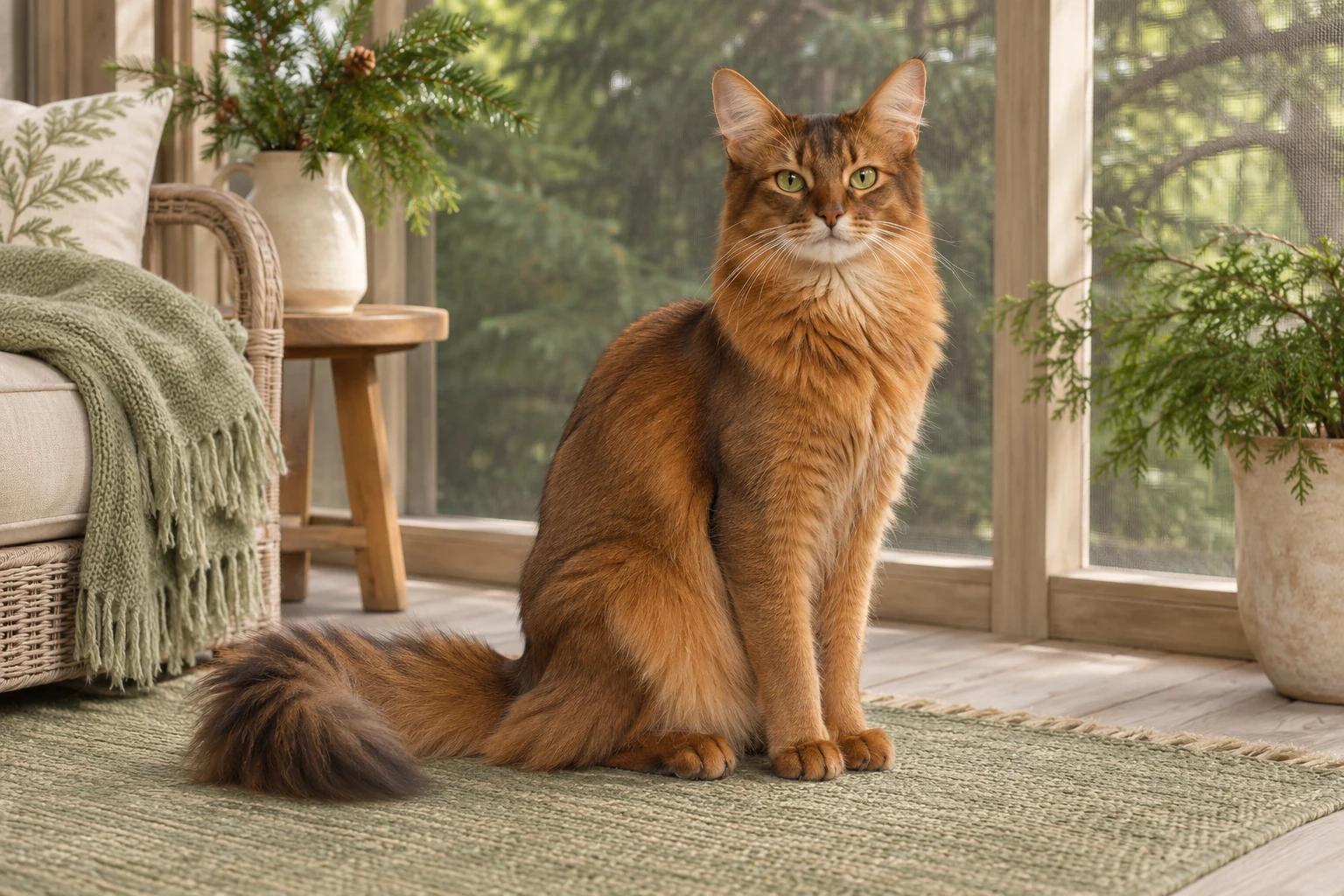
Somali exercise should provide an active, curious cat with opportunities it can choose and a household can maintain. CFA and TICA describe interest in exploration and interaction, while the current profile includes climbing, hunting-style games and suitable puzzles. None of those descriptions establishes a fixed daily duration, jump height or goal of exhausting the animal.
This guide considers somali indoor play outside the busy cooking period covered in the existing article. It focuses on choosing and reviewing ordinary activity, with room for rest and veterinary advice when a familiar pattern changes.
Somali exercise: learn the existing activity before adding difficulty
Ask the caregiver which game the individual returns to, where it happens and what signals the ending. The Somali profile supports varied opportunities rather than judging activity from a single energetic visit. Learn the ordinary routine on a working day as well as a leisurely one.
TICA describes investigation of elevated places; CFA also emphasizes interactive play. Those observations suggest useful questions about the environment, not a requirement to demonstrate the highest possible leap. One lively encounter cannot establish what the animal needs throughout life.
Start with something familiar enough that you can observe the response. Introducing several complicated devices together may make it harder to understand what the cat enjoys or why it leaves. More difficulty is not automatically more useful activity.
Give a movement game a clear route
Before inviting pursuit, look at the space it will use. Keep the route away from hazards and exterior exits, and avoid congested areas where the animal must rush between people or other pets. Prepare the object before play begins.
FelineVMA's play guidance discusses natural play behavior and appropriate toys. Do not use hands or feet as the prey. Allow room for approach, turning and departure rather than moving an object into the cat's face to force attention.
Watch the whole sequence, including the pause after interest. A comfortable, understandable opportunity is more useful than a dramatic pounce staged for a camera. There is no need to keep extending the route to prove the animal is energetic enough.
Assess height separately from excitement
A favored viewpoint can be part of the environment without becoming an exercise challenge. Check support, installation and load instructions for furniture. Consider usable resting space and a manageable route down rather than buying solely for maximum advertised height.
Offer alternatives and keep essentials accessible. An active reputation does not make a difficult jump an appropriate requirement for food, water or litter. Another animal should not be able to control every route to a useful place.
If the cat stops using something familiar or movement looks uncomfortable, seek veterinary advice. Do not test the route again to find out whether the animal is merely reluctant. The environmental question can be reviewed without a home diagnosis.
Vary the purpose, not just the object
For someone asking how to exercise a somali, it can help to distinguish interactive movement, exploration and a suitable independent activity. Several objects that all require the same action may offer less variety than their packaging suggests.
FelineVMA notes individual toy preferences and rotation. Keep a familiar favorite available where appropriate and introduce changes deliberately. You do not need to replace an item because a calendar says it is no longer novel.
A short note can record what the cat chose and how the activity ended. Use it to communicate with another caregiver, not to award the animal an intelligence score. Declining one device does not establish that the cat needs a harder puzzle.
Keep equipment inspection in the routine
FelineVMA warns about string-type materials and loose parts that can be swallowed. Avoid string and yarn as play materials, inspect objects and put damaged or uncertain items out of access. Follow appropriate product instructions and ask for advice when use is unclear.
Do not improvise a repair with a loose attachment and offer it to see whether it holds. A similar-looking component is not automatically suitable. Safe storage and inspection remain separate responsibilities from choosing an enjoyable game.
Adults should guide children's involvement and explain how the activity ends. A child can help prepare and put away equipment without being responsible for keeping the cat moving or deciding whether a changed response is a health concern.
Food opportunities need a dependable care plan
Suitable food-based activity may be one option, but any contents should fit the current diet and instructions. Ask your veterinary team about restrictions. Do not make ordinary meals contingent on solving a new task or use hunger to obtain participation.
In a multi-animal home, establish which individual obtains the food rather than treating an empty device as proof. Keep reliable feeding arrangements and suitable resources available while learning how an activity works.
This article supplies no calorie calculation or weight-loss schedule. Somali activity level is not a treatment plan. Discuss body condition and any limitations with the veterinary team rather than increasing effort to meet an imagined breed target.
Allow rest and keep exercise separate from management
When the cat leaves, let the opportunity end. Do not have a succession of people restart it because each wants a turn. An involved companion still needs undisturbed rest and retreat.
The existing Somali dinner-preparation guide concerns a separate household safety arrangement. A play session cannot guarantee that the cat remains away from hot work afterward. Keep appropriate physical boundaries independent of activity and learned cues.
Use the cat quiz to organize preferences before adoption, then make a plan around the actual animal and the support available. Seek veterinary advice about a new loss of interest, changed movement or other concern. The useful routine offers meaningful choices without turning exercise into a quota, an exhaustion goal or a promise of perfect household behavior.
Frequently asked questions
Is there a universal exercise duration for a Somali?
No fixed duration is prescribed here. Learn the individual's routine and seek advice about limitations or concerns rather than imposing a breed-wide quota.
Should every activity become more difficult over time?
No. A familiar, manageable game can remain useful. Review the animal's response instead of equating difficulty or novelty with quality.
Can play guarantee the cat stays away from cooking?
No. The linked dinner guide addresses a separate safety arrangement. Keep boundaries effective if the cat leaves its activity.
What if the cat stops enjoying a familiar game?
Seek veterinary advice about a new or concerning change. Do not repeatedly test it or automatically increase the demand to obtain a response.
Sources behind this article
- CFA: Somali ↗
- TICA: Somali ↗
- FelineVMA: Playing with your cat ↗
- FelineVMA: Indoor cats position statement ↗
Article source checked: November 20, 2026. Source checked 2026-11-20
Keep reading

American Curl exercise
Read article →