Somali Cat Temperament: An Involved Companion With Its Own Agenda
Explore Somali cat temperament, curious involvement and chosen contact while planning daily care, rest and introductions around the individual.
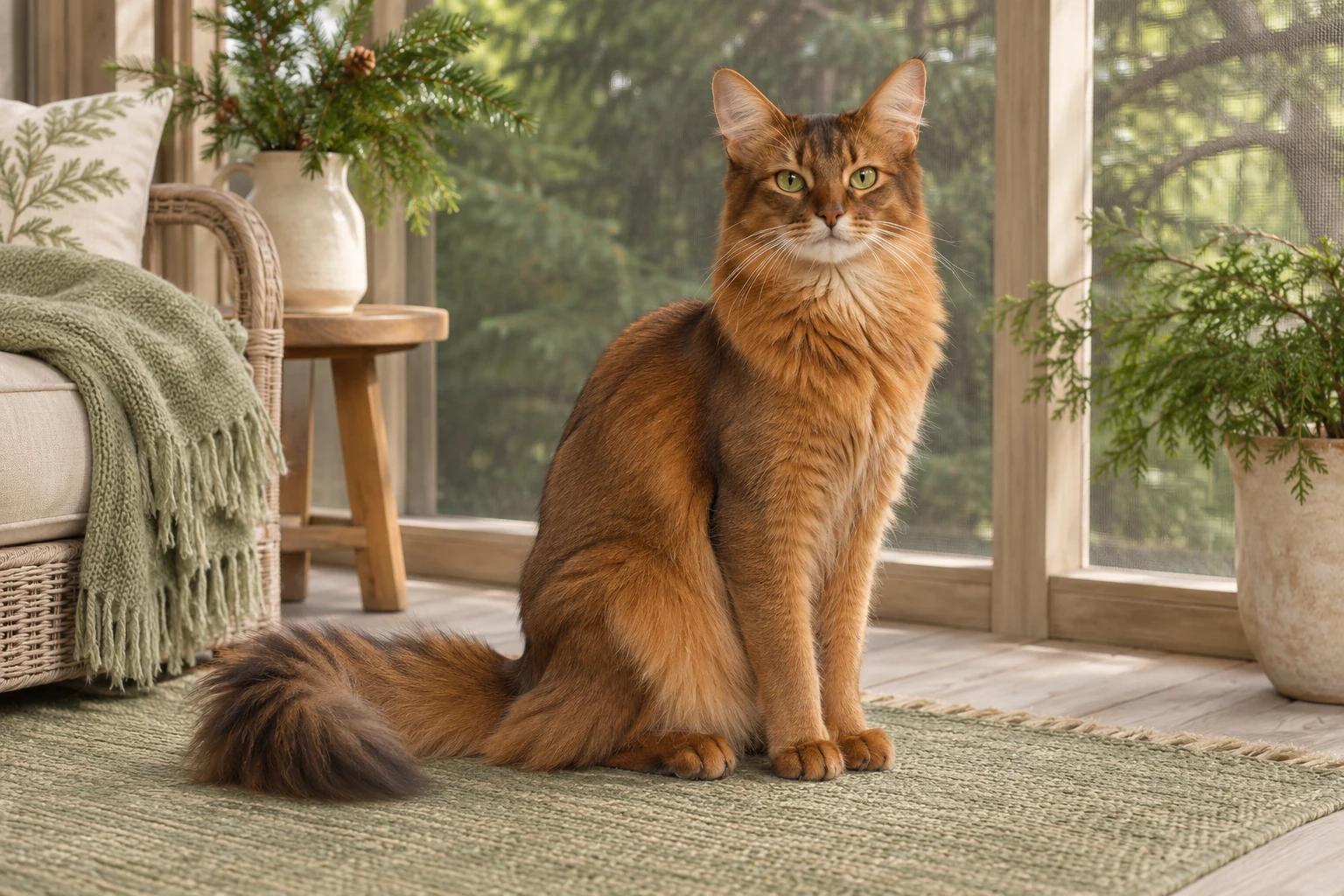
Somali cat temperament is described through curiosity, activity and affection. CFA and TICA both present cats interested in household life, but involvement is not the same as constant availability for touch. A Somali investigating a room may want to see what you are doing without wanting to be picked up, and a resting animal still needs the option to remain undisturbed.
This guide explores somali cat personality as an everyday relationship. It looks beyond the full tail and lively photograph without promising that every individual is bold with visitors, compatible with resident pets or easy to keep occupied.
Somali cat temperament: translate involvement into a real day
Ask the caregiver to describe how the cat participates while someone is working, moving between rooms or resting. The Somali profile retains substantial companionship needs alongside individual variation. Learn which interactions the animal actually seeks rather than choosing from a list of flattering adjectives.
CFA describes interest in cupboards and household activity, while TICA emphasizes exploration and interaction. Those accounts help explain why a new household should prepare thoughtfully. They do not establish that every closed door will be opened or that every individual wants the same amount of company.
Ask about the quieter periods too. How does the cat settle, what remains available during absences and who provides care when the usual person is busy? A workable relationship includes ordinary days, not only the most entertaining moments.
Make curiosity manageable before it becomes conflict
Review storage, exterior exits and attractive work areas in advance. Secure hazards rather than expecting a verbal rule to be the only boundary. A reputation for problem solving is not a reason to challenge the animal with an uncertain latch.
Offer appropriate investigation and resting choices. FelineVMA's indoor-cat guidance connects activity with resources and retreat, so consider access as well as objects. Another pet should not control the only comfortable viewpoint or every route to essentials.
Observe ordinary use without arranging a performance. The cat does not need to explore each new object immediately to demonstrate confidence. If a familiar response changes, seek relevant advice rather than assigning a motive from the breed description.
Affection can arrive in several forms
CFA describes proximity and chosen contact alongside activity. Ask how the particular animal requests attention and what happens when a person pauses. A cat may settle nearby, approach briefly or invite a game rather than remain on a lap.
Let contact finish when the animal leaves. Returning it repeatedly to a visitor can make a friendly reputation depend on tolerating pressure. Explain to children and guests that the coat and tail are not invitations for handling.
Adults should remain responsible for supervision and care. A cat enjoying a familiar person's touch may still dislike lifting or grooming in another setting. Learn those preferences separately instead of using one pleasant interaction as blanket permission.
Look beyond sound when discussing communication
The site's description allows for quieter communication, and CFA notes that interaction is not always vocal. Ask about the actual animal's usual ways of approaching, orienting or requesting an activity. A quiet cat can still need substantial involvement.
Keep observations specific when a concern appears. The cat left a familiar game, changed its route or called in a setting where it usually rested. Those statements provide more useful information than labels such as demanding or stubborn.
Seek veterinary advice about a sudden or concerning change. Do not provoke the event again to obtain a stronger example or assume that every difference is caused by insufficient entertainment. Temperament is not a substitute for individual assessment.
Include coat handling in the companionship conversation
Somali cat characteristics include a semi-long ticked coat and a full tail. The current profile starts with weekly combing and asks for adjustment to shedding, tangles and grooming ability. A lively animal still needs that ordinary maintenance considered before adoption.
Ask for a suitable demonstration and learn where help is available. Acceptance of a cuddle does not establish comfort with every tool or position. If handling is newly avoided or an area seems uncomfortable, obtain appropriate advice rather than treating the response as attitude.
This personality guide provides no mat-removal or bathing procedure. Its purpose is to keep the practical relationship visible: enjoyable company and necessary care both need an arrangement the individual can manage.
Introductions belong to the individuals involved
Ask about previous experience with other cats, dogs and unfamiliar people. A registry description cannot guarantee a particular match. Seek guidance about the actual residents and prepare separation, retreat and independent resources before arranging contact.
Do not let a busier animal determine the whole pace. An apparently confident newcomer still needs choices, and a quiet resident should not have to defend access to essentials. One peaceful meeting does not establish that all management can be removed.
Visitors can meet the cat without touching it. Give them clear instructions about waiting and distance, and protect resting places. The animal should not have to provide an affectionate turn for everyone interested in its appearance.
Be honest about the household routine
Use the cat quiz to organize preferences about daily company and activity. Then explain the real schedule to the caregiver, including work, absences and backup care. Ask which responsibility a new owner is most likely to underestimate.
The existing Somali dinner-preparation article handles a specific busy period. It should not be read as a complete plan for the relationship, and a familiar toy cannot replace dependable support through the rest of the day.
An honest account may include inconvenience or an unresolved question. Keeping that visible helps you decide whether the actual cat's needs fit what you can maintain. The useful expectation is an involved companion with choices, not a permanently entertaining personality shaped around every human preference.
Frequently asked questions
Does an involved Somali always want to be held?
No. Following, observing, playing and lifting are different experiences. Ask about the individual and respect its response to contact.
Does quiet communication mean little companionship is needed?
No. A cat can be highly involved without frequent calling. Learn the actual routine rather than estimating needs from volume alone.
Can curiosity be managed with a cue alone?
Do not rely on a signal as the sole protection around hazards. Prepare suitable storage, boundaries and appropriate opportunities to investigate.
Is compatibility with another pet guaranteed?
No. Assess the individuals and plan introductions with appropriate guidance, separate resources and usable retreat.
Sources behind this article
Article source checked: November 20, 2026. Source checked 2026-11-20
Keep reading

American Bobtail cat temperament
Read article →