Sokoke Cat Temperament: Strong Bonds and a Patient Transition
Explore Sokoke cat temperament through strong relationships, activity and vocal interaction, with patient preparation and individual choice.
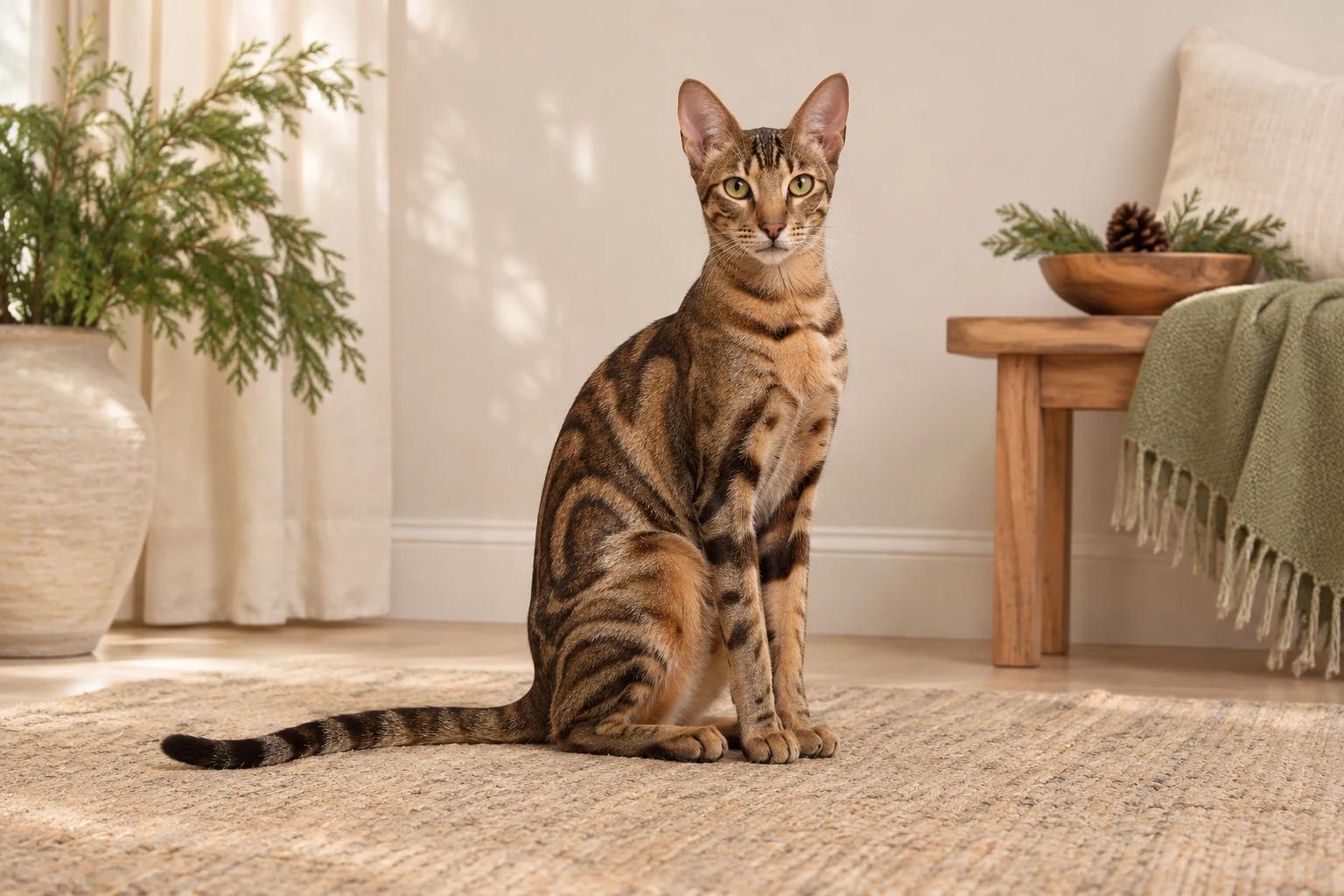
Sokoke cat temperament is described by FIFe through activity, climbing, vocal interaction and strong relationships. Its account also includes an important qualification: rehoming can involve a longer adjustment for adults and older kittens with established bonds. That is a reason to plan thoughtfully, not a promise that a particular cat will settle in a fixed number of days or always greet strangers confidently.
This guide explores sokoke cat personality through continuity, ordinary communication and individual choice. It keeps the household relationship separate from the existing outdoor-access article and avoids turning a breed's natural-history description into an ownership guarantee.
Sokoke cat temperament: begin with the existing relationships
Ask the current caregiver which people and animals are important to the individual. FIFe's description of deep bonds gives that question a concrete purpose. Learn how the cat behaves with familiar companions before deciding what an unfamiliar visitor's experience means.
The Sokoke profile asks owners to preserve predictable routines during a move. Discuss actual relationships with the rehoming organization and seek its guidance about any bonded group. Do not infer from a generalized article that an animal should be separated or that introducing a new companion will automatically replace an old one.
A useful account includes ordinary habits and difficult moments. Ask what the caregiver most wants the new household to understand. An honest qualification can be more helpful than a cheerful assurance that the cat loves everyone.
Leave room for a transition without making a timetable
Prepare a quiet starting space with suitable resources and undisturbed retreat. Learn the familiar arrangements and care instructions before changing multiple things at once. The cat does not need to explore the whole home or meet every resident immediately.
FelineVMA's indoor-cat guidance treats safe places and predictable positive interaction as part of the environment. Think about how those choices remain usable when visitors arrive or work schedules change. A quiet room loses its purpose if everyone repeatedly enters to obtain a greeting.
Do not translate a cautious first day into a permanent personality judgment. Equally, do not promise that patience alone resolves every concern. Seek veterinary or appropriately qualified behavior advice where the animal's condition or adjustment raises questions.
Interpret calling through context
FIFe includes vocal interaction with people and other cats in its breed description. Ask what the individual normally does and when. A sound accompanying a familiar greeting is a different observation from an unexplained change during rest.
Keep notes concrete if a concern develops: the setting, what changed and other ordinary observations. Avoid deciding that every sound means attention-seeking or that the cat is being difficult. The breed label cannot identify the cause.
Contact your veterinarian about a sudden or concerning change. Do not deliberately produce the situation again to obtain a more convincing recording. Existing observations may help the professional conversation without turning the household into a diagnostic experiment.
Give climbing a usable place in daily life
The registry account emphasizes activity and enjoyment of climbing. Ask which structures the individual already uses and how it travels between rest and resources. A familiar route can tell you more than the tallest jump someone has photographed.
Follow installation and load instructions for equipment. Provide manageable alternatives and a way down, and do not make an essential resource depend on completing a physical challenge. Another pet should not control every access point.
Observe chosen activity without extending it to demonstrate the breed's energy. A cat can enjoy exploration and still need uninterrupted rest. Seek advice about changed movement rather than testing whether the animal can still perform an athletic reputation.
Contact should remain the animal's choice
A strong bond does not mean accepting every form of handling. Following a person, sitting nearby and being lifted are different experiences. Learn the contact the cat seeks, then notice how it chooses to finish.
If it leaves, allow that departure. Repeatedly bringing it back to a visitor's lap turns affection into an expectation of tolerance. Adults should supervise children and explain the resting places that remain undisturbed.
Ask about necessary care separately. A cat that welcomes touch in one setting may need a different arrangement for a grooming tool or transport. If familiar handling becomes newly difficult, seek appropriate advice rather than redefining the whole temperament.
Introductions are not a test of the description
Sokoke cat characteristics can provide a broad starting point, but compatibility belongs to the actual individuals. Ask about previous contact with other animals and the circumstances. A comfortable relationship in one home does not certify a new resident or a different arrangement.
Prepare separation and resources with suitable guidance. Do not let the more enthusiastic animal decide the pace, and do not remove management after one apparently peaceful encounter. Each animal needs access to rest and essentials while the relationship is assessed.
Visitors need a plan too. They can observe without touching, wait at a distance or leave the cat alone. A visit that respects withdrawal can be useful even when it produces no affectionate photograph.
Make companionship sustainable
The existing Sokoke outdoor-plan article addresses a separate environmental decision. Secure access, if appropriately arranged, cannot replace the relationships and daily care discussed here. A forest-related name does not tell you how long the cat can be left without support.
Use the cat quiz to organize wider preferences, then explain the household's real schedule to the caregiver. Include absences, busy periods and who provides backup. Ask what continuity can be maintained rather than promising an ideal day nobody can repeat.
A sustainable plan can accommodate company, activity, rest and a slower transition where needed. It respects the individual without treating either initial confidence or initial caution as a final answer. The useful relationship develops through understood responsibilities, not a timetable attached to a breed name.
Frequently asked questions
Does strong bonding mean a move will be easy?
Not necessarily. FIFe specifically notes that established relationships may make rehoming adjustment longer in adults and older bonded kittens. Plan for the individual without a fixed deadline.
Does vocal behavior always mean attention-seeking?
No. Describe the context and seek veterinary advice about a new or concerning change. A breed tendency cannot establish the cause of a sound.
Should a Sokoke demonstrate climbing during a visit?
No performance is required. Learn familiar activity and assess equipment appropriately without provoking a physical test.
Does an affectionate relationship imply acceptance of carrying?
No. Proximity, touch and lifting are different experiences. Respect the animal's preferences and learn necessary care separately.
Sources behind this article
Article source checked: November 20, 2026. Source checked 2026-11-20
Keep reading
Sokoke Cat Size: A Lean Build Without an Invented Measurement Chart
Read article →