Small Munsterlander Training: Build a Working Partnership
Develop Small Munsterlander training with clear lessons, beside-you walking, simple movement games and comfortable handling practice.
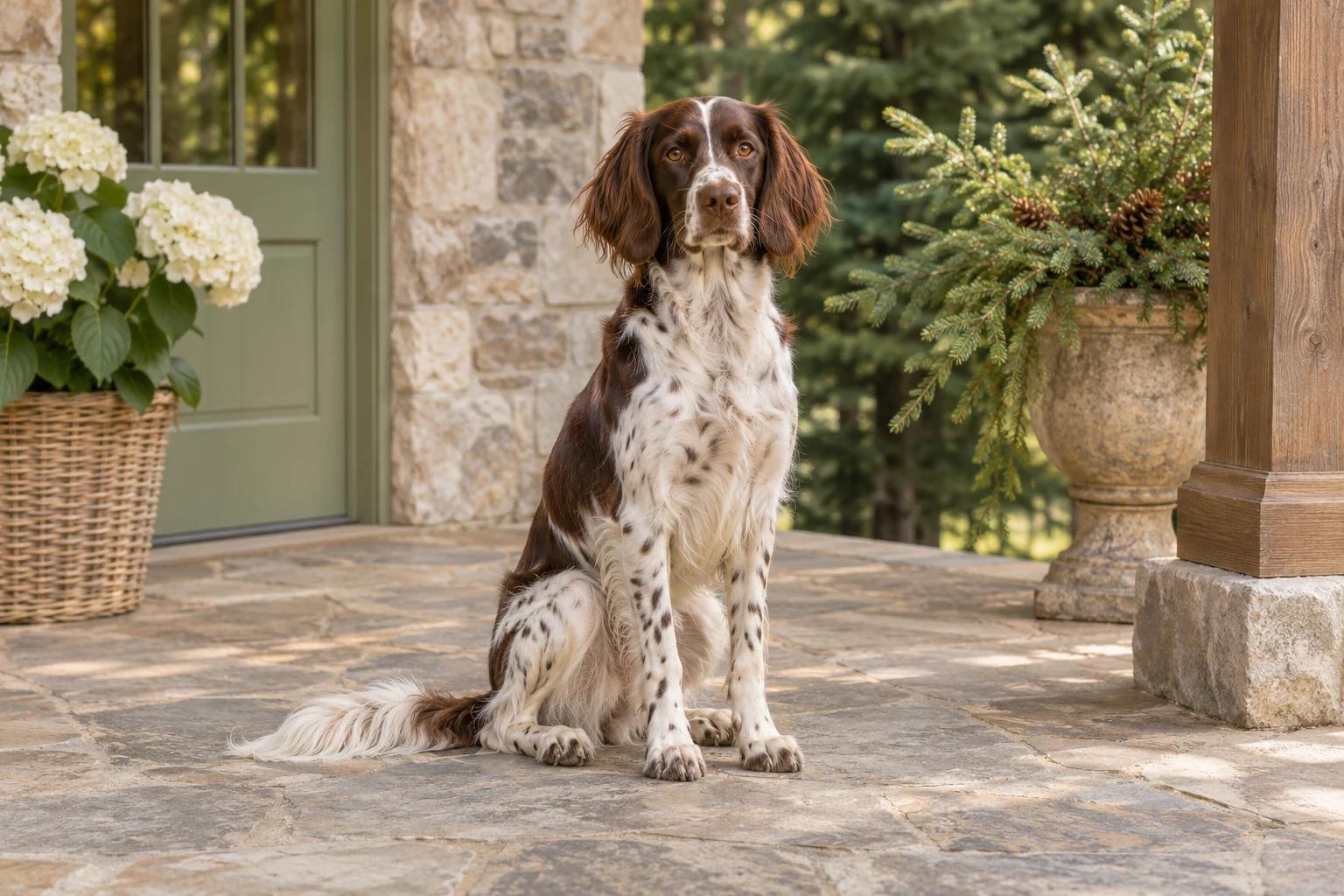
Small Munsterlander training is an important part of the companionship this breed offers. The breed profile gives responsiveness to training its highest rating and places mental engagement toward the higher end. For someone who enjoys teaching, those tendencies can be appealing. They are not a substitute for teaching the actual dog.
Small Munsterlander training: teach before testing
The Small Munsterlander Club of America advises teaching first, then practicing in different places and at different difficulty levels before testing a response. It also cautions against excessive repetition of drills.
That distinction matters when a dog appears talented early on. Understanding a lesson in one familiar place does not prove it can perform amid every distraction. Give the youngster a genuine learning stage rather than repeatedly setting difficult tests. Consistency need not mean making the dog repeat the same exercise until interest has disappeared.
Build a place beside you
For everyday Small Munsterlander obedience, walking near you can be taught as an inviting position rather than enforced by pulling. AKC trainer Christie Canfield's lesson starts indoors with small rewards and enough space to move.
Call the dog and indicate the side where you want it to join you. Mark and reward its arrival beside you. After a few repetitions, allow it to find that position voluntarily and reward again. Deliver the reward with the hand nearest the dog, so it does not need to cross your path to collect it.
As the position becomes familiar, gentle changes of direction give the dog opportunities to find it again. Keep the reward hand up near your chest between deliveries rather than dangling food just out of reach and inviting jumps. This is a learning game, not a reason to march around until either partner is frustrated. It gives your Munsterlander a clear location to choose and you a clear behavior to acknowledge. Practice in a secure area; an indoor lesson does not replace the need for appropriate management outside.
Use a simple movement lesson
Learning how to train a Small Munsterlander can include an uncomplicated trick, without turning every session into a test of advanced performance. The AKC spin lesson uses a food lure moving in a broad circle so the dog follows with its body.
Choose a clear, nonslip area and use a comfortable arc, not a tight twist. Bring the dog's attention to the treat, move it slowly around and reward the completed turn. Once the movement is predictable, add a spoken cue. Work toward the same hand movement without food visibly held in it, rewarding afterward.
Keep this brief and optional. The goal is understanding a movement cue, not fast spinning or a long sequence of repeated circles. If turning looks uncomfortable, stop and ask your veterinarian about suitable activities rather than trying to coax through difficulty. A simple trick lets you notice your own timing: whether your hand actually describes a followable path and whether the reward arrives when the requested movement is complete. Clarity matters more than spectacle.
Include comfortable handling in social experience
Small Munsterlander socialization should include preparation for ordinary care, not only outings. Cornell's veterinary-visit guidance recommends practicing comfortable handling at home with rewards and allowing the dog to move away.
Start with an area the dog already accepts being touched, rather than immediately attempting a full examination. Briefly touching a paw or ear and rewarding the interaction can be part of this preparation when the dog is comfortable. If it withdraws, make the next step smaller and slower instead of holding it in position. Ask the veterinary team or a humane trainer for help if you are unsure how to begin.
The clinic itself can also become familiar before treatment is needed. Arrange a quiet introductory visit with the practice, beginning outside if that is what the dog can comfortably manage, and pair the experience with suitable rewards. A dog that learns sporting exercises readily may still need this kind of preparation. Training ability does not automatically make unfamiliar handling easy, and consent to a brief touch is not consent to an entire procedure.
Match the learning to the companion
The Atlas reference gives the Small Munsterlander strong family affection, but only a middle playfulness rating. These are useful distinctions for an owner thinking about motivation. Enjoying involvement with you does not mean wanting the same toy game on every occasion, and interest in learning is not identical to a wish for constant entertainment.
Consider which aspects of dog ownership you genuinely enjoy. If you like helping a dog understand new tasks and noticing the differences between its responses, this profile may appeal. If training feels like an inconvenience to finish once, the high responsiveness rating is not a reason to assume there will be little to do.
The activity rating is also relatively high. Mental engagement and physical activity are separate entries because one score cannot describe the whole day. Do not interpret a successful lesson as proof that all the dog's other needs have been addressed, or assume that an active outing automatically supplies the teaching you value.
This breed's lower grooming-frequency rating and lower vocal tendency may be attractive practical features, but neither removes the need for interaction. The strongest match is with someone who wants the involved companion described by the whole profile, not someone selecting a single convenient trait. The dog quiz can help compare those preferences with other breeds.
For background on the breed's development, see the existing history article. Historical milestones and the education of a particular dog answer different questions; the latter depends on the experiences you share now.
Frequently asked questions
Does a high training rating mean a puppy arrives obedient?
No. The profile describes a tendency toward responsiveness, not completed education. An individual dog's history and current skills still matter. Choose the breed because you welcome an interested learning partner, not because you expect the teaching to have happened automatically.
Is playfulness the same as interest in learning?
No. The profile rates training responsiveness more highly than playfulness. A dog may be interested in interaction without wanting every exchange to become a toy game. Pay attention to the individual rather than assuming one style of engagement fits every situation.
Is training the only major commitment with this breed?
No. The profile also records relatively high activity needs and strong family affection. Those are separate parts of companionship. Someone who enjoys teaching but wants little involvement outside lessons should consider the whole profile before deciding this is the right match.
Sources behind this article
- Small Munsterlander Club of America: general characteristics ↗
- AKC: walking beside the handler ↗
- AKC: teaching a spin ↗
- Cornell: less stressful veterinary visits ↗
Article source checked: November 16, 2026. Source checked 2026-11-16
Keep reading

Affenpinscher Training: Build Useful Everyday Habits
Read article →