Slovensky Kopov Training: Attention, Trade and Discovery
Build Slovensky Kopov training around clear attention cues, safe trades, scent-work opportunities and comfortable early experiences.
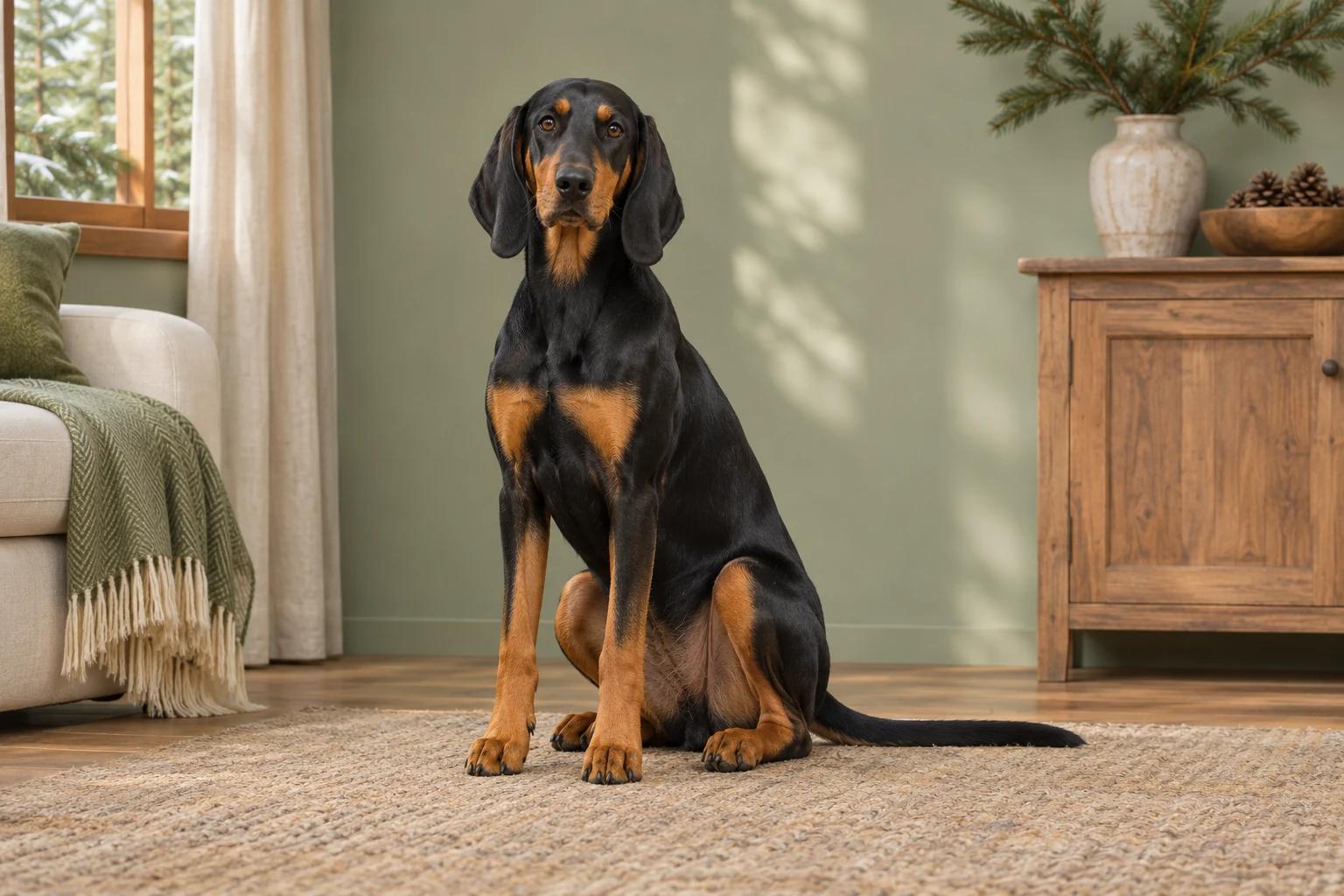
Slovensky Kopov training is part of living with the breed, not an optional extra reserved for competition dogs. The Slovensky Kopov profile records relatively good responsiveness to training alongside strong family affection. That is an encouraging starting point for someone who enjoys teaching, but it does not describe a dog arriving with household skills installed.
Slovensky Kopov training starts with a useful glance
An attention cue gives you a specific response to teach rather than an undefined demand to “listen.” The AKC's watch-me lesson starts in a quiet setting, using a treat moved from the dog's nose toward the handler's eyes. Mark the resulting look and reward it.
For your Kopov, work toward the same response to an empty hand, with the reward coming from the other hand. Once the gesture is familiar, introduce the spoken cue before it. The food need not remain permanently displayed beside your face for the lesson to work.
Do not turn this into a staring contest. Some dogs find eye contact uncomfortable; keep your manner relaxed and pause if the dog deliberately looks away. Add distractions gradually after the quiet version is established. If the response disappears, return to an easier setting instead of interpreting the mistake as a challenge. Slovensky Kopov obedience becomes more concrete when you can identify the precise response being taught and adjust the difficulty, rather than judging the dog's entire attitude from one unsuccessful cue.
Teach a voluntary trade
Learning how to train a Slovensky Kopov should include releasing an object without a contest. The AKC's drop-it guidance uses an exchange: start with a safe, relatively unexciting toy and offer a more appealing food reward.
When the dog releases the toy, mark that moment and deliver the reward. Pick up the toy while the dog eats, then offer the safe toy again. Repeatedly getting the toy back helps make the exchange worthwhile. Add the cue once release is predictable, and gradually work toward saying it before revealing the reward.
Do not begin with something dangerous or highly guarded. Chasing a dog carrying an object can turn the event into a game or encourage swallowing; prying its mouth open creates additional risk. A Kopov that guards possessions needs professional guidance before practicing these exercises. The lesson is cooperation around a permitted object, not a demonstration that a person can forcibly take anything. Giving a safe toy back during practice does not mean returning an unsafe item that the dog happened to find.
Let searching become a shared skill
AKC Scent Work offers a structured way to develop searching and communication. The dog locates a target scent and tells the handler where it is; the handler learns to recognize that information rather than directing every movement.
For a Kopov owner, that is an interesting contrast with an attention exercise. Here, looking away from you and investigating the search area is part of the assignment. The handler's job changes with the task. A dog should not be considered inattentive simply because it is doing the searching it was invited to do.
The sport includes container, indoor, outdoor and buried searches, with increasing difficulty. A beginner class can help you learn the foundations and recognize the dog's indication without rushing into complex hides. Keep unfamiliar scent materials under knowledgeable instruction rather than improvising with household fragrances. You do not need a title as your immediate goal; learning how the team communicates can itself be rewarding. Contact the organizing club for event requirements if competition later becomes appealing, because informal practice and entering a trial are different steps.
Make early experience comfortable
Slovensky Kopov socialization involves more than meeting other dogs. Dogs Trust's puppy guidance includes people, objects, surfaces, sounds and handling, introduced gradually while the puppy is comfortable.
A folded umbrella resting at a distance is a different experience from one suddenly opening overhead. Similarly, an inactive vacuum is an easier starting point than a moving, noisy machine. Give the puppy time to notice these ordinary objects, with enjoyable rewards, rather than repeatedly bringing the object toward its face. Stop when worry or excessive arousal appears.
Include calm observation of other animals from a safe distance, taking their comfort into account too. Social experience does not require a puppy to approach or corner them. Ask your veterinarian which outings and contacts are appropriate for the puppy's vaccination status and local disease risks. Home experiences can begin while those details are being settled. The goal is not to accumulate the longest list of encounters but to make the experiences that will belong to this dog's daily life understandable and manageable.
Choose lessons for the actual companion
The Kopov's training-responsiveness rating is four out of five, while its activity and mental-engagement ratings are in the middle of the scale. Those numbers do not mean the dog needs increasingly elaborate assignments every waking moment. They describe tendencies, not a timetable or a required sport.
Strong family affection also should not be confused with enthusiasm for every activity the family selects. Someone interested in competition and someone interested in comfortable everyday companionship may both value learning, but they are asking for different outcomes. Be clear about the life you want to share rather than collecting exercises simply because the dog learns readily.
The breed's working terminology has its own context, explored in the existing giving-tongue article. Keep that background separate from assumptions about what your individual dog has already learned. If you are still choosing a breed, use the dog quiz to compare training interest alongside companionship, grooming and other practical priorities.
Frequently asked questions
Is the Kopov's training rating a promise of easy ownership?
No. It is a favorable tendency, not a description of the individual's education. The breed profile also treats affection, activity, voice and adaptability separately. A good match considers those dimensions together rather than using one high score as a shortcut.
Must every Kopov owner want a competition dog?
No. The profile's responsiveness rating does not impose a competitive goal. Decide whether you enjoy the everyday teaching involved in sharing life with a dog. Formal achievements and comfortable companionship are not interchangeable measures of how well a household works.
Should a Kopov be selected mainly for low grooming demands?
No. The relatively low grooming-frequency rating is only one aspect of the breed. Strong family affection and a substantial interest in learning remain part of the commitment. A simpler coat routine does not make daily interaction or education optional.
Sources behind this article
- AKC: teaching watch me ↗
- AKC: teaching drop it ↗
- AKC: getting started in Scent Work ↗
- Dogs Trust: puppy socialisation ↗
Article source checked: November 16, 2026. Source checked 2026-11-16
Keep reading

Affenpinscher Training: Build Useful Everyday Habits
Read article →