Scottish Fold vs Scottish Straight: Ear Shape Is Not the Whole Difference
Compare Scottish Fold vs Scottish Straight with clear limits on ear appearance, genetic evidence and individual diagnosis, without breeding promotion.
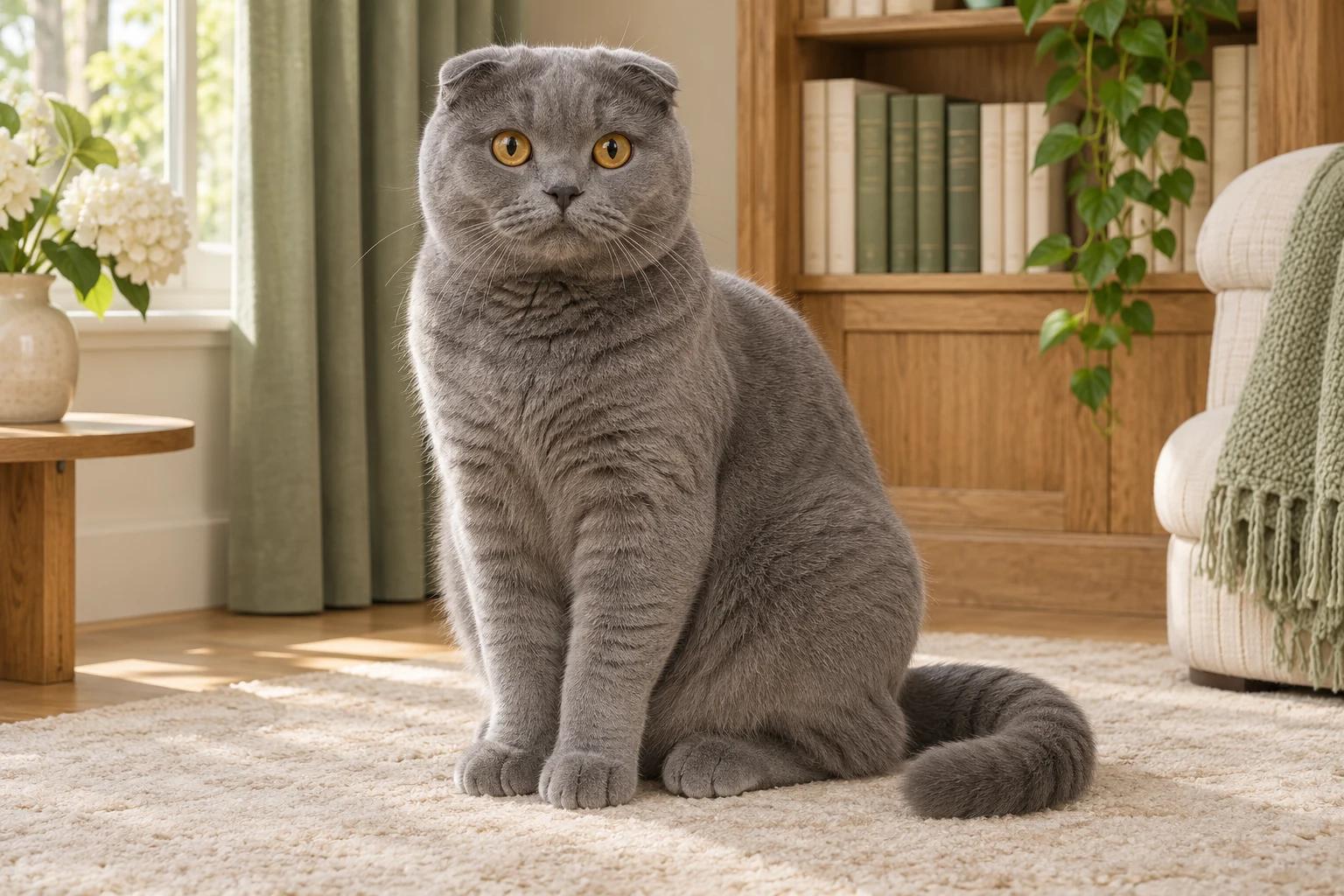
Scottish fold vs scottish straight is a comparison that needs more than a photograph of the ears. Both names occur within the Scottish breed group, with short and long coat varieties. The folded-ear trait also involves cartilage and bone, so it cannot be treated as a cosmetic option or a way to select a particular personality. The individual animal's records and veterinary assessment matter more than an appealing expression.
This guide explains the distinction without promoting breeding or diagnosing a cat from its appearance. If you are considering care for a scottish fold or scottish straight, keep identity, genotype and present comfort as separate questions.
Scottish Fold vs Scottish Straight: understand the names
TICA describes Scottish Straights as upright-eared Scottish-group cats and recognizes both coat lengths within the group. Its registry description explains the shared rounded appearance, but the health significance of the folded trait requires veterinary evidence rather than appearance marketing.
UC Davis Veterinary Genetics Laboratory identifies the Scottish Fold variant in the TRPV4 gene. One copy is sufficient to affect cartilage development, and two copies tend to be associated with more severe bone and cartilage problems. Timing and progression vary. A pleasant photograph or brief lively interaction cannot establish an individual animal's current or future comfort.
Read the current Scottish Fold profile and Scottish Straight profile. The difference between scottish fold and scottish straight should not be reduced to a decorative ear choice while leaving the associated care evidence out of the conversation.
Keep evidence about the trait separate from diagnosis
A laboratory result concerns the variant tested. It is not a complete health certificate, and a pedigree is not the same document as an identified individual test result. Ask the veterinary team to explain what the available records establish and which questions remain unanswered.
Do not automatically assign Fold-associated disease to a Straight with a confirmed negative result for that variant. Equally, do not use upright-looking ears alone as a substitute for appropriate records or assessment. Keep uncertainty visible rather than deciding that every relative has the same genotype or that appearance proves general health.
Cats Protection highlights serious health and welfare concerns associated with folded-ear cats and advises against choosing the trait. That warning belongs in an informed discussion; it should not be softened into a promise that a particular source of kittens removes the concern. This article provides neither breeding advice nor an assurance that the trait can be selected without consequence.
Personality descriptions cannot establish comfort
Registry accounts often describe affectionate, inquisitive companions. Those are broad tendencies, not permission to interpret low activity or unusual posture as a desirable temperament. A cat that avoids a familiar movement may need veterinary attention rather than praise for being easygoing.
Ask about the actual animal's ordinary choices: approaching people, moving between resources, participating in a familiar game and resting. Do not provoke a jump, bend a tail or manipulate a limb to produce evidence. If something has changed or seems uncomfortable, contact the veterinary team rather than waiting to complete a comparison checklist.
A social label also does not guarantee tolerance of children, visitors or another pet. Adults should guide contact and protect retreat. The individual needs room to leave an interaction without being followed simply because someone expected a gentle breed.
Compare care by coat length and accepted handling
Both group descriptions include short and long coats. The site's current care reference starts with weekly brushing or combing for short coats; longer coats may need attention several times a week, depending on the individual undercoat and shedding. Coat length and condition matter more than assuming ear category determines grooming work.
Ask for a suitable demonstration of familiar care. Learn which tools are accepted and when professional help is needed. Avoid forceful handling, including of the tail or limbs, and do not use a grooming session to assess joints at home.
An uncomfortable response is information to discuss, not a reason to hold the cat more firmly. Necessary care should follow appropriate professional advice. Neither a calm appearance nor a short coat establishes that every technique is suitable.
Prepare an accessible home without inventing treatment
Look at ordinary access to food, water, litter and resting places. Ask the veterinary team about individual needs where movement is a concern. A general breed article cannot prescribe a rehabilitation routine or determine which modifications are right for a particular animal.
Choose stable equipment and follow installation instructions. Do not require difficult jumps to reach essential resources or stage an agility test to decide which cat is healthier. Assess the environment as part of care while leaving clinical conclusions to the professionals responsible.
A practical household plan also includes who can arrange help and how current instructions will be shared. Keep medication and treatment directions intact if any exist, rather than substituting a product suggested in an informal comparison.
Use the existing articles for their distinct purposes
The Scottish Fold movement guide explains how to prepare a veterinary conversation about a change without provoking it again. The Scottish Straight records guide explains what ancestry papers can and cannot establish. These are different tasks, and neither replaces assessment of the individual.
For a scottish straight vs scottish fold comparison, bring those distinctions together: what is registered, what has been tested, what the veterinary history says and what care is currently required. Do not ask the cat to demonstrate that a favorable description is true.
The cat quiz can organize household preferences but cannot evaluate genotype, pain or health. Its suggestions should never override veterinary concerns or turn a welfare warning into an endorsement. An informed decision keeps the evidence and the animal's current needs visible, including inconvenient information that appearance alone leaves out.
Frequently asked questions
Is the fold only a cosmetic ear feature?
No. UC Davis links the TRPV4 fold variant with altered cartilage development and possible bone and joint problems. Individual timing and progression require appropriate veterinary interpretation.
Does straight-ear appearance prove a cat is healthy?
No. Appearance is not a complete medical history or a substitute for appropriate testing. A result for one variant also cannot clear every possible health concern.
Should every Scottish Straight be assigned Fold-associated disease?
No. Do not assign it automatically to an individual with a confirmed negative result for that variant. Discuss the actual records and any current concerns with a veterinarian.
Can calm behavior settle a concern about movement?
No. Low activity or changed movement should not be dismissed as temperament. Seek veterinary advice without making the cat repeat a difficult activity.
Sources behind this article
- TICA: Scottish Straight ↗
- TICA: Scottish Fold ↗
- UC Davis VGL: Scottish Fold variant ↗
- Cats Protection: Scottish Folds ↗
Article source checked: November 20, 2026. Source checked 2026-11-20
Keep reading

Abyssinian vs Somali: Coat, Size and Everyday Company
Read article →