Schnoodle vs Cockapoo: Compare the Dogs, Not the Haircuts
Compare Schnoodle and Cockapoo ancestry, coat texture and adult appearance, then use everyday observations to choose an individual dog.
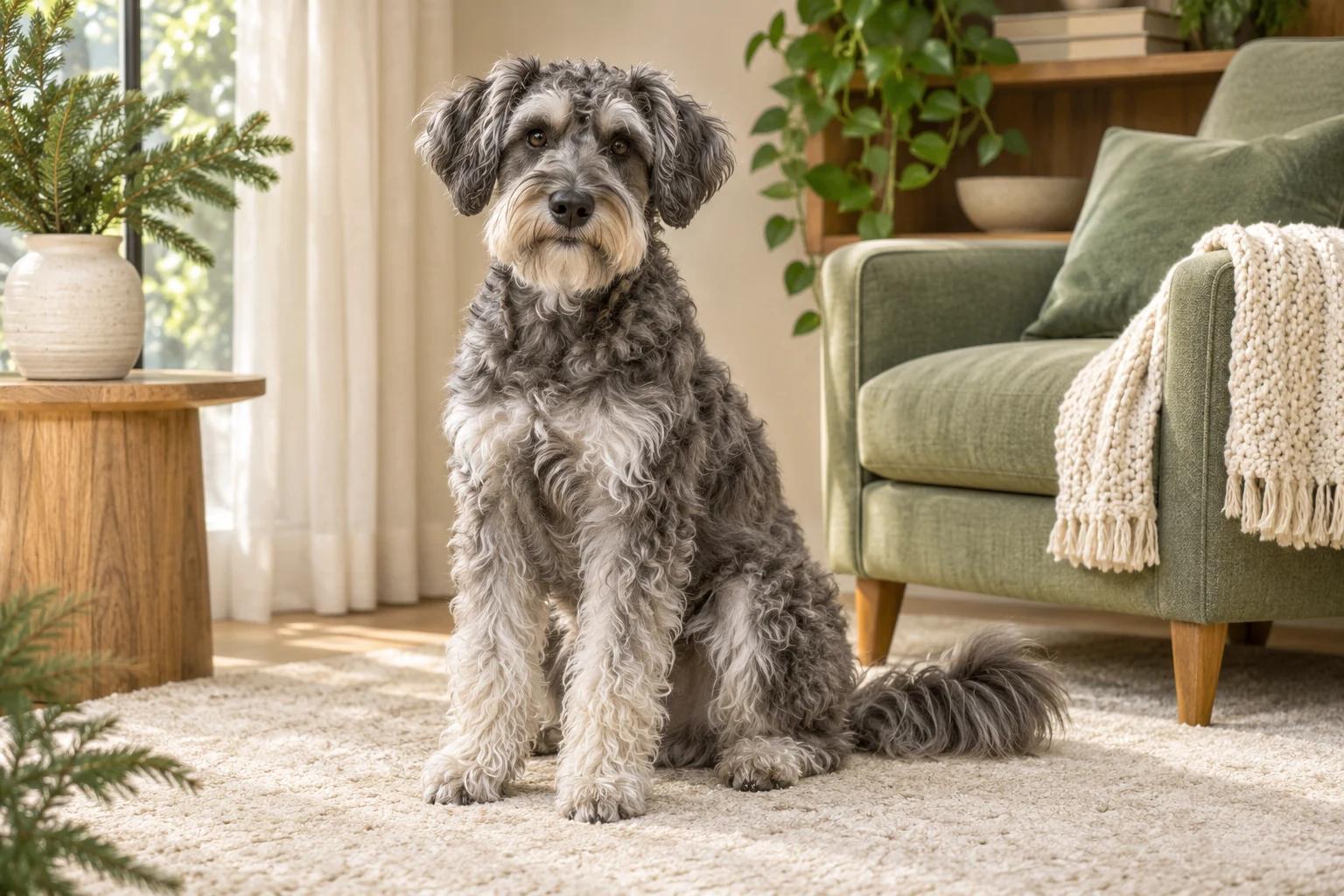
A Schnoodle vs Cockapoo decision can become surprisingly confusing when both dogs have rounded faces and fluffy pet trims. Start with the actual dogs rather than the haircut you prefer. A photograph tells you what looked appealing at one moment; it cannot show the complete relationship you would be taking on.
This comparison separates the ancestry behind those faces from the choices an owner needs to make. It is not a contest with one universally better companion. Your priorities might include enjoying hands-on care, sharing outdoor activities or having a dog whose familiar routine you can already observe.
Schnoodle vs Cockapoo: what the names tell you
VCA's designer-dog explanation identifies Schnauzer and Poodle ancestry in the Schnoodle and Cocker Spaniel and Poodle ancestry in the Cockapoo. It also explains why crossing breeds does not produce the same consistency as a settled breed standard. Inherited coat and behavioural traits can vary.
Use that information to ask better questions, not to build an imaginary perfect combination. “All the cleverness from this parent and none of the difficult habits from that one” is a sales description, not an observation of your prospective dog. Ask which traits the caregiver actually sees and in what situations.
An adult's ordinary routine is particularly valuable when you want less guesswork. Ask to see the dog before an outing, during an everyday interaction and once the household has become quiet again. For a puppy, ask about the actual parents without treating either parent as a complete preview. The cross name provides background; it does not settle the choice.
The Schnauzer contribution: a different starting outline
The Miniature Schnauzer standard describes a sturdy, square dog with a rectangular head, substantial whiskers, a wiry outer coat and a close undercoat. Its character description emphasizes alertness and spirit. This is one relevant ancestral reference, not a Schnoodle standard.
That distinction matters when someone presents a beard as proof of personality. Facial furnishings can make a dog appear stern, comic or thoughtful without telling you how it responds to people. Look beyond the eyebrows to the whole dog and its actual behaviour.
If a Schnoodle has a pronounced beard, examine how much of the visual impression comes from the trim. Ask to see an ordinary photograph between grooming appointments rather than only a freshly styled portrait. Do the same with the body outline: compare the underlying shape in a natural stance rather than the outer edge of the hair. A parent-breed description is a useful visual reference, but it should never become a rule that an individual cross must match.
The Cocker contribution: ears, feathering and expression
The American Cocker Spaniel standard describes a compact sporting dog with long, feathered ears and a silky coat that is flat or slightly wavy. Feathering appears on the chest, underside and legs. The head has a rounded skull and a relatively broad muzzle.
These are American Cocker characteristics, not a description of every Cockapoo. Establish whether the Cocker ancestry being discussed is American or English before using a parent-breed reference. Do not let a seller's casual use of “spaniel” answer that question for you.
For an actual Cockapoo, look at where the hair grows and falls rather than assuming that every soft-looking curl represents the same coat. A rounded face trim can obscure the muzzle; ear hair can conceal the ear's outline. Ask the caregiver to show the dog naturally from the side as well as from the front. You are trying to understand this dog's appearance, not mark a crossbreed against show-ring requirements written for its ancestor.
Shared Poodle ancestry does not mean identical presentation
The Poodle standard describes square proportions, a long, fine muzzle, hanging ears and a dense curly coat. Its account of movement emphasizes a light, springy trot. These features provide another useful reference when comparing the two crosses.
However, a pet haircut can change what you notice first. A longer face may disappear beneath rounded facial hair, while close-trimmed legs reveal much more of the body than a full coat. Compare dogs in ordinary motion as well as standing for a picture. Avoid deciding that one is more substantial simply because its hair has been left longer.
Ask what each dog looks like in the style the caregiver actually maintains. A highly polished photograph may show an appearance you do not want to reproduce. It is reasonable to prefer a different look, but make that an explicit conversation about the individual rather than expecting either cross name to deliver a particular silhouette automatically.
Cockapoo vs Schnoodle: make the decision concrete
When choosing a Schnoodle or Cockapoo, bring a real situation to the conversation. If your home opens into a shared corridor, ask to watch the departure routine. If you regularly travel by car, ask how this dog enters, rides and leaves. If you expect to attend classes, ask which activities the dog has already tried.
Separate “has done this before” from “should be able to do this.” Both may be relevant, but they are different answers. An owner describing an actual experience can explain what went well and what still requires help. A prediction needs more investigation.
Also distinguish your non-negotiable requirements from preferences. Perhaps you can change your preferred haircut but cannot change the stairs to your front door. Perhaps you enjoy training but would struggle to manage an intense greeting in a narrow entrance. Be candid about those constraints before a charming first meeting makes everything feel negotiable.
The Schnoodle profile and Cockapoo profile provide background. Use the dog match quiz to organize your priorities. The separate Schnoodle size-label guide explains naming questions that this everyday comparison does not repeat.
FAQ
What is the most useful difference between Schnoodle and Cockapoo comparisons?
A useful comparison connects your actual home and activities with the individual dogs available. A list of attractive adjectives does not make that connection.
Should I choose from puppy photographs?
Use photographs as an introduction, not the entire decision. Ask for an opportunity to discuss ordinary life and meet the dog appropriately.
What if I like both equally?
Prioritize the questions you cannot compromise on, such as access to your home and the activities you intend to share. You do not need to choose during the first meeting.
Sources behind this article
- VCA: Designer dogs ↗
- AKC: Miniature Schnauzer standard ↗
- AKC: Cocker Spaniel standard ↗
- AKC: Poodle standard ↗
Article source checked: November 16, 2026. Source checked 2026-11-16
Keep reading

Affenpinscher vs Brussels Griffon: Everyday Differences
Read article →