Savannah Cat Temperament: Attachment, Curiosity and Personal Space
Explore Savannah cat temperament, attachment and curiosity while keeping individual boundaries and household suitability visible.
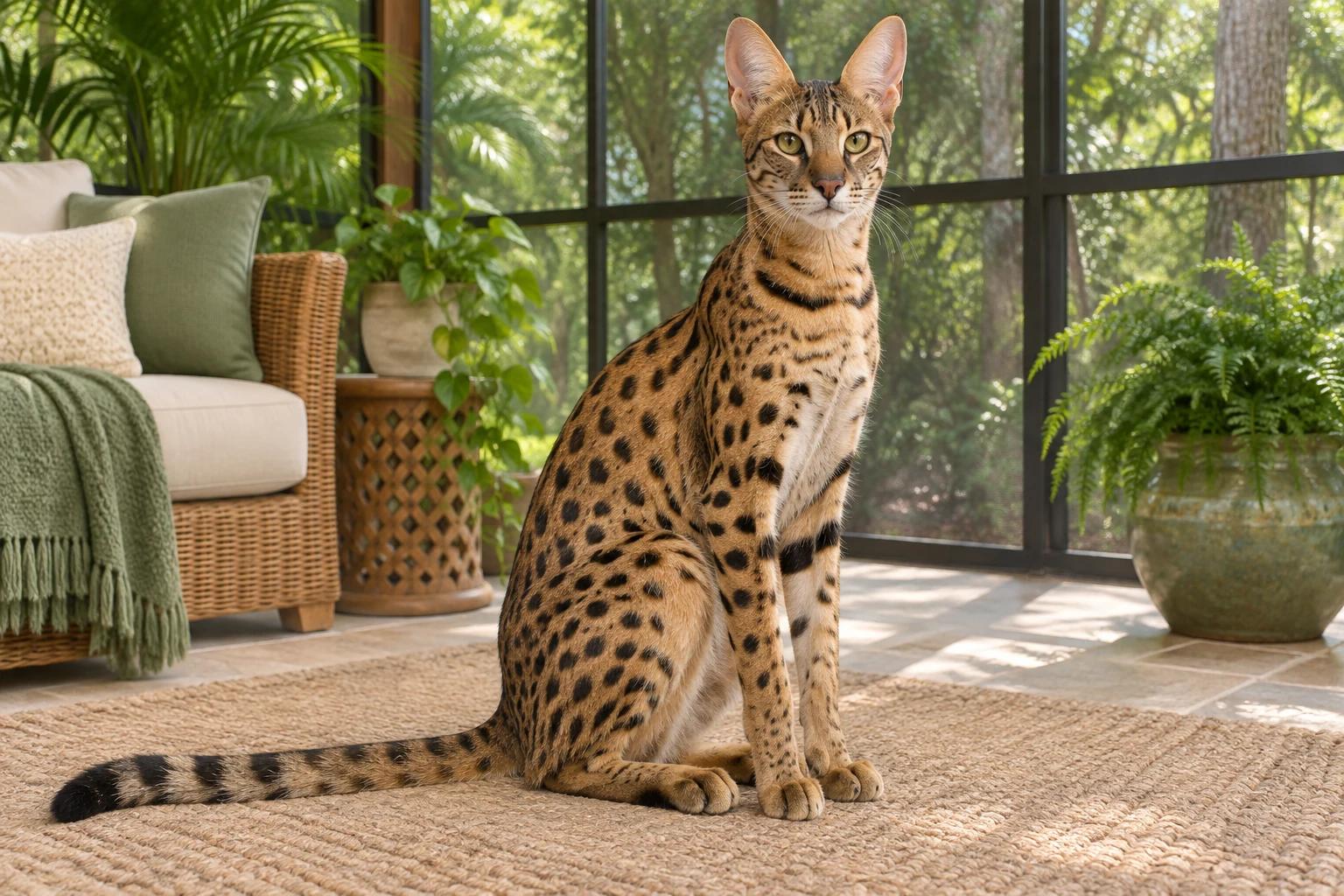
Savannah cat temperament is often described through strong attachment and persistent curiosity. Those qualities do not necessarily produce a lap cat, nor do they tell you how an individual will handle every visitor or resident animal. The current profile specifically distinguishes bonding from a preference for being held. Understanding the relationship requires attention to how the cat chooses proximity and what its activity involves.
This guide considers savannah cat personality as part of a practical household decision. It does not assess legality, predict behavior from an ancestry label or promise that an attractive breed reputation will fit every home.
Savannah cat temperament: company can take different forms
TICA describes cats that bond with familiar people while retaining personal space. The Savannah profile keeps that distinction visible. Ask the caregiver how this individual joins daily activity rather than whether it is simply affectionate.
Does the cat follow movement, rest nearby, approach with a toy or seek brief touch? What happens when a person is occupied? Examples from an ordinary day explain the relationship more usefully than a claim that the animal is loyal.
During a meeting, let the cat determine whether to approach. Interest in a visitor does not establish permission to lift or restrain it. Observe the departure as well as the greeting and ask whether the behavior is familiar in that setting.
Curiosity changes the practical demands of a home
Savannah cat characteristics include a reputation for investigating surroundings. That is a reason to prepare secure boundaries and appropriate outlets, not an explanation that makes every household conflict inevitable. Ask about actual exploratory habits and which arrangements the present home uses.
Check cupboards, materials, fragile objects and exterior-door routines. A verbal instruction should not be the only protection around something hazardous. Learning a cue can support communication, but physical management remains a separate responsibility.
FelineVMA's indoor-cat guidance emphasizes appropriate resources, retreat and opportunities for activity. Use that wider view when assessing your rooms. An environment should provide useful choices rather than repeatedly placing the cat near something forbidden and expecting it to ignore the attraction.
Activity needs should be described honestly
The site's high-energy description supports asking detailed questions about games, exploration and the time people actually provide. Do not confuse a short, exciting visit with a care routine you can maintain every day. Learn what happens during less convenient periods too.
Ask which activities the cat chooses and how it ends them. The animal should be able to rest without somebody immediately restarting a game. An active companion is not obliged to provide entertainment whenever a person wants an impressive demonstration.
Consider your own preferences. Someone seeking mostly quiet nearby company may need different expectations from someone keen to maintain extensive interactive opportunities. Neither wish should be resolved by promising that a kitten will become the exact version of the breed that suits the buyer.
An ancestry label is not a personality score
The Savannah profile recognizes serval ancestry, but a generation label cannot replace an individual behavioral history. Ask what documentation supports the information and which experiences are actually known. Do not use uncertain background to make confident predictions about handling or household suitability.
Likewise, avoid deciding that an unfamiliar response is explained by the animal being wild-looking. Describe the behavior and its setting. A photograph, coat pattern or tall outline cannot tell you why a cat moved away from a person or avoided a task.
The separate Savannah housing-rules article explains a different process involving the actual location and animal. This temperament guide does not provide a legal ruling or treat a registration label as permission. Keep those questions with the appropriate responsible bodies.
Introductions need a plan for the individuals
Ask about past experience with other animals, including how introductions were managed. A comfortable relationship in one setting is useful history, not a guarantee for a different resident pet. Arrange resources, separation and retreat before contact rather than using the first meeting to test a general claim.
Adults should supervise children and protect the cat's ability to leave. A bonded animal may still dislike repeated approaches, unfamiliar handling or interruption during rest. Do not interpret a social description as automatic tolerance of all those events.
Seek qualified help when the animals or people are uncomfortable. An introduction should not be prolonged to obtain a photograph or to prove that the cat fits its description. A workable management arrangement matters while compatibility is being assessed.
Changed behavior needs its own assessment
Savannah cat behavior should be described concretely when something changes. Note a new avoidance of touch, a different activity pattern or difficulty using a familiar place. Contact your veterinarian about concerns rather than assuming that persistence, ancestry or energy explains everything.
Do not repeatedly recreate a difficult situation to obtain a stronger response. A factual account of what happened can begin the professional conversation without further testing the animal's limits. Follow the guidance you receive about what to observe and how urgently help is needed.
Routine grooming and necessary handling also deserve individual discussion. A short coat does not establish acceptance of every care task. Learn what the animal already tolerates and how to obtain suitable help if the familiar routine becomes difficult.
Make a decision that includes the unglamorous parts
Before committing, ask the caregiver which responsibility is most likely to surprise a new owner. Include backup care, access to veterinary help and the practical arrangements for periods when the household is busy. An honest answer about a demanding routine is useful evidence.
Use the cat quiz to organize preferences, then bring them back to the actual animal. The relationship needs room for energetic participation, personal distance and ordinary rest. A successful choice does not depend on the cat becoming a lap companion or performing an adventurous reputation all day; it depends on the household understanding and supporting its real needs.
Frequently asked questions
Does strong bonding mean a Savannah wants to sit on a lap?
Not necessarily. TICA and the current profile distinguish attachment from a preference for personal space. Ask how the individual chooses contact.
Can a generation label predict household behavior?
It cannot replace an individual history and assessment. Keep documentation, observed behavior and suitability questions distinct instead of treating a label as a personality score.
Is curiosity a reason to rely on training around hazards?
No. Provide reliable physical management and secure boundaries. A learned response is an additional communication tool, not the only safety arrangement.
What if a familiar cat suddenly avoids an activity?
Describe the change and contact your veterinarian about concerns. Do not assume ancestry or a breed reputation establishes the cause.
Sources behind this article
Article source checked: November 20, 2026. Source checked 2026-11-20
Keep reading

American Bobtail cat temperament
Read article →