Savannah Cat Exercise: Plan More Than a Collection of Toys
Plan Savannah cat exercise through interactive play, suitable space and care continuity without imposing numerical endurance targets.
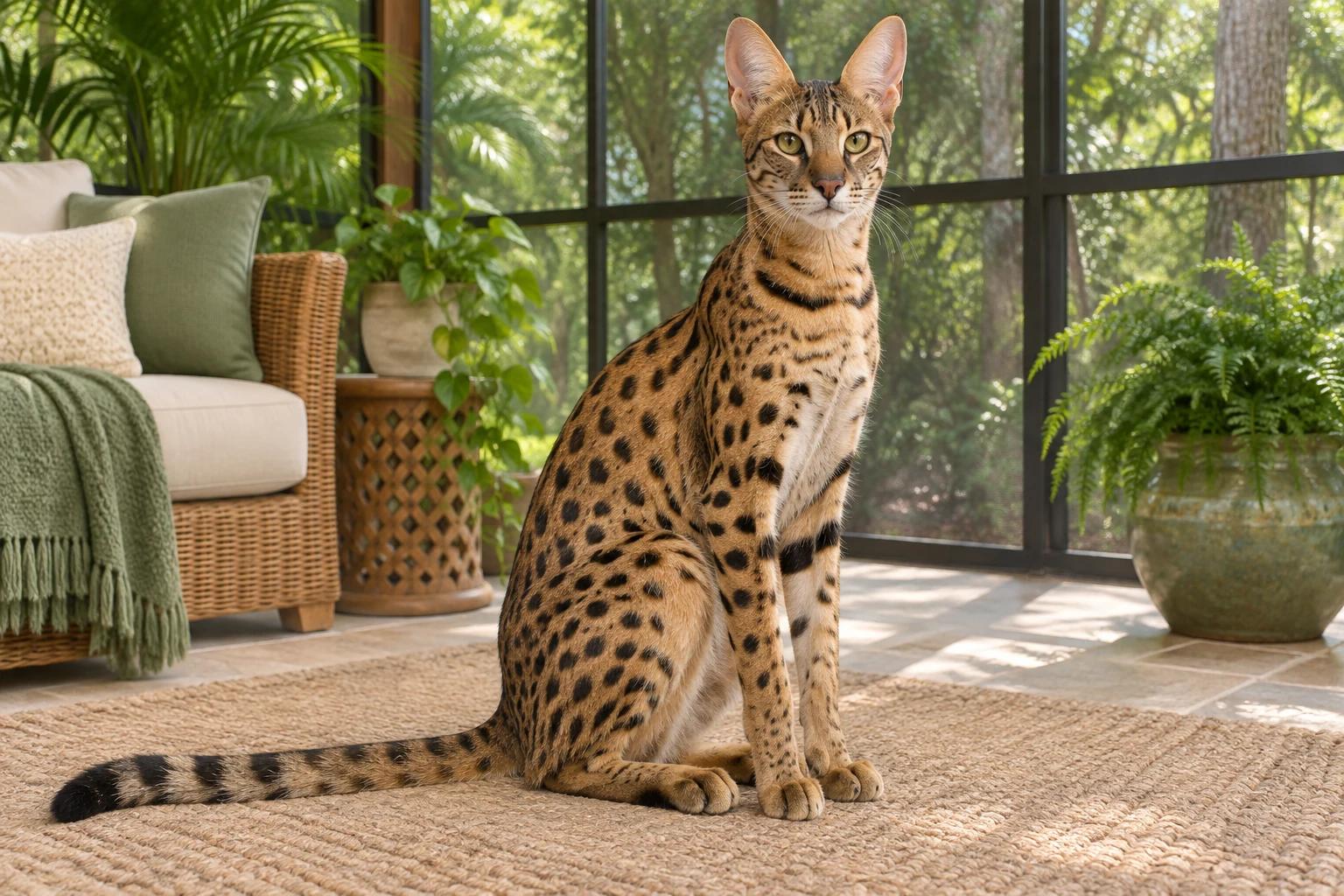
Savannah cat exercise deserves a realistic discussion before the striking coat becomes the deciding factor. The current profile describes a high-energy companion needing substantial interactive play, secure climbing, food activities and patient learning opportunities. That is a broader commitment than buying a tall structure and expecting it to provide the whole routine. The individual still needs appropriate choices, dependable care and attention to comfort.
This guide considers savannah cat indoor play and environment planning without prescribing distances, jump heights or endurance targets. It does not establish that a particular home is suitable or that permission to keep a cat means its needs will automatically be met.
Savannah cat exercise: begin with the actual routine
TICA describes an active, adventurous breed, while the Savannah profile emphasizes substantial daily enrichment. Ask the current caregiver what the individual actually does: familiar games, preferred exploration areas, resting periods and activities that do not work well.
An energetic demonstration during a visit is not an entire care history. Learn how the routine is maintained on ordinary working days and what backup is needed when a person is unavailable. Avoid a plan that assumes you will always have more time than your current schedule provides.
Savannah cat activity level cannot be reduced to a universal number of minutes. The useful planning question is whether you can provide the animal's documented opportunities consistently and adapt with professional advice when needs or circumstances change.
Assess the room before choosing equipment
Look at secure boundaries, usable surfaces and routes through the home. An athletic breed description does not certify a shelf, window arrangement or climbing structure. Follow load and installation instructions and consider whether more than one animal might use equipment at the same time.
Provide accessible alternatives and keep essential resources available without requiring a difficult jump. The cat should be able to choose rest, water or litter without completing your preferred exercise route. Review whether another animal can block access.
FelineVMA's indoor-cat guidance places play alongside safe places and appropriate resources. For an active companion, that means evaluating the whole environment rather than concentrating every opportunity in one crowded corner. A large piece of furniture alone does not establish a complete plan.
Offer interactive movement that remains manageable
Choose a suitable toy and a clear area where the cat can move without colliding with obstacles or approaching a hazard. Prepare before inviting interest. Do not use hands or an unsafe household item simply because the animal responds enthusiastically.
Observe the cat's chosen pace and direction. An invitation should allow participation and departure; it is not a test of how long you can keep the animal moving. Put damaged objects and detachable parts out of reach and store interactive equipment appropriately when it is no longer being used.
If you are learning how to exercise a savannah cat, begin with familiar activities from its care history and ask for qualified guidance about unfamiliar ones. Avoid escalating height, speed or intensity to reproduce a dramatic video. Another cat's performance does not establish what is suitable for yours.
Think of exploration as a supervised opportunity
TICA's account emphasizes curiosity as well as activity. Secure materials and areas that should not be available instead of relying on a command to control every investigation. Keep exterior-door management independent of any learned response.
A change to a room can create interest without requiring an expensive purchase, but it still needs assessment for suitability. Check that the object or arrangement can be used safely and that the animal has a familiar alternative. Novelty is not beneficial merely because it occupies attention.
Introduce changes deliberately rather than replacing every familiar feature at once. That makes it easier to observe what is used and what is avoided. If a setup does not work, review it rather than describing the animal as ungrateful for the equipment.
Food activities need a feeding plan
A suitable food puzzle can offer one kind of engagement, but difficulty is not the goal. The task should be understandable and compatible with the cat's diet and ability to use it. Ask your veterinary team how rewards or feeding devices fit current instructions.
Cornell's feeding guidance emphasizes individual nutritional needs and veterinary help with body condition. Do not withhold essential food to make an activity compelling or use an exercise plan to justify an improvised diet. A breed's ancestry does not supply a universal food prescription.
Keep activity and nutrition records clear when several people share care. A caregiver should know what is part of the agreed feeding plan instead of assuming a puzzle's contents are extra or that vigorous play requires an automatic portion increase.
Protect the end of an activity
An active cat still needs undisturbed rest. Let it leave a game and avoid having another person restart immediately because they have not yet had a turn. Adults should guide children's participation and remain responsible for equipment and care.
Observe familiar patterns without requiring constant entertainment. A cat resting is not necessarily under-stimulated, and a busy cat is not automatically comfortable. Look at how the whole routine works rather than using one moment as a verdict.
Contact your veterinarian about changed movement, a new loss of interest or any concern about comfort. Do not dismiss a change as stubbornness or try to resolve it by making a game harder. This article cannot diagnose the cause or provide a physical rehabilitation or weight-loss program.
Keep permission and care as separate questions
The existing Savannah housing-rules guide discusses checking arrangements for the actual animal and location. Exercise equipment cannot resolve those questions, and a permission answer does not establish that the home meets the cat's daily needs.
Before acquisition or travel, keep those checks and the care discussion clear with the appropriate authorities and professionals. This article gives no jurisdictional or ancestry-generation ruling. It focuses on the environment and routine you would have to provide once relevant arrangements are settled.
Use the cat quiz to organize preferences, then compare them with the individual care history. A worthwhile plan is one you understand, can maintain and can revise appropriately. It should offer meaningful activity without making the animal responsible for proving an athletic reputation.
Frequently asked questions
Does a climbing structure meet all exercise needs?
No. Consider interactive opportunities, exploration, suitable resources and rest alongside correctly installed equipment. One object does not establish a complete environment.
How many minutes should a Savannah exercise?
No universal duration is prescribed here. Review the individual's routine and obtain professional advice about needs, limitations or concerns.
Should a food puzzle be deliberately difficult?
Not simply to occupy the cat longer. It needs to be understandable and appropriate to the animal and feeding plan, without withholding essential food.
Can exercise planning replace housing checks?
No. Permission, housing arrangements and practical care answer different questions. The linked rules guide addresses that separate process without supplying a universal legal answer.
Sources behind this article
Article source checked: November 20, 2026. Source checked 2026-11-20
Keep reading

American Curl exercise
Read article →