Russian Tsvetnaya Bolonka Size: Build and Everyday Fit
Understand Russian Tsvetnaya Bolonka size through proportions, individual body condition and practical fit, without making smallness a goal.
Explore the
Russian Tsvetnaya Bolonka
Background, care, and everyday considerations.
View breed profile →Russian Tsvetnaya Bolonka size matters most when it helps you provide a usable home, suitable equipment and an appropriate feeding routine. It should not become a competition to find the tiniest dog. Separate body dimensions, current weight and body condition before deciding what a number tells you.
For a prospective owner, the practical question is how this individual will move, rest and take part in your day. A dog fitting on a lap does not answer all the other questions about fit.
Russian Tsvetnaya Bolonka size: understand the outline
The My Breed Atlas profile lists adult weight at 7–9 pounds and shoulder height at 11 inches. Those are the site’s household-planning references, not exhibition eligibility rules or a guarantee of an individual dog’s final dimensions.
The AKC standard describes a small, sturdy, moderately boned dog whose body is slightly longer than its shoulder height. That helps explain the overall proportions without treating the breed as a scaled-down version of a taller, leggier dog.
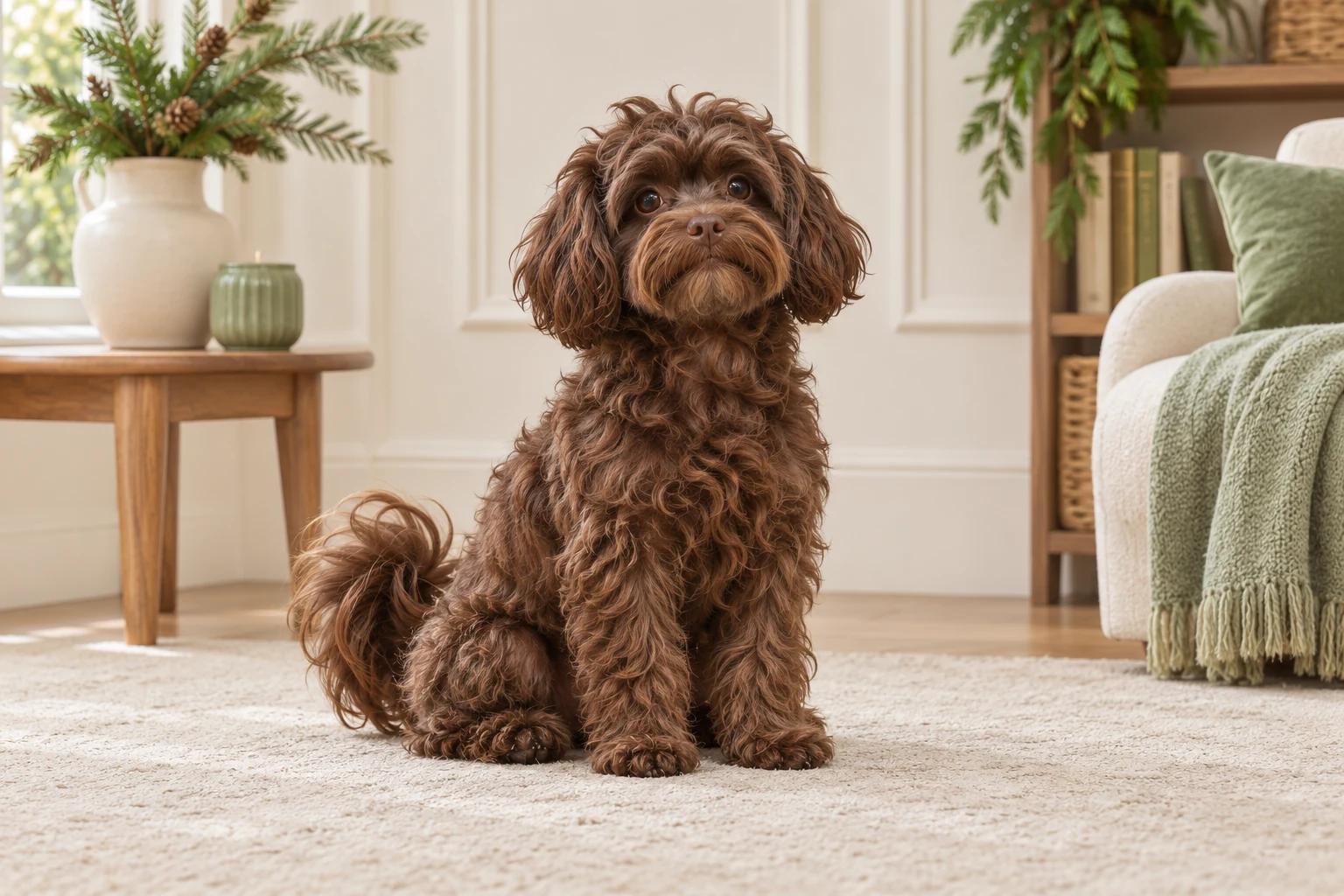
A photograph can make proportions hard to judge. A close-up from above, a coat arranged around the body or a dog held against a person's chest may provide very little reliable scale. Look at an ordinary side view of the individual standing naturally instead of relying on a novelty photograph that emphasises smallness.
Ask whether the dog pictured is an adult. A puppy's present appearance is not a precise forecast of its eventual dimensions. Equipment that suits arrival day may need adjustment or replacement during growth.
Russian Tsvetnaya Bolonka weight and body condition
PDSA's veterinary guidance distinguishes weighing a dog from assessing its body shape. Both matter. It recommends an individual veterinary plan when weight management is needed rather than a generic reduction in food.
For your Bolonka, ask the veterinary team to demonstrate how to assess condition and interpret the current weight. Do not feed toward an advertised miniature size, and do not add food merely to create a more substantial appearance. The aim is appropriate care for this dog, not conformity with a photograph.
It helps to know what the dog actually receives. Food used in training, chews and pieces offered by other people can otherwise disappear from the conversation about meals. Bring those details when asking about portions rather than estimating only what is put in the bowl.
Ask your veterinary team about unexpected weight changes rather than interpreting one weigh-in alone.
Russian Tsvetnaya Bolonka height is a specific measurement
Shoulder height and the top of a dog's head are different measurements. A dog looking up, sitting or being held cannot be compared directly with a standing shoulder-height description. For an accurate measurement, ask someone experienced to show you the method on a willing dog.
Keep exhibition questions separate from household fit. The existing Bolonka height and disqualification article explains the wording of that standard. Here, the useful task is choosing arrangements that work for the dog you have, not recreating an official measurement at home.
If a supplier asks for several measurements, do not replace them with the breed name. A back-length measurement is not a chest measurement, and neither is the dog's weight. Read where the measurement begins and ends before choosing an item.
How big do Russian Tsvetnaya Bolonkas get in a home?
Think in terms of usable space rather than an isolated label such as small. A resting spot needs enough room for the dog's chosen position. A route between furniture needs to remain clear when people are using that furniture, not just when the room is empty.
Try walking through the room while somebody pulls out a dining chair or opens a cupboard. Where would the dog be during that movement? A small body may fit in the gap yet still be in the wrong place at the wrong time. Moving an object can be more useful than repeatedly asking the dog to avoid it.
This is not a reason to carry the dog everywhere. It is a reason to let it use the floor sensibly, with spaces that are not continually crossed by feet, bags and moving chairs.
Choose a bed by usable area
The RSPCA's bed guidance recommends space for natural sleeping positions, including stretching out, and a washable, comfortable surface. A quiet location and a place near the family offer different resting choices. Leave a sleeping dog undisturbed.
For a small dog, compare the interior lying area rather than the largest outside measurement. Thick raised sides can occupy much of the footprint. Watch the position your dog chooses before deciding that a compact round bed is enough; the product's appearance is not the dog's preference.
Before buying a replacement, ask what failed about the existing one. Was it too small, awkward to enter, difficult to clean or simply in an unsuitable location? Those lead to different solutions. Buying the same design in a larger size will not necessarily solve a placement problem.
Equipment fit needs more than a size category
Use the maker's instructions for the particular item, and have fit checked when unsure. “Toy” and “extra small” are categories, not measurements shared by every manufacturer. An adjustable item is useful only if the necessary part can be adjusted to the dog.
Look at what happens during ordinary movement in a secure familiar area. Does the item remain where intended, or shift so that a buckle ends up in a different place? Do not assume that fastening successfully proves a good fit. Equally, do not tighten indiscriminately to solve movement without understanding the design.
Revisit the fit after growth or changes in the dog. A previous purchase decision does not stay correct forever. The Bolonka profile and dog match quiz can help you consider size alongside the rest of the commitment.
FAQ
Can a puppy photograph establish adult size?
No. Ask for reliable individual information and allow for growth rather than treating an image as a guarantee.
Is weight enough to choose equipment?
No. Use the measurements requested for the specific item and assess its fit on the dog. A weight label alone cannot describe every body dimension.
Should I aim for the smallest possible adult?
No. Prioritise the individual dog's condition and needs. Smallness is not a feeding goal or a measure of a better companion.
Sources behind this article
Article source checked: November 16, 2026. Source checked 2026-11-16
Keep reading
Russian Tsvetnaya Bolonka Temperament: Daily Company
Read article →