Russell Terrier Training: Clear Cues and Useful Choices
Build Russell Terrier training around reward timing, fair exchanges and manageable new experiences, without turning curiosity into a battle.
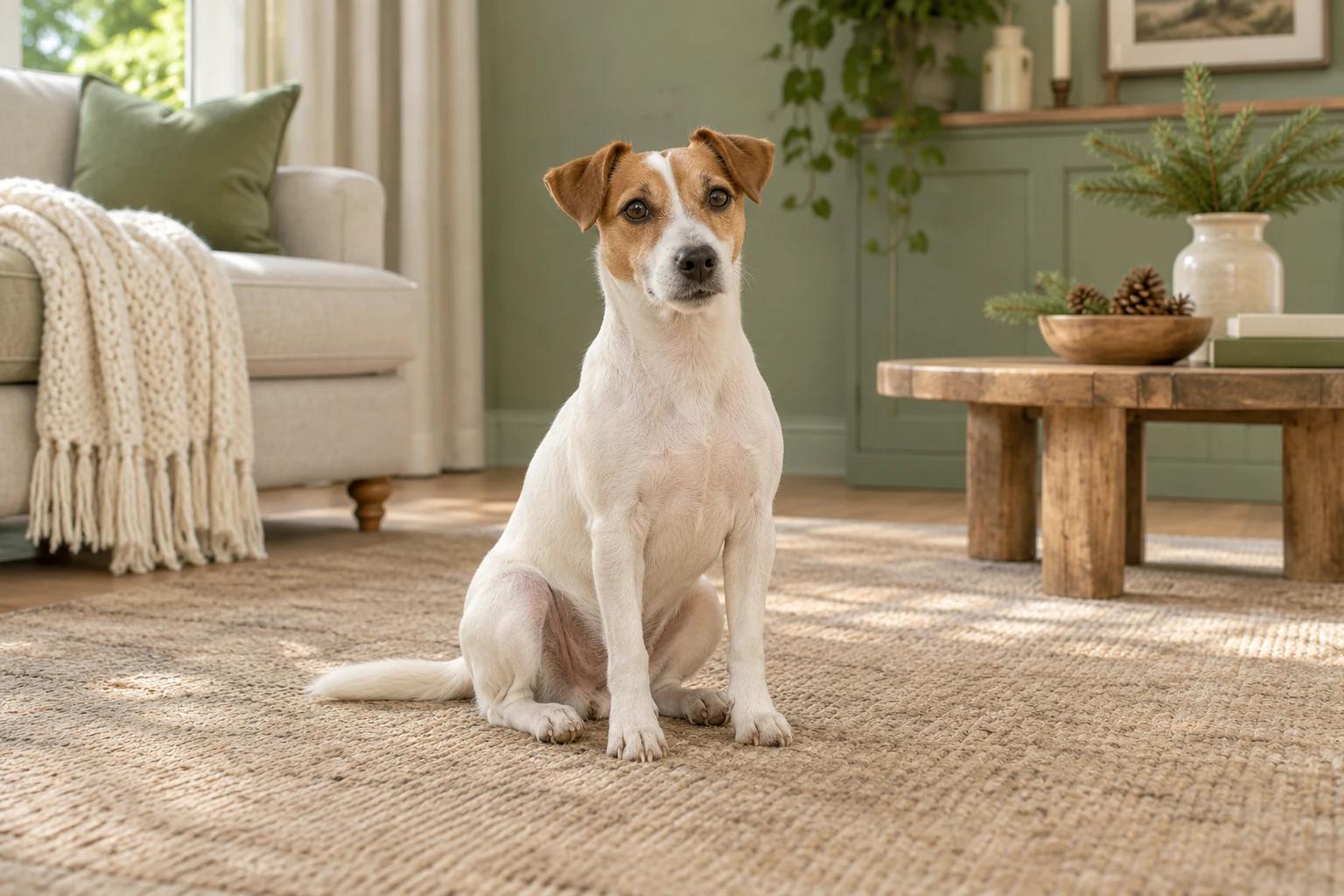
Russell Terrier training works best when the task is clear enough to compete with an interesting world. Repeating a cue more loudly does not explain it better. A small, understandable exercise with a worthwhile outcome gives you a more useful starting point than testing how long the dog will tolerate a drill.
Choose one everyday skill first. Releasing an ordinary toy, noticing a signal or calmly investigating something new can matter far more than assembling a long list of tricks. Keep the aim practical and the first attempt easy to interpret.
Russell Terrier training: Work with attention
Begin by deciding which action you want to see. “Behave” is too broad to teach in one attempt; a glance, release or step toward you is something you can actually recognize.
Set up at the dog's working height. If the reward hand stays far above the head, you may accidentally create a jumping task while trying to teach something else. If the toy is hidden among several other objects, you may be asking the dog to choose a target before it understands the exercise.
Before bringing the dog over, rehearse what your own hands will do. Where is the reward? Which hand holds the toy? Where will the released object land? This brief physical preparation is more useful than improvising while an excited terrier is already participating.
How to train a Russell Terrier with a precise marker
Dogs Trust's marker guide explains that a marker identifies the exact successful behavior and is followed by a reward. Choose a consistent sound or word, introduce it by pairing it with a treat, and use the same calm delivery rather than changing pitch or volume each time.
Once the marker has meaning, try a simple observation exercise: while your dog is comfortably nearby, mark a voluntary glance toward you and deliver the reward. Do not add a long stare or a sit as hidden extra conditions. You are identifying one small action, not testing a chain of behaviors the dog has not been taught.
If your timing is late, simplify your own task. Put the reward where you can reach it and practice noticing the glance before adding movement. The dog's quick response is a reason to improve clarity, not to race through more repetitions.
Distinguish a cue from commentary
A household can become noisy with advice: “Here, come on, look, sit, this way.” Decide which word actually asks for the action. Everything else may simply be background sound from the dog's perspective.
When several people practice, demonstrate the finished behavior to one another without the dog first. It is surprisingly easy for two people to mean different things by “come here” or “wait.” Shared understanding prevents the dog from being asked to solve the humans' disagreement.
Teach a fair exchange before an urgent one
Dogs Trust's leave-training guide begins exchanges with a toy that is not the dog's favorite. Offer better food beside the dog, let it choose to release, then return the toy for more play. Add the release cue once that pattern is familiar. Leaving an item before picking it up is a separate skill from releasing something already held.
Use a safe toy large enough for the dog to handle without swallowing, on an uncluttered surface where you can see the release. Keep prized possessions out of this lesson. A sock stolen during a busy morning is not an ideal first teaching opportunity, and a dangerous object is not a practice prop.
If your dog guards items, stiffens or threatens when approached, stop the home experiment and seek qualified behavior support. Do not reach into the mouth to prove that the cue should work. Training an exchange and managing an immediate hazard are different situations.
Avoid turning mistakes into a chase
If the dog takes the practice toy away, reset calmly rather than starting a chase.
Keep the exchange area clear of inaccessible gaps beneath furniture.
Russell Terrier socialization includes ordinary objects
RSPCA Australia's socialization guidance includes surfaces, sounds, objects and experiences, not just meetings with dogs. Pair manageable novelty with something pleasant, allow investigation or retreat and avoid forcing contact. Introduce only a little at a time; ask your veterinarian about appropriate exposure while a puppy's vaccination course is underway.
For example, place a folded, stable mat on a familiar floor and let the puppy notice it without being pulled onto it. Looking at it can be the first interaction. There is no need to add a moving object, loud noise and visiting person to the same attempt. The exercise is about a new surface, not tolerating a surprise obstacle course.
For an older dog with established worries, get an individual plan rather than treating puppy advice as a cure. History and current comfort matter more than completing a checklist.
Russell Terrier obedience should make life clearer
Useful Russell Terrier obedience is not a contest of persistence. It gives the dog a small vocabulary for things that happen regularly. Choose skills that you can actually use and maintain, then assess whether the surroundings let the dog succeed.
If the dog performs a familiar action indoors but not beside a busy gate, you have changed more than the address. Movement, sound and other attractions are now part of the task. That is a reason to make the next attempt more manageable, not to conclude that previous learning was fake.
Read the Russell Terrier profile for wider ownership needs, and use the dog match quiz if you are still deciding whether daily teaching appeals to you. The existing Russell and Parson Russell guide covers naming and size rather than the practical training explored here.
FAQ
Should I teach every useful cue in the first week?
No. Pick a small priority and make it understandable. A short list of usable skills is more helpful than many words the dog has not learned clearly.
Is a failed outdoor response proof of stubbornness?
No. Consider what changed around the dog and how difficult the setting is. The explanation may lie in the task rather than an assumed attitude.
Does training need special equipment?
Not for every beginning exercise. Clear space, suitable rewards and thoughtful timing can be more useful than a large collection of training accessories.
Sources behind this article
- Dogs Trust: Introducing a marker ↗
- Dogs Trust: Leave and fair trade ↗
- RSPCA Australia: Puppy socialisation ↗
Article source checked: November 16, 2026. Source checked 2026-11-16
Keep reading

Affenpinscher Training: Build Useful Everyday Habits
Read article →