Romanian Carpathian Shepherd training: useful steps
Plan Romanian Carpathian Shepherd training with a place cue, a brief stay and thoughtful socialization. Teach small actions rather than testing loyalty.
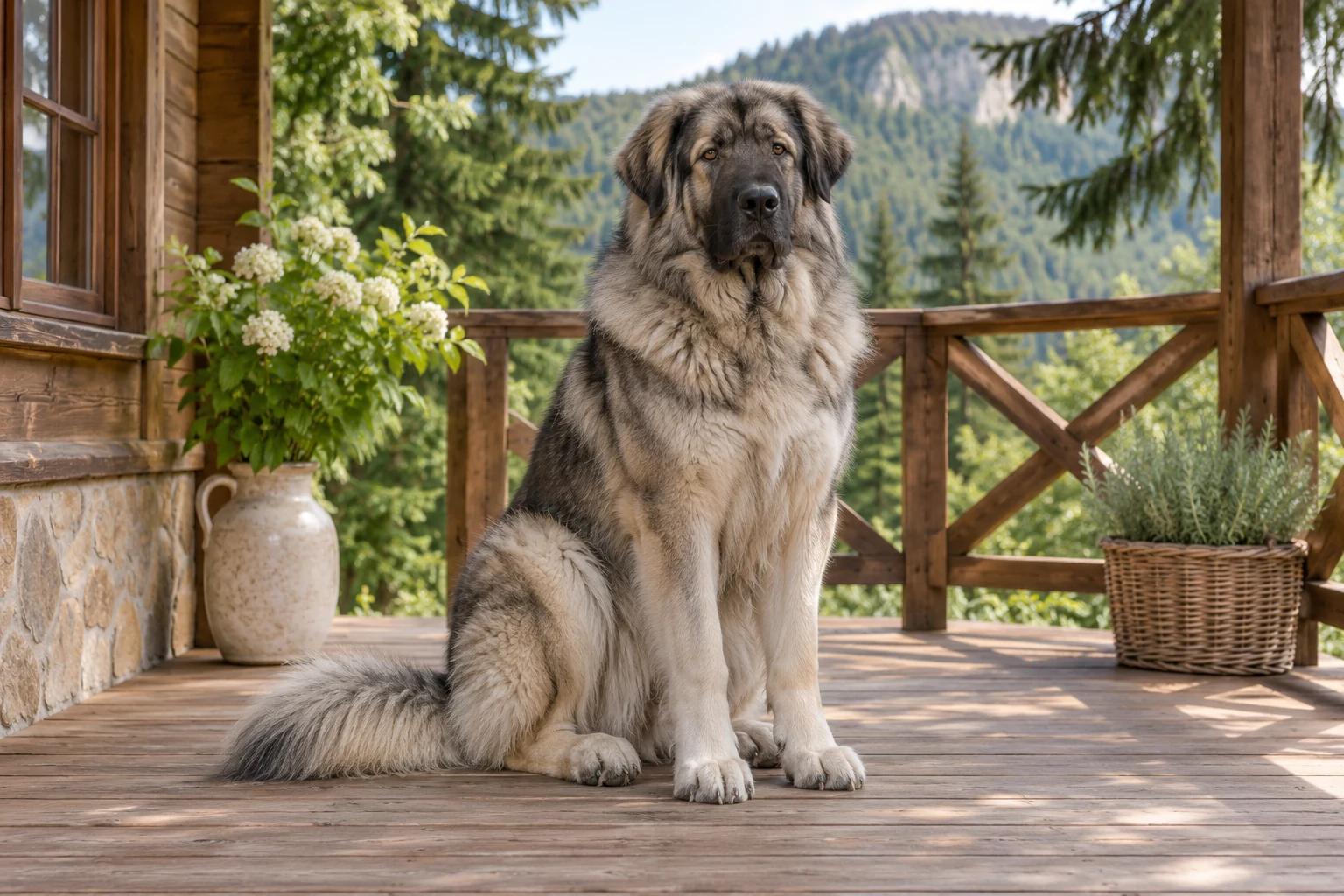
Explore the
Romanian Carpathian Shepherd
Background, care, and everyday considerations.
View breed profile →Romanian Carpathian Shepherd training becomes clearer when you replace broad expectations with small, useful actions. Going to a resting spot, remaining in position briefly and moving comfortably through an unfamiliar setting can all make daily life easier. None requires treating the dog as an opponent or testing whether it respects you.
The breed profile provides the wider ownership context. The FCI standard describes a guardian attached to its people and flock. That background is not a substitute for teaching the household skills your particular dog needs.
Romanian Carpathian Shepherd training: choose one outcome
When considering how to train a Romanian Carpathian Shepherd, identify the exact movement you want to teach. “Go onto this mat” has a visible destination. “Be good while I am busy” leaves the dog to work out a much larger problem.
Begin with an arrangement that lets you see the response clearly. Choose a non-slip area, remove objects from the route and put your reward within reach. If you are balancing a door, a lead and a bag of shopping, you are managing a busy event rather than conducting a straightforward first lesson.
Choose a destination that fits the dog's body. A small decorative mat might be easy to carry but unsuitable for an adult to stand on comfortably. The dog should not need to tuck its feet tightly together or lean against furniture simply to occupy the place you selected.
Teach movement to a place
VCA's play-and-exercise guide describes a place game that starts by tossing a reward onto a mat or bed and allowing the dog to investigate. Invite the dog away and repeat. As the destination becomes familiar, reward steps toward it rather than always showing the reward there first. Add a verbal cue when you can predict the movement. The lesson teaches going to a location; remaining there is a separate demand.
For a Carpathian Shepherd, begin away from arrivals and door movement, with enough space beside the mat to see the whole response.
Check the mat for sliding, folded edges or loose threads before starting. Replace an unstable surface rather than compensating for it.
Add a brief stay separately
The RSPCA stay lesson begins from a familiar down or sit. Introduce a hand signal, wait briefly and reward while the dog remains in position. Increase duration gradually before adding distance, beginning with only one step away. Set the difficulty low enough to reward success rather than repeatedly waiting for the dog to get up.
Do not force an uncomfortable posture. Ask your veterinarian about difficulty sitting or lying down.
Define the end of the attempt for yourself as well. If you need to walk across the room to find another reward, finish the exercise first rather than accidentally adding a much longer absence. A planned short attempt is easier to interpret than one whose duration depends on where you left your supplies.
Socialization is broader than meeting strangers
For Romanian Carpathian Shepherd socialization, Battersea's puppy guidance emphasizes gentle, positive exposure rather than overwhelming encounters. It includes different surfaces and everyday objects as well as people and dogs. Introduce an object still and quiet before adding movement or sound, and allow the puppy to move away. Ask your veterinarian how outdoor exposure fits vaccination and local health considerations.
A practical example is a stationary umbrella placed securely at a distance in a familiar area. Do not begin by opening it over the puppy. The first question is whether the object can be present without creating difficulty. Movement, a new location and a person carrying it are later changes, not requirements for the first encounter.
For an adult with established fears, do not assume a puppy checklist is a treatment plan. A qualified professional can help choose an appropriate starting point. Repeated exposure that overwhelms the dog is not useful practice merely because the object appears on a socialization list.
Make progress visible without demanding perfection
Romanian Carpathian Shepherd obedience involves distinct skills. Notice whether the improvement was reaching a destination or holding a position.
If an attempt fails, inspect the arrangement before adding more words. Did the mat move? Did another person stand in the route? Did you ask for a longer wait than before? Those are practical changes you can address. Repeating a cue more loudly does not make the physical task clearer.
Also distinguish a training opportunity from a situation that requires immediate management. A newly learned stay is not a barrier beside an open road. A place cue is not a reason to let an unfamiliar person approach an uncomfortable dog. Keep the environment secure while the skill is developing.
When choosing instruction, ask to see how the trainer teaches a new behavior and handles mistakes. Look for explanations you can apply to the actual exercise, not promises to transform the dog through a single confrontation. If you cannot manage the dog safely, seek hands-on qualified help rather than rehearsing a risky situation alone.
Use the dog match quiz to consider whether daily teaching fits the relationship you want. The existing article on the Carpathian Shepherd's 1934 standard history addresses documentation rather than a training method.
FAQ
Is a place cue the same as a stay?
No. One identifies a destination; the other asks the dog to remain in a position. Teach and assess them separately before combining them. That makes it easier to see which part needs more practice when a sequence becomes difficult.
What if the dog responds in one room but not another?
Compare the two settings. The route, surface, position of people and other activity may differ. Return to a simpler version of the task in the new room instead of assuming the earlier lesson has been forgotten or deliberately ignored.
Should every lesson end with a harder challenge?
No. A lesson can finish after an achievable response. Increasing difficulty is a choice for a later attempt, not a requirement for proving progress. Clear repetitions of a useful action can be more valuable than an ambitious final test.
Sources behind this article
- FCI: Romanian Carpathian Shepherd ↗
- VCA: Play and Exercise ↗
- RSPCA: Teaching Stay ↗
- Battersea: Puppy Socialisation ↗
Article source checked: November 16, 2026. Source checked 2026-11-16
Keep reading

Affenpinscher Training: Build Useful Everyday Habits
Read article →