Rhodesian Ridgeback vs Vizsla: choosing your companion
Compare Rhodesian Ridgeback vs Vizsla build, companionship and outdoor life. Look beyond similar warm-colored coats to the dog you will live with.
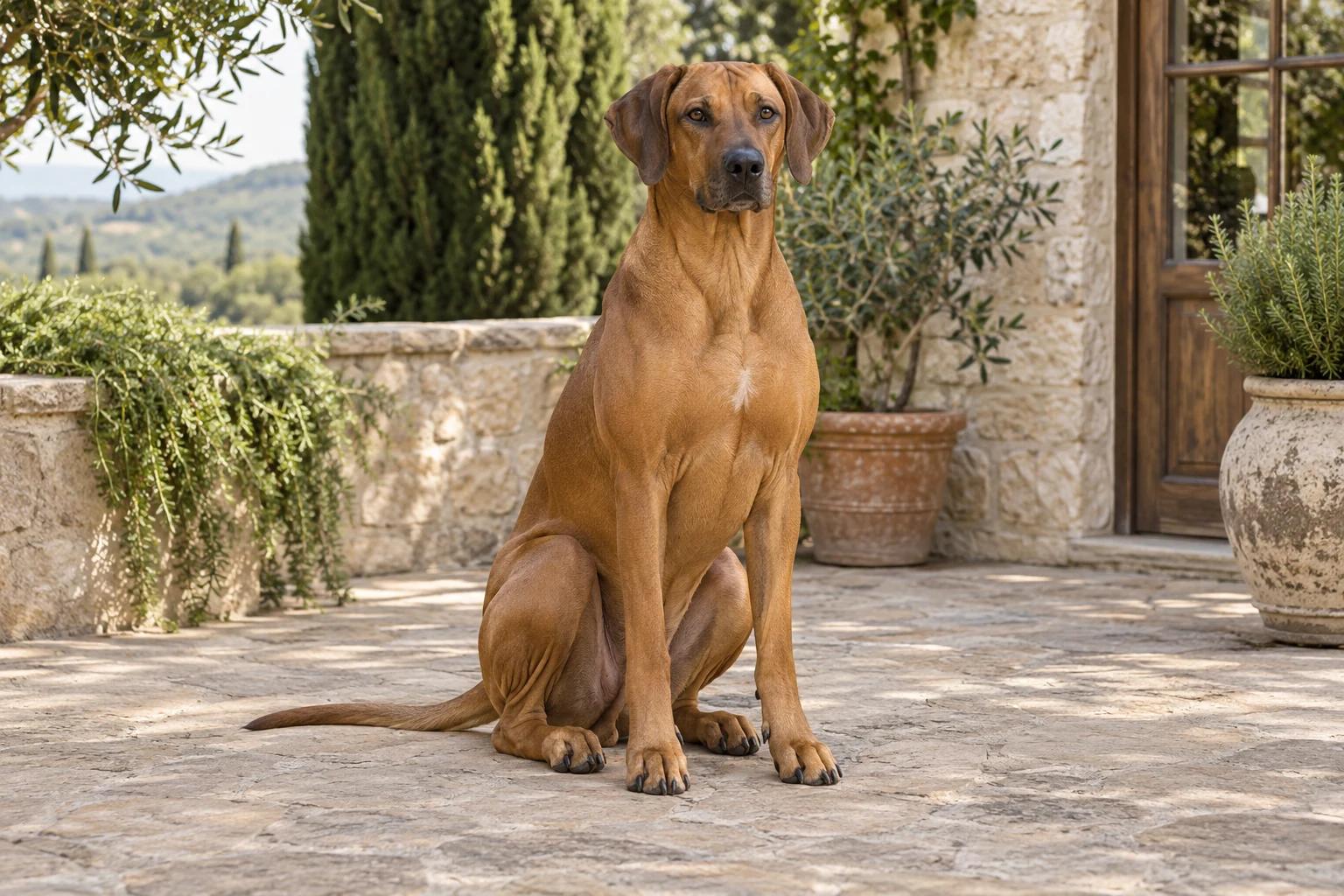
Rhodesian Ridgeback vs Vizsla is not simply a choice between two sizes of reddish, short-coated dog. Their outlines can look superficially similar, yet their working backgrounds and the kind of interaction owners often describe are different. A useful comparison asks what you want to do together and what the individual dog already finds enjoyable or difficult.
Read the Rhodesian Ridgeback profile and Vizsla profile alongside this guide. Neither breed name answers whether a particular dog can comfortably share your home, walk with your existing dog or accompany you on a favorite outing.
Rhodesian Ridgeback vs Vizsla: shape and physical presence
The FCI Ridgeback standard emphasizes a strong, muscular, agile outline without excessive massiveness. It describes a short, dense coat in wheaten shades. This is an athletic hound rather than a dog whose ideal appearance depends on maximum bulk. Its physical presence should not be mistaken for an instruction to encourage intimidating behavior.
The AKC Vizsla standard describes a medium-sized hunting dog that is robust but comparatively lightly built. Its short, close coat is golden rust and lacks a woolly undercoat. The ideal height is 22–24 inches for males and 21–23 inches for females. The standard also describes a Hungarian dog developed for field, forest and water, with a light-footed, far-reaching gait.
In practical terms, compare usable space rather than photographs. Ask an adult dog to be shown in a familiar resting area, then look at how much room remains around it. Check your vehicle's accessible floor area and doorway, not merely its passenger capacity. A dog can fit inside a compartment yet have an awkward route into it.
The difference between Rhodesian Ridgeback and Vizsla should not become a competition for the more impressive outline. You need to be able to manage the individual during an ordinary awkward moment, such as another pedestrian appearing at a narrow gate. Being comfortable with a dog standing quietly beside you is only part of that assessment.
What outdoor life might involve
The Rhodesian Ridgeback Club of the United States warns prospective owners to take chasing seriously and to provide secure containment and lead control. It also emphasizes active participation in the family rather than leaving the dog to occupy a yard alone. These are important considerations when the attractive image in your mind is an effortless off-lead hiking companion.
For a prospective Ridgeback, examine your actual walking options. Can you leave a busy trail before reaching a narrow bridge? Is there a secure place where you can practice without a public path running through it? An open field is not automatically a controlled exercise space simply because it looks empty when you arrive.
The Vizsla Club of America puts considerable emphasis on an active outdoor life, close human involvement and ongoing learning. It describes enthusiasm for retrieving and chasing as well as sporting activities such as agility and field work. A garden is not presented as a substitute for doing things with the dog. Choose this kind of companionship because you enjoy participating, not because you expect the dog to create your motivation.
Separate your ideal weekend from an ordinary weekday. A demanding hike once in a while does not describe the rest of the relationship. Think about the activities you already choose when it is drizzling, when your favorite park is crowded and when you have only a nearby route available. The answer gives a more realistic picture than an ambitious list of future adventures.
Company without stereotypes
A Vizsla vs Rhodesian Ridgeback decision often gets reduced to “clingy versus independent.” That is too blunt to be useful. Ask how a specific adult behaves while its caregiver cooks, reads or leaves the room. Does it settle nearby, follow, seek a game or become distressed? Those are different observations, and a label can hide the distinction.
A dog following someone through the house does not by itself establish a problem. Equally, a dog resting in another room has not demonstrated that it can comfortably spend a whole workday alone. Ask about actual absences and established routines rather than interpreting a single moment as proof.
Your preferences matter here. Some people enjoy frequent physical proximity; others prefer a companion that shares the room without occupying their lap. Be honest about what feels pleasant rather than choosing the description that sounds most affectionate. A mismatch in expectations can be frustrating even when the dog's behavior is entirely ordinary.
Compare the dogs, not the demonstrations
Meet adults where possible, and ask to see ordinary life rather than only a polished training display. A quick series of impressive cues may tell you little about walking past another dog, waiting while a gate opens or relaxing after a visitor arrives.
When considering a Rhodesian Ridgeback or Vizsla, compare similar circumstances. A rested adult at home and an excited youngster at a public event are not a fair pair. Ask the caregiver what is typical, what is unusual about today's setting and which skills still need work.
Also separate appearance from the ownership questions you are trying to answer. The distinctive back marking has its own explanation in reading a Rhodesian Ridgeback's ridge. It does not replace a conversation about the dog's experience and daily behavior.
Use the dog match quiz to organize your preferences, then take the result back to real dogs and real conversations. The strongest choice is not the breed that wins the most categories. It is the individual whose needs fit a life you genuinely want to provide.
FAQ
Which dog should I choose for a small home?
Look at the usable layout and the individual dog's routine rather than selecting from a size label alone. Consider entrances, resting space, stairs and access to suitable outings. A large living room cannot compensate for a daily routine that does not fit the dog.
Can a photograph settle the comparison?
No. Photographs can help you notice differences in outline, but perspective and posture alter the impression. They cannot show how a dog responds during everyday interruptions or how it behaves after the camera is put away. Meet and discuss the individual wherever possible.
Is an adult worth considering instead of a puppy?
An adult may have an established routine you can discuss in detail. Ask which observations come from a home and which come from a temporary setting. That information can make the decision more concrete without promising that every habit will remain unchanged after a move.
Sources behind this article
- FCI: Rhodesian Ridgeback Standard ↗
- AKC: Vizsla Standard ↗
- RRCUS: Life With A Ridgeback ↗
- Vizsla Club of America: Owning a Vizsla ↗
Article source checked: November 16, 2026. Source checked 2026-11-16
Keep reading

Affenpinscher vs Brussels Griffon: Everyday Differences
Read article →