Rhodesian Ridgeback temperament in everyday life
Understand Rhodesian Ridgeback temperament through greetings, play and home life. Learn what to observe without mistaking reserve for a problem.
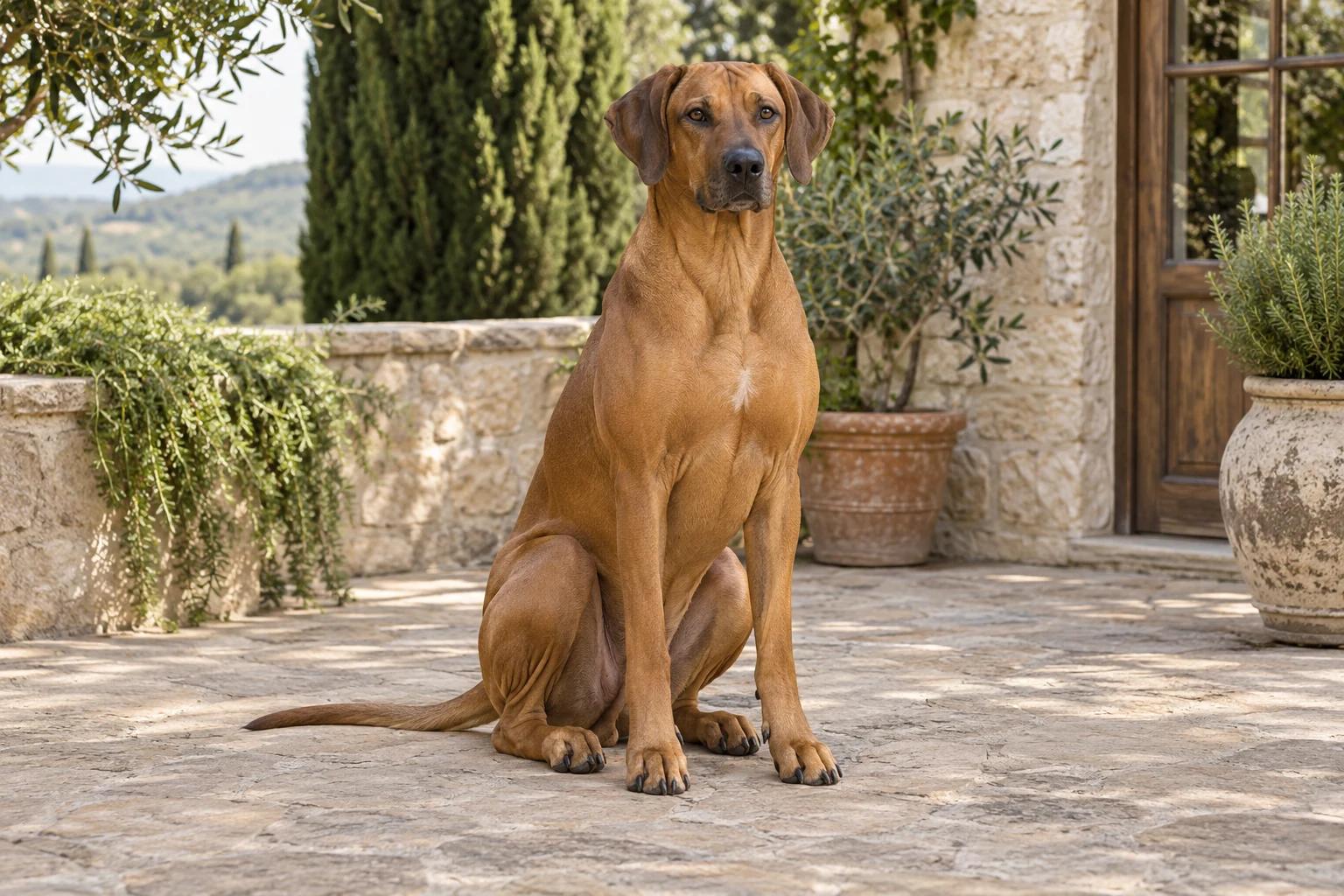
Rhodesian Ridgeback temperament is easier to understand through everyday situations than through a single adjective. A dog can enjoy familiar company, hesitate during an introduction and become animated during a game without being inconsistent. Each situation asks something different of it, and your response should depend on what is happening rather than the reputation attached to the breed.
The Rhodesian Ridgeback profile gives the broader ownership picture. Here, the aim is to make words such as “dignified” useful: what should you notice, which expectations are reasonable and how can the home support comfortable behavior?
Rhodesian Ridgeback temperament: reserve is not a job
The FCI standard describes an intelligent, dignified dog that can be aloof with strangers, while its ideal excludes aggression and shyness. A standard describes an intended temperament, not an assessment of your individual dog. Reserve does not mean that a dog should be encouraged to challenge visitors or decide who may enter the house.
At a first meeting, do not measure friendliness by the speed of the greeting. An adult that remains beside its caregiver while a conversation begins is providing different information from a dog that rushes forward. Neither movement, viewed alone, tells you how the rest of the encounter will unfold.
Ask the caregiver to describe a normal arrival at home. Does the dog approach after the visitor sits down? Does it remain nearby without seeking contact? What changes when several people arrive together? These examples reveal more about Rhodesian Ridgeback personality than asking whether the dog is “protective,” a word that can cover very different behavior.
Read the whole encounter
Dogs Trust's body-language guidance emphasizes the whole body and the surrounding situation. A wagging tail alone is not proof of comfort, and lip licking can mean different things around food and during a worrying event. Distance also matters: a dog may cope with something farther away but struggle as it approaches. Changes in established behavior warrant veterinary attention because discomfort or illness can affect responses.
For a useful observation, compare the same dog at two points in an ordinary encounter. Notice where it was before someone moved and where it chose to stand afterward. Did the person's movement remove an exit or bring an object into the dog's space? This is not a test to repeat until you provoke a reaction; it is a way of understanding something that already happened.
Avoid narrating every pause as stubbornness. You may be asking for an action the dog does not understand, in a place where it has never practiced. Describe the visible event first: “He stopped beside the doorway” is more useful than “He decided to be difficult.” The first description leaves room to investigate the situation.
A second dog changes the household
Battersea's introduction guidance distinguishes a meeting on neutral ground from sharing a home. It recommends separate feeding areas, individual resting places and time apart, with careful supervision around valued items. Do not force greetings. If introductions are going poorly, seek qualified behavioral help instead of repeatedly putting the dogs together and hoping they resolve it themselves.
For a Ridgeback household, examine the paths between those areas. Two beds are less useful if reaching either requires stepping over the other dog. A resting place beside the only doorway can become a traffic problem even when the bed itself is generously sized. Think about movement through the room as well as the objects in it.
Before adding a companion, describe your current dog's ordinary habits to the rescue or breeder. A dog that enjoys meeting others on walks may still have little experience of sharing its sleeping space. That is not a contradiction or a verdict against another dog; it is a different situation requiring a more careful discussion.
Give curiosity something worthwhile to do
Dogs Trust's enrichment guide suggests opportunities to sniff, search and work out simple food or toy puzzles. Select activities for the individual dog's ability and dietary needs, supervise them and reduce difficulty if they become frustrating. Food used in games belongs within the daily allowance. Enrichment should leave room for rest rather than fill every waking moment with stimulation.
A practical example is a visible toy search in a clear room. Begin with a familiar, appropriately sized toy placed where it is easy to find, not concealed inside furniture or among possessions you do not want investigated. The interest lies in locating it, not in making the dog dismantle an obstacle. Keep the first arrangement straightforward enough that you can see what the dog actually does.
Choose the playing area with the dog's movement in mind. A narrow corridor ending at glass doors is different from an open space with a clear stopping area. Remove loose rugs that slide and avoid throwing toys toward people moving through the room. Good preparation makes the activity more useful than simply increasing speed or excitement.
Judge patterns, not one afternoon
Among Rhodesian Ridgeback characteristics, the most important for a prospective owner are those demonstrated by the individual over time. Ask how the dog behaves before and after a normal outing, what its familiar caregiver considers unusual and which activities it actively chooses. A tired dog after a special event is not a complete picture of ordinary home life.
A sudden difference also deserves a different question. If a previously comfortable dog starts avoiding a familiar activity, do not simply decide its true temperament has emerged. Explain the change to your veterinarian and describe the circumstances accurately.
The dog match quiz can help you examine your own expectations. Keep physical appearance separate from behavior: reading the Ridgeback's ridge explains that distinctive feature without treating it as a personality assessment.
FAQ
What is the best question to ask about Rhodesian Ridgeback behavior?
Ask for an example from an ordinary day: what happens when the household becomes busy, when an outing ends or when the dog wants interaction? Concrete examples are easier to compare with your own life than broad claims such as “perfect temperament.”
Should every family member expect the same relationship?
Not necessarily. People offer different activities and interact in different ways. Compare what each person actually does with the dog before assuming a preference means rejection. The aim is comfortable, understandable interaction, not identical behavior toward everyone.
Can I assess temperament at a show or public event?
You can observe that particular setting, but ask how it differs from home. Travel, unfamiliar surroundings and the day's activities may affect what you see. Combine the visit with a discussion of established everyday habits rather than treating one appearance as a complete assessment.
Sources behind this article
- FCI: Rhodesian Ridgeback Standard ↗
- Dogs Trust: Body Language ↗
- Battersea: Introducing a New Dog ↗
- Dogs Trust: Enrichment Activities ↗
Article source checked: November 16, 2026. Source checked 2026-11-16
Keep reading

Airedale Terrier Temperament: What Everyday Life Can Feel Like
Read article →