Rafeiro do Alentejo Size: Height, Weight and Home Fit
Understand Rafeiro do Alentejo height, weight and substantial proportions, then plan equipment and access for the individual adult dog.
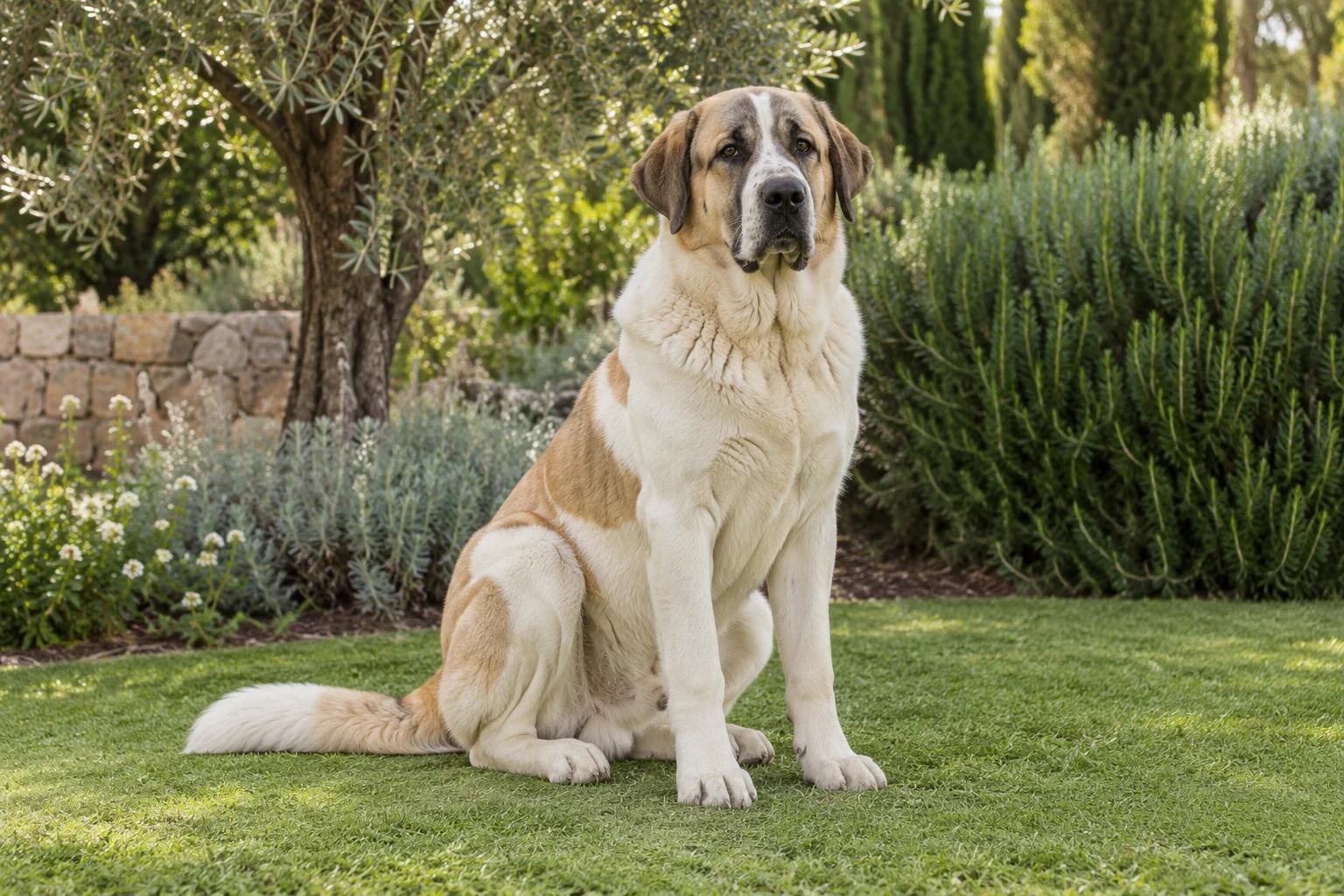
Rafeiro do Alentejo size is a practical ownership consideration, not simply an impressive number. The breed profile lists an adult span of roughly 25–29 inches and 77–132 pounds. A dog in this broad range affects vehicle access, resting space, handling and the equipment you can safely use.
Start with the individual whenever possible. An adult can be measured directly; a puppy's future dimensions remain an estimate. Neither a large parent nor a large paw supplies an exact adult forecast.
Rafeiro do Alentejo size in the standard
The FCI standard gives males a withers height of 66–74 centimetres and weight of 45–60 kilograms; females are 64–70 centimetres and 35–50 kilograms. It describes a powerful, muscular body slightly longer than its height. FCI standard.
Those figures explain why a single breed average is a poor shopping guide. A smaller female and a larger male can both belong within the standard while needing different equipment. Use the measurements of the dog you have, not the largest number as an ambition.
The question how big do Rafeiro do Alentejos get also needs a description of shape. This is a substantial body, so usable width and room to turn matter alongside shoulder height. A space that looks generous from above may still have an inconveniently narrow entrance.
Measure Rafeiro do Alentejo height consistently
Withers height is measured at the shoulder, not at the ears or the top of a raised head. A dog sitting, stretching or standing on uneven ground will not provide a comparable reading.
Choose level, secure footing and a calm opportunity. If the dog is uncomfortable with a measuring aid, do not force a rigid pose. Ask a veterinary team or experienced professional to help obtain the measurement safely.
For household access, measure the opening itself as well. Door hardware, a partly folded seat or a crate latch can reduce usable clearance. A catalog's external dimension is not the same as the space through which your dog must move.
Keep height separate from reach. A dog standing normally may be below a worktop while its nose can investigate something placed close to the edge. Arrange food, medications and unsafe objects beyond access rather than relying on a shoulder measurement.
Interpret Rafeiro do Alentejo weight with condition
Record the date, unit and source of a weight reading. A clinic scale and a guess made while lifting a puppy are not equivalent. As the dog grows, reliable measurements are more useful than impressions such as looking bigger this week.
VCA explains that body-condition scoring considers fat coverage through visual assessment and touch, separately from body weight. The scoring scale should accompany the number. Ask your veterinarian to interpret condition and weight together. VCA body-condition guidance.
Do not increase food simply to reach the upper end of the breed range. Nor should a changing weight be dismissed because it still falls inside that interval. Your veterinarian can advise on the individual rather than treating a standard as a feeding chart.
The distinction is especially useful with a substantial dog: broad proportions should not become an excuse to overlook a change, and a smaller individual should not be encouraged to become heavier merely to resemble a photograph.
Plan the vehicle before the first journey
Measure the entry opening, the available floor area and the space left after your chosen restraint or crate is installed. A large cargo compartment does not automatically have a convenient door or a level place for equipment.
Think about the complete movement: approaching, entering, turning and settling. A dog may fit once inside but struggle with the transition. If a ramp is appropriate, follow its load rating and instructions and arrange gradual familiarization rather than expecting immediate use during a rushed departure.
Consider what happens if the dog cannot climb in independently. This is not a breed whose adult transport plan should assume one person can always lift it. Discuss safe assistance with your veterinary team and identify practical help before an urgent situation.
Do not use a successful jump as the only test of the arrangement. The same setup may become less suitable as the dog ages or its mobility changes.
Give the resting body room to move
A bed should accommodate a comfortable stretch, not merely a tightly curled pose. Measure the usable lying area between bolsters. Thick raised edges can make the actual space much smaller than the product's outer dimensions.
Place the bed where the dog can stand without striking furniture and turn without blocking a doorway. Avoid a location that forces people to step over the dog on their way through the room.
Check the floor route to water, the outside door and the main resting areas. Rugs or other appropriate traction arrangements should lie securely rather than creating a sliding surface of their own. Ask for individual advice if movement becomes difficult.
Outdoor gates and internal barriers need to suit the actual dog and setting. Weight ratings, fixings and opening mechanisms matter; a product described as large-dog equipment still needs to be installed correctly.
Size changes the handling plan
Practice ordinary cooperation while it is easy to arrange: standing for equipment fitting, moving through an opening and waiting while a door is managed. Physical strength should not be the only method for controlling where a large adult goes.
Choose a lead and harness that fit the individual's measurements and follow the manufacturer's instructions. Recheck fit as a young dog grows. Do not assume the size printed on one brand transfers to another.
The dog quiz can help you consider whether this physical commitment fits your home. The Rafeiro's seasonal flock history is useful background, but historical travel does not tell you which modern equipment fits.
FAQ
Is the largest adult weight a target for my puppy?
No. A breed range is descriptive, not a growth objective. Ask your veterinarian about the puppy's condition and development instead of feeding toward the largest published figure.
Should I buy a crate from shoulder height alone?
No. Check usable length, width, height and the entrance, plus the product's instructions. The dog needs appropriate room to turn and settle, not merely enough clearance at the shoulder.
What is the most easily overlooked size issue?
The route into a space is often overlooked. Check vehicle openings, corners and door swings as well as the resting area itself, and plan how you would assist the dog if mobility changed.
Sources behind this article
Article source checked: November 16, 2026. Source checked 2026-11-16
Keep reading
Rafeiro do Alentejo Temperament: A Watchful Companion
Read article →