Portuguese Podengo training: everyday cooperation
Build Portuguese Podengo training around clear cues, useful rewards and realistic distractions, from door routines to recall and social experiences.
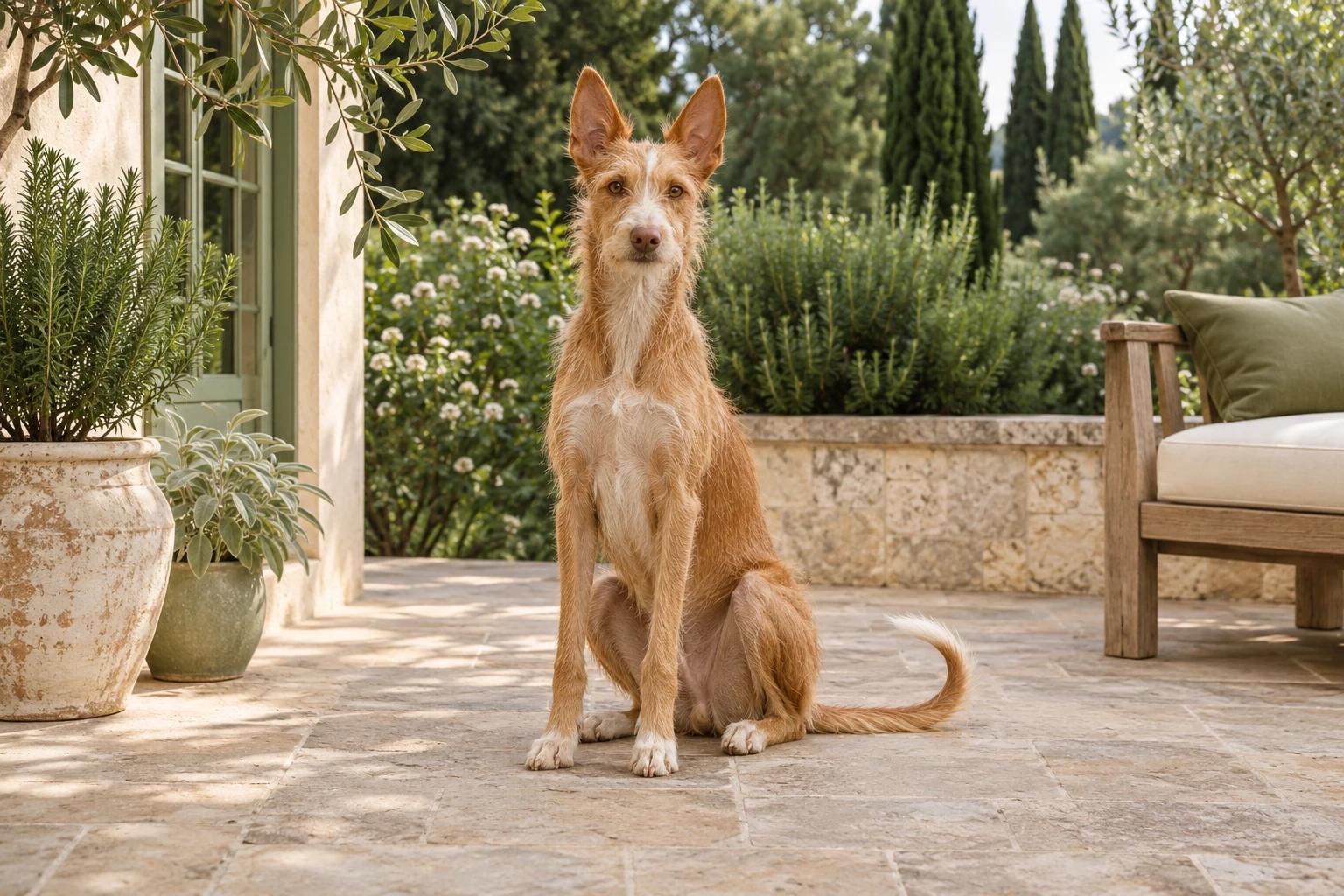
Portuguese Podengo training works best when you define what cooperation should look like in everyday life. “Be good” is not a teachable task; “pause while I open this door” is. Start with a handful of skills that make your actual routine easier, and practise them where the dog can succeed. You are building communication with a dog, not trying to erase the independent temperament described in the AKC Podengo standard.
Portuguese Podengo training: choose a first-week priority
List the moments that could become difficult in your home. Perhaps you have a gate opening onto the street, a shared lift, or a narrow hall where visitors remove coats. Choose the most useful manageable skill for one of those settings. Do not begin by asking the dog to master a long list of commands while also adjusting to unfamiliar people and surroundings.
Prepare the practice area before bringing the dog into it. Close the exterior door, put other animals elsewhere if needed and have rewards ready. The first door exercise can take place at an internal doorway; you do not need an open route to the street to teach a pause.
Write a simple success description. For example: the dog remains on this side of the doorway while the handle moves. Once that is easy, you can work on a small opening. This turns a vague ambition into steps you can observe and prevents a rushed jump to the hardest version.
Find rewards and make the task clear
The ASPCA’s training position statement supports reward-led methods that minimize distress and discomfort. For your own practice, choose rewards the dog wants in that setting and make the requested action understandable.
Someone asking how to train a Portuguese Podengo often needs a simpler setup before needing a more exciting reward. If the dog cannot turn toward you on a busy pavement, move to a quieter place rather than conducting a prolonged negotiation beside the distraction. Make it easy to notice you, then reward that small response.
Try a few easy repetitions and stop before either of you becomes frustrated. Note the setting and what worked. “Responded in the hallway with the door closed” tells you where to restart tomorrow. “Knows it now” can conceal an enormous jump between indoor practice and an outdoor expectation.
Food used in training belongs within the dog’s overall feeding plan. Discuss dietary questions with your veterinarian, especially if the dog has restrictions. Avoid changing foods or adding large quantities merely to keep a difficult session going.
Build a recall that does not end every good thing
Begin recall practice over a short distance in a secure, quiet space. Use one agreed cue, reward the dog for reaching you and give a clear next step. Sometimes that next step can be permission to return to a suitable activity, so coming close does not always predict the end of exploration.
Gradually vary one part of the exercise. You might increase distance while keeping the room familiar, or practise in a quiet enclosed outdoor area at a shorter distance. Do not add distance, unfamiliar surroundings and exciting movement all at once. If responses deteriorate, return to an easier version.
A lead or suitably managed long line helps prevent an unsuccessful practice attempt from becoming an escape. Ask a qualified trainer to demonstrate safe handling and equipment fit if you are unfamiliar with long lines. Do not wrap a line around your hand or use it as permission to let the dog accelerate into its end.
Treat recall as an ongoing skill, not certification for off-lead access. Use secure containment where needed and follow local requirements. The question is not whether the dog once came when called, but whether the setting is appropriate for the level of reliability you have actually established.
Make lead walking a conversation
For Portuguese Podengo obedience in public, define where you need close walking and where you can allow exploration. A narrow pavement beside traffic requires a different arrangement from a quiet open path. Consistent transitions make those expectations easier to teach.
Practise a short stretch with a loose lead in an uncomplicated place, rewarding the position you want. Pause to reset if the setup becomes difficult rather than dragging the dog through a long route while repeating the same cue. Pick a destination with enough room to change direction or create distance.
If another dog or an interesting scent captures attention, work farther away. You can reward looking back at a manageable distance without requiring the dog to pass at arm’s length. Over time, record what distances and situations are becoming easier. That is more informative than judging the entire walk as a success or failure.
Socialization is not a greeting quota
Portuguese Podengo socialization should help the dog experience the world without being overwhelmed. Observation counts. A calm look at a person across a quiet space may be a better starting point than direct contact in a crowded entrance.
Plan one modest outing goal, such as watching bicycles from a comfortable distance. Keep an exit available and leave while the dog can still engage with you. Do not invite everyone nearby to handle the dog simply because you have decided the outing is socialization.
For puppies, discuss appropriate exposure and vaccination considerations with your veterinarian. For an adult with an unknown history, begin with what you can observe now. Previous experience should inform the plan, but lack of a complete history does not justify forcing a series of tests.
Know when the plan needs another pair of eyes
If progress stalls, check the practical details before adding more repetitions. Is the surface slippery? Is the dog tired? Is the reward inconvenient to deliver? Are different people using different words? A short video of an ordinary session can help a trainer see problems that are hard to notice while you are handling the dog.
Stop and seek professional guidance if training involves fear, aggression or risk of injury. Sudden behavioral changes also deserve a veterinary discussion. Everyday practice should not become an attempt to diagnose or treat a serious problem from a breed article.
Keep your plan grounded in the Podengo breed profile and your individual dog. The size and working-role article clarifies variety questions without prescribing a training outcome. If you are choosing rather than already training a dog, the dog match quiz can help you decide whether this daily teaching role is something you want to take on.
FAQ
How many commands should I teach first?
Start with the few skills that make your home manageable, such as a doorway pause, coming close and settling in a designated space. Teach them in easy conditions before combining them into a busy routine. More commands are not automatically more useful.
Does indoor recall mean my Podengo is ready off lead?
No. Indoor success does not establish reliability around outdoor distractions. Keep appropriate containment and build skills gradually. Choose outings based on demonstrated responses and the environment rather than a single successful training session.
What should I do if my dog ignores a cue?
Check whether the task is familiar and the surroundings are too difficult. Move to an easier setup and reward a response the dog can manage. Repeatedly calling or increasing pressure does not clarify a cue the dog has not yet learned in that situation.
Sources behind this article
- American Kennel Club: Portuguese Podengo standard ↗
- ASPCA: Position Statement on Training Aids and Methods ↗
Article source checked: November 15, 2026. Source checked 2026-11-15
Keep reading

Affenpinscher Training: Build Useful Everyday Habits
Read article →