Pixiebob Cat Personality: An Involved Companion, Not a Stereotype
Explore Pixiebob cat personality through everyday play, contact and rest, with practical questions about the individual animal.
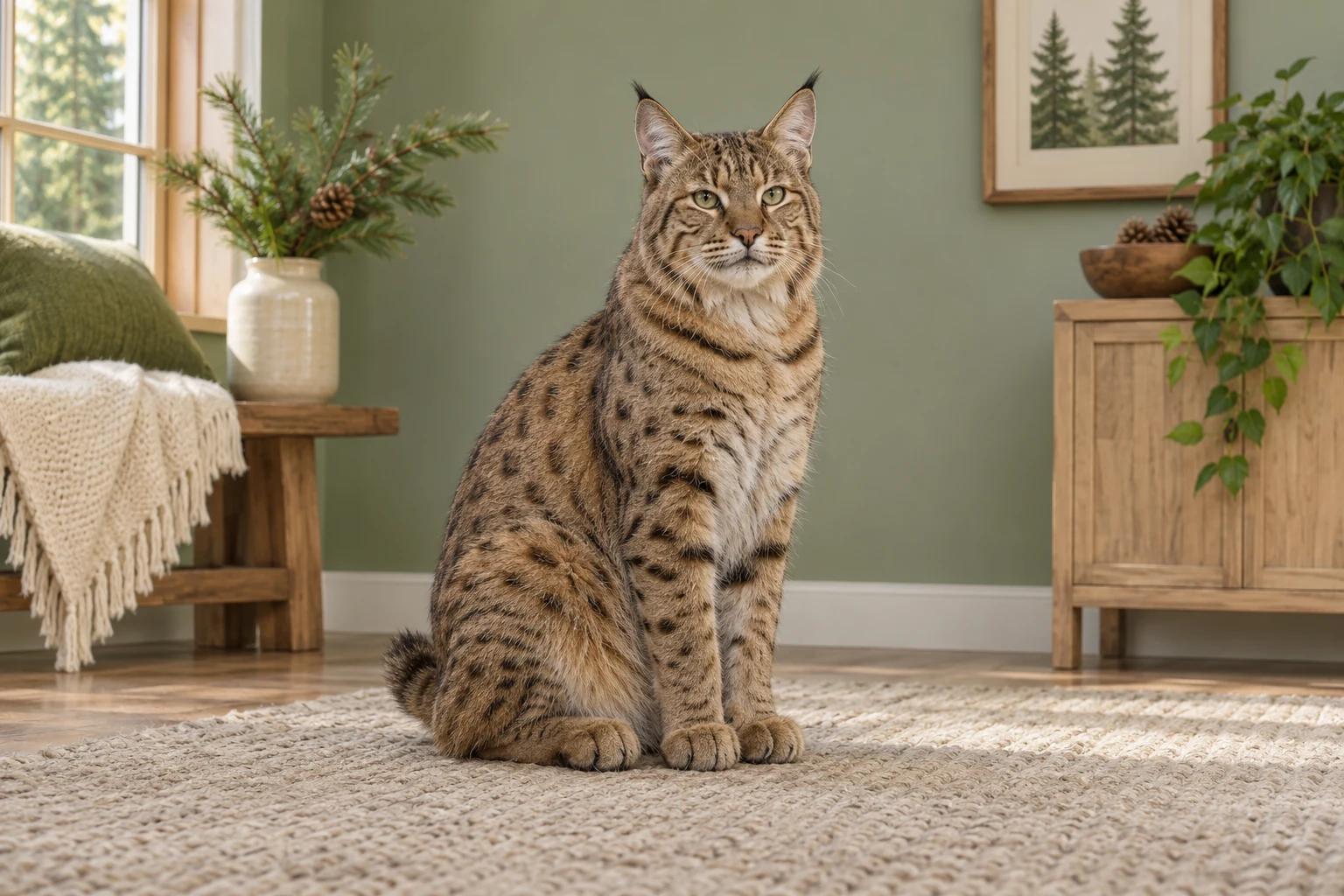
Pixiebob cat personality is often described as social, playful and involved in household activity. The short tail and spotted coat may catch your attention first, but appearance says little about how an individual wants to spend an afternoon. Some cats seek a game, some follow a familiar person and some prefer observing from a comfortable place. Meeting those preferences matters more than obtaining the behavior promised by a flattering breed description.
This guide considers pixiebob cat characteristics through ordinary companionship. It leaves identification paperwork to the existing article and focuses on the questions that help you understand the animal itself.
Pixiebob cat personality: ask for everyday examples
TICA presents the Pixiebob as an active, social domestic cat. Its description of devotion is a reason to ask about the individual's relationship with familiar people, not evidence that every cat will respond identically. Ask the caregiver what happens when someone sits down, starts work or invites play.
The Pixiebob profile emphasizes companionability while retaining the need for careful handling and introductions. Use that balance when assessing a prospective companion. A social cat can still want distance from a new person or dislike a particular kind of touch.
At a meeting, allow the animal to investigate without immediately reaching toward it. Ask whether the observed behavior is typical of the setting. A single confident approach is useful information, but it cannot tell you how the cat behaves during every household event.
Playfulness does not prescribe one favorite game
Fetch and harness activities appear in the registry description, yet either should remain optional for the individual. A Pixiebob that prefers another game has not failed its breed identity. Learn what already interests the cat before setting a training ambition.
Watch how the activity begins and ends. Does the cat return to the object, change its position or settle elsewhere? Give it a clear way to stop, especially when several people are eager to take part. Repeatedly restarting the game can turn an enjoyable invitation into an unwanted demand.
FelineVMA's indoor-cat guidance places play within a wider environment of retreat, resources and positive contact. That means a quiet resting place matters alongside toys. Prepare a home where participation has alternatives rather than judging success by how long you can keep the cat visibly active.
Domestic appearance and ancestry are different questions
The breed was developed to resemble a bobcat, but resemblance should not be used to explain an individual's behavior as wild or uncontrollable. Likewise, a domestic breed label does not guarantee suitability for every situation. Ask about actual experience and responses instead of assigning a motive from the coat and tail.
If identification or contact details need organizing, the separate Pixiebob records guide covers that practical task. A complete record is useful, but it is not a personality assessment. Keep those two conversations connected without allowing one to substitute for the other.
Avoid asking a caregiver to prove a temperament claim through an uncomfortable demonstration. A cat need not be carried, dressed or exposed to an unfamiliar animal to show that it is companionable. Observe normal interactions that the animal already chooses.
Handling deserves its own conversation
Ask which contact the cat enjoys, which tasks are familiar and what should be left to professional help. A cat may rest beside you willingly while finding lifting difficult. Do not interpret that distinction as inconsistent affection.
Some Pixiebobs have extra toes. If that applies to the individual, ask the veterinary team to show the relevant care checks rather than assuming its paws are identical to another cat's. This article gives no nail-trimming procedure. Its point is to include ordinary care in the relationship discussion before an unfamiliar task becomes a confrontation.
Adults should guide children and remain responsible for handling and care. Explain that a resting place stays undisturbed and that the cat can leave an interaction. The animal's social reputation is not permission to test how much attention it will tolerate.
Introductions are not a breed entitlement
Find out whether the cat has lived with other animals and what those arrangements involved. A comfortable relationship with one familiar pet does not establish acceptance of every new one. Ask about the circumstances rather than simply recording a yes or no.
Prepare appropriate separation, resources and retreat, and obtain advice on introductions suited to the individuals. Do not rush contact to see whether the Pixiebob really is friendly. The home needs a workable management arrangement while you learn about compatibility.
Visitors also benefit from clear guidance. Tell them how the cat usually approaches and when it should be left alone. A companionable animal can choose to watch from across the room without needing encouragement from every guest.
Read changed behavior as information
Pixiebob cat behavior should be described in context. If a familiar activity stops or contact becomes difficult, note what changed and seek veterinary advice when concerned. Do not explain away a new response as stubbornness, a breed quirk or a consequence of its wild-looking appearance.
Describe what you saw: the cat avoided a step, moved away from a hand or stopped following a favorite toy. Concrete observations are easier to discuss than a claim that it has become moody. Avoid repeatedly reproducing the situation just to confirm your interpretation.
For prospective owners, the same habit improves decision-making. Ask what the caregiver would want a new household to understand during the first week. Include play, handling, rest and periods apart, with realistic answers about what support is available.
Build your decision around the actual relationship
The cat quiz can help clarify your preferences about interaction and daily care. Bring those preferences to the caregiver conversation rather than expecting a breed description to resolve every uncertainty.
A thoughtful choice includes the parts of life that do not appear in a photograph: quiet company, accessible resources, care tasks and a dependable backup during absences. You are choosing whether you can support this particular cat over time. Curiosity about its own habits is a stronger foundation than expecting it to perform a reputation.
Frequently asked questions
Are Pixiebobs always outgoing?
No individual response is guaranteed. TICA describes a social tendency, but history, setting and personal preferences still matter during introductions.
Does every Pixiebob enjoy fetch or harness walking?
No. These appear as possible activities in breed descriptions. Offer suitable choices and let the individual determine whether it enjoys them.
Does the bobcat-like appearance explain behavior?
Appearance alone is not a behavioral explanation. Assess the domestic cat's actual history and responses rather than assigning motives from its markings or tail.
What should I do about a sudden personality change?
Describe the change and contact your veterinarian about concerns. A breed label cannot establish whether the animal is comfortable or explain a new response.
Sources behind this article
Article source checked: November 20, 2026. Source checked 2026-11-20
Keep reading
Pixiebob Cat Size: Reference Weights and Everyday Fit
Read article →