Peterbald Cat Temperament: Social Interest With Personal Boundaries
Explore Peterbald cat temperament, social interest, play and vocal behavior while respecting individual preferences and handling boundaries.
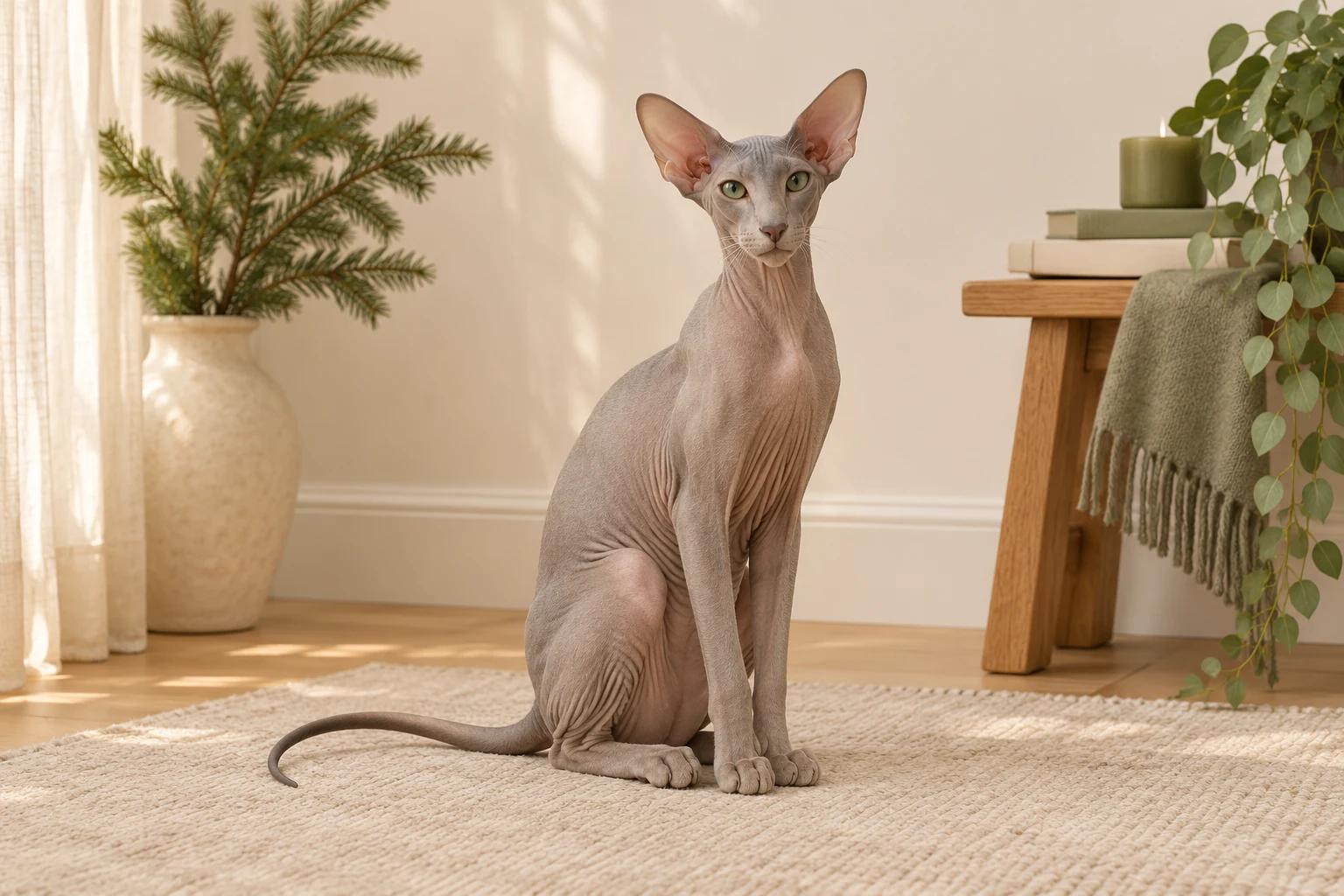
Peterbald cat temperament is commonly described as affectionate, curious and eager for company. That can make the breed appealing to someone who wants a companion involved in daily life. It also makes individual boundaries important: a cat that follows you may not want the next thing you choose to do, especially when contact becomes handling or skin care. Start by understanding the animal's ordinary ways of joining in.
This guide examines peterbald cat personality through meetings, play and shared space. It keeps temperament separate from a skin-care timetable and does not promise tolerance of every person, pet or household routine.
Peterbald cat temperament: ask what social means here
TICA's Peterbald account emphasizes an interactive, affectionate breed. The current Peterbald profile preserves that tendency while warning that sociability is not guaranteed acceptance of every visitor or animal. Ask the caregiver to describe actual behavior rather than relying on the strength of an adjective.
A cat might follow a familiar person between rooms, rest nearby or approach with a toy. Those are different kinds of involvement. Notice which ones the individual chooses and which invitations it declines. A social label is most useful when it leads to concrete questions about the relationship.
During a meeting, give the animal time to investigate without immediately touching it. Ask whether the setting is familiar and whether its behavior is typical. A short visit can provide observations, but it cannot reveal how the cat behaves throughout an entire day or during an ordinary absence.
Keep affection separate from handling
A Peterbald's unusual coat can invite constant attention from people who want to know how it feels. That curiosity belongs to the visitor, not necessarily to the cat. Before allowing contact, ask how the animal prefers to be approached and whether particular handling should be avoided.
Let the cat move away. Do not repeatedly pass it between people to demonstrate its reputed friendliness. If children are present, an adult should organize the encounter and explain that the cat can choose distance. Respect for that choice matters even when the animal has previously enjoyed being touched.
The same distinction belongs in everyday care. A cat enjoying company does not establish that a particular grooming technique is comfortable. A response to washing or a tool needs its own assessment. Do not call the animal difficult simply because its handling preference complicates the routine you hoped to follow.
Give playful curiosity a useful outlet
The site's profile describes an athletic, playful cat, and TICA includes interactive challenges in its breed account. Find out which games the individual already uses. Fetch may be mentioned in breed descriptions, but it should remain an optional activity rather than a test the cat must pass.
Prepare space for exploration that does not depend on access to hazards. Secure materials and fragile objects, provide suitable observation places, and keep a quiet alternative available. FelineVMA's indoor-cat guidance places play alongside retreat and other environmental needs. One activity does not replace the others.
Observe how the cat moves between engagement and rest. A lively companion should not be kept active for a visitor's entertainment after it chooses to stop. If you are learning a new game together, change the setup gradually and notice what actually encourages comfortable participation.
A vocal cat still needs careful listening
Peterbald cat characteristics can include vocal interaction. It is reasonable to ask about this before adoption, especially if your home is sensitive to sound. Request examples from normal days rather than expecting the cat to demonstrate a typical volume on demand.
After adoption, describe a confusing pattern in its setting: time, location and nearby activity. Avoid assuming that calling always asks for food or that a new sound is explained by the breed. Contact your veterinarian about sudden changes or concerns, including changes accompanied by altered activity or handling tolerance.
Caregivers can help by using concrete descriptions. Saying that the cat called after moving away from a familiar resting place gives more information than saying it was dramatic. Clear observations support a useful conversation without trying to diagnose a behavioral or physical problem yourself.
Think honestly about periods apart
Before committing, explain the household's usual schedule and ask about comparable experience in the cat's present home. There is no universal number of hours in this article that guarantees a Peterbald will be comfortable alone. The animal's history and environment matter, as do the opportunities available when people return.
Plan dependable care during delays and absences. A backup person needs the current feeding, contact and skin-care information, not just instructions to refill a bowl. Avoid promising a level of involvement that depends on a schedule nobody in the household can maintain.
Another pet is not an automatic substitute for human company or a guaranteed answer to an unsettled cat. Assess the animals individually and arrange careful introductions. If behavior raises concern, seek appropriate professional advice rather than adding another animal as an experiment.
Include care without making it the whole personality
The existing Peterbald seasonal care article discusses reviewing a skin routine when circumstances change. This temperament guide asks a different question: how does the cat participate in ordinary life, including the parts that require hands-on attention?
Ask the caregiver which care tasks are familiar, which need professional help and how the cat signals discomfort. Keep that history attached to the individual and current coat type. It would be unfair to predict personality from whether the animal accepts an unfamiliar task during a first meeting.
Use the cat quiz to clarify your preferences about an interactive companion. Then compare those preferences with the care history, your resources and the animal's choices. A workable relationship leaves room for enthusiastic company and quiet refusal alike; it does not ask the cat to perform an affectionate reputation all day.
Frequently asked questions
Are Peterbalds generally social?
TICA describes an affectionate, interactive tendency. That is a starting point for questions about the individual, not a guarantee of comfort with every visitor or animal.
Does seeking company mean a Peterbald enjoys all handling?
No. Nearby company, petting, lifting and skin care are different experiences. Learn the cat's preferences and seek advice about uncomfortable care tasks.
Must a Peterbald enjoy fetch?
No. It appears in breed descriptions as a possible activity, but the individual may prefer another game. Offer suitable choices without making one activity a breed test.
Can another pet solve concerns about time alone?
Not automatically. Compatibility and introductions need their own assessment, and another animal adds responsibilities. Seek professional advice about a persistent or sudden behavioral concern.
Sources behind this article
Article source checked: November 20, 2026. Source checked 2026-11-20
Keep reading
Peterbald Cat Size: Weight References and a Lean Outline
Read article →