Peterbald Cat Size: Weight References and a Lean Outline
Understand Peterbald cat size and weight references without treating them as feeding targets. Consider body condition, transport and individual fit.
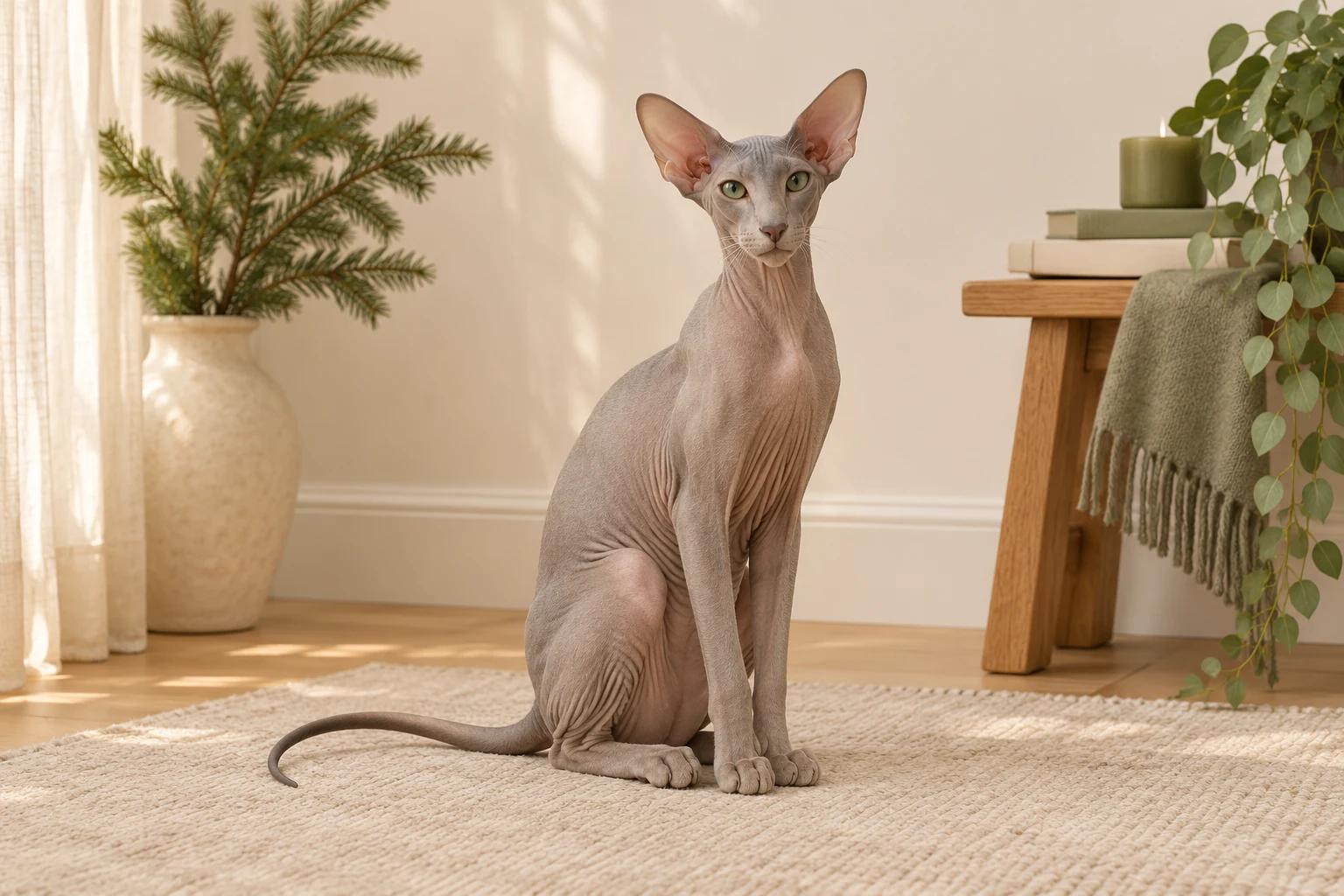
Peterbald cat size is described on the current site with adult reference ranges of 5–7 pounds for females and 7–10 pounds for males. Those TICA figures accompany a medium-sized, long-lined body description. A cat with little coat may make its outline especially visible, but appearance alone cannot establish body condition, health or the right amount of food.
This guide puts peterbald cat weight into context and looks at equipment fit and useful care records. It does not offer a growth calculator, a feeding prescription or a numerical height estimate unsupported by the reviewed sources.
Peterbald cat size: what the published figures mean
TICA gives separate adult female and male weight references. The Peterbald profile uses those figures while reminding readers that individuals vary. They are not a guarantee of a kitten's eventual weight or a boundary within which every animal must be made to fit.
The breed's long body and lean outline can create a different visual impression from a compact cat at the same weight. Coat type also changes what a photograph reveals. TICA describes coverage ranging from hairless to ordinary coats, so not every Peterbald will have the same visible silhouette.
When someone asks “how big do peterbald cats get?”, begin by distinguishing a reference group from the actual animal. Ask for age, current measurements if available and relevant veterinary history. A single number without that context is a limited basis for choosing equipment or assessing a change.
There is no invented height chart here
The reviewed TICA account describes size through weight and body type. This article does not add a verified peterbald cat height range because the material does not establish one. An upright ear tip, shoulder and stretched body length are different measurements; they should not be exchanged to produce a precise-looking answer.
If a measurement serves a practical purpose, describe that purpose first. A carrier opening, a resting platform and a route to a resource pose different questions. A shoulder-height estimate would not settle whether a cat can turn comfortably inside a particular container.
Avoid repeatedly positioning an unwilling cat just to complete an online size comparison. Ask for professional help if handling or movement makes assessment difficult. The object is to support comfortable daily life, not to collect every possible measurement.
Body condition needs an individual assessment
Cornell's feeding guidance emphasizes that cats vary in food requirements and recommends veterinary help in determining an appropriate individual weight. A breed reference does not supply that assessment. A cat inside the published interval can still raise concerns, and one outside it should not automatically be pushed toward a number from a chart.
Do not assume a visible outline proves that a nearly hairless animal is underweight. Equally, do not dismiss a new change in weight or appetite because you expect the breed to look lean. Describe what changed and consult your veterinarian rather than selecting a conclusion from appearance.
Ask for dated records where possible. A weight from a previous appointment is easier to discuss when you know when it was measured and what the veterinary team advised. Keep those instructions separate from general breed information so that every caregiver follows the same plan.
Choose transport equipment around the real body
A carrier's advertised maximum weight is not its usable interior. Check the entrance, space to change position and the way the carrier opens for access. A long-bodied cat may need a different fit from a compact animal with the same measured weight.
Ask which carrier the Peterbald already uses and how travel is managed. If a replacement is needed, consider both the animal's comfort and secure handling by the person carrying it. Follow the manufacturer's instructions and ask your veterinary team for guidance when the current arrangement is difficult.
Familiarization at home, where appropriate, is different from forcing a test immediately before a journey. Give the cat a chance to investigate suitable equipment without turning fit assessment into a contest over whether it can be made to enter. A poor opening or awkward interior remains a problem even if the animal briefly tolerates it.
Review access as the individual changes
A medium-sized breed label cannot establish the right height or route for every resting place. Look at how the cat currently reaches the surfaces it chooses and whether the support is stable. Follow load and installation guidance for furniture rather than assuming a light cat cannot strain an unsuitable fixture.
Keep necessary resources accessible. Do not place water, litter or a required resting option behind a difficult physical challenge to encourage exercise. The animal should have choices that suit its movement and circumstances, including alternatives to raised spaces.
If a familiar movement becomes awkward or the cat stops using a preferred place, seek veterinary advice rather than deciding that it has simply grown too large or become less athletic. A room-layout review may be useful, but it cannot diagnose the reason for a change.
Keep coat care and feeding questions distinct
Peterbald coat types require different care discussions, and the current profile keeps them separate. That variation is relevant to ownership but does not justify a universal feeding adjustment. Do not calculate extra portions from how much bare skin you can see or borrow another hairless breed's routine as a nutritional rule.
The existing Peterbald seasonal skin-care guide explains how a care plan can be reviewed without automatically increasing washing. Weight assessment belongs with the veterinary team rather than being added to a seasonal product or bathing experiment.
Before adoption, use the cat quiz to consider your broader care preferences, then ask practical questions about the candidate cat. Record the actual weight if known, familiar carrier, movement needs and current professional instructions. Those details help you prepare a home while leaving uncertainty visible where a breed reference cannot answer it.
Keep coat coverage separate from the weight record
For this breed, note a documented coat change separately from the dated weight and any veterinary advice. A newer photograph with less hair can make the outline look different even when you have not established a change on the scale. That observation does not explain the animal’s condition; it tells you which facts you have and which still need checking. Give the veterinary team the dates rather than deciding that coat loss proves weight loss or automatically requires more food.
Frequently asked questions
What adult weight range does this article use?
It follows TICA's adult reference figures of 5–7 pounds for females and 7–10 pounds for males, as used on the current site profile. Individual animals vary.
Does a lean-looking Peterbald need more food?
Appearance alone cannot answer that. Ask your veterinarian to assess body condition and feeding needs rather than adjusting portions from a breed silhouette or coat type.
How tall is a Peterbald?
No verified shoulder-height interval is published here. The reviewed material describes weight and body type without supporting a numerical height chart.
Can I buy a carrier solely from its weight limit?
No. Also assess usable interior space, access, secure handling and the actual cat's ability to change position comfortably. Seek guidance if travel or handling is difficult.
Sources behind this article
Article source checked: November 20, 2026. Source checked 2026-11-20
Keep reading
Peterbald Cat Temperament: Social Interest With Personal Boundaries
Read article →