Old Danish Pointer temperament: living with a steady gundog
Understand Old Danish Pointer temperament through everyday routines, introductions, companionship, and practical questions before choosing a dog.
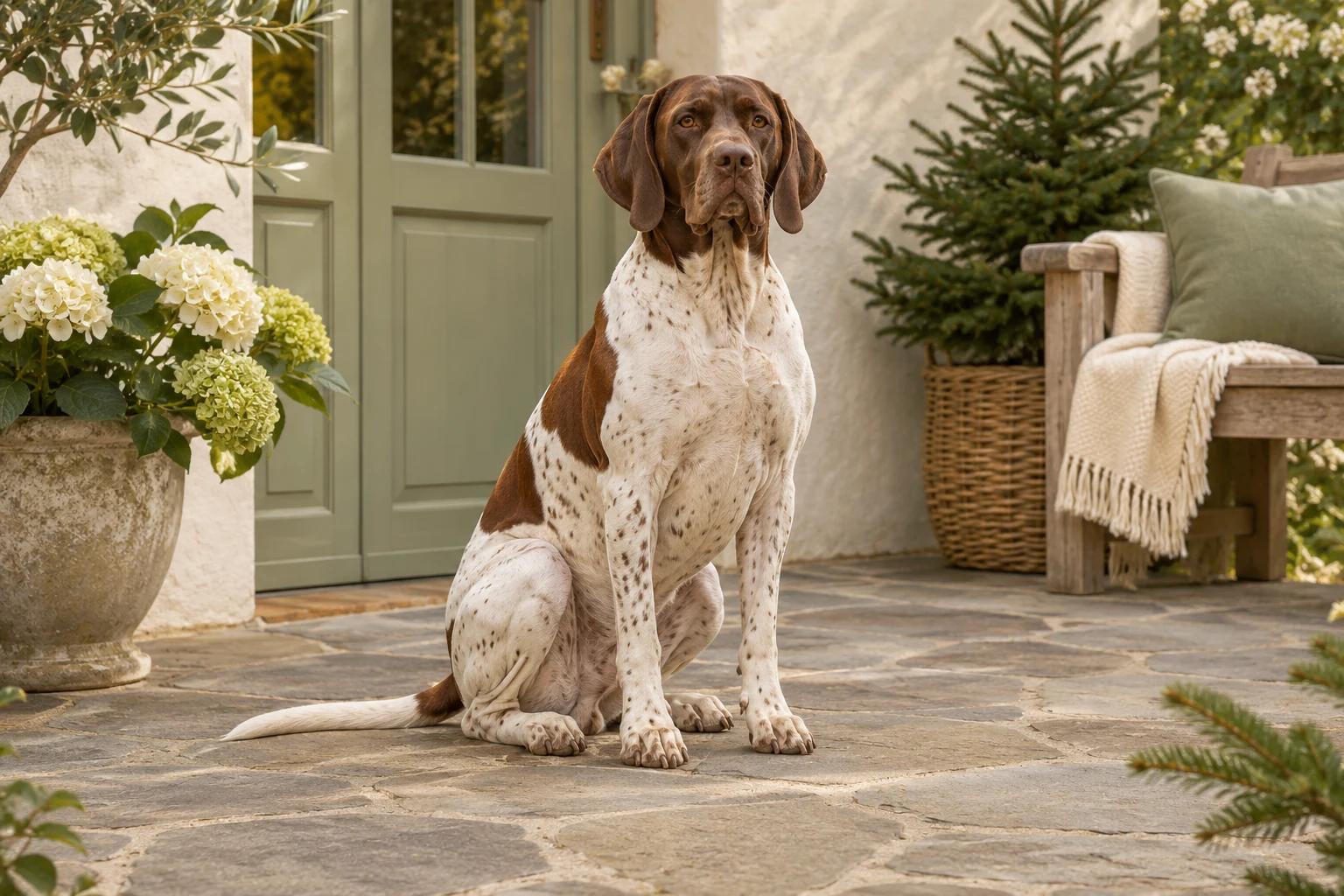
Old Danish Pointer temperament is often described as calm and determined, a combination that deserves more thought than simply calling this an easy dog. A companion can be composed in the living room and thoroughly interested in what is happening outside. The useful ownership question is whether you enjoy sharing ordinary activities with a substantial gundog, including the teaching, planning, and observation that make those activities work.
The Old Danish Pointer profile introduces the breed’s everyday care. Here, the focus is on choosing and living with an individual, rather than interpreting its traditional hunting pace.
Old Danish Pointer temperament in everyday decisions
The UKC breed standard describes a stable, determined character. The FCI standard likewise presents a composed but purposeful gundog. These are descriptions of the breed ideal, not a temperament assessment of the puppy in front of you.
For a household, translate those words into questions. What does the dog do while someone prepares dinner? Can it remain comfortable when a familiar person leaves the room? How does it respond when an outing ends? These small transitions reveal more about daily compatibility than a photograph of a dog sleeping after a busy afternoon.
Ask to hear about an ordinary weekday, not the breeder’s best training session. An answer that includes both easy moments and things still being taught is more useful than a blanket assurance that every dog is relaxed.
Company without a constant performance
An Old Danish Pointer personality should be understood through actual preferences. One dog may enjoy lying near a desk; another may choose a quieter corner. You do not need to turn every shared hour into a game. Make space for companionship that includes doing very little together.
Try placing a bed where the dog can observe the room without blocking a doorway. This is a practical detail with a substantial dog: a sleeping place in a narrow passage repeatedly brings feet, visitors, and movement into its resting area. A calmer location makes household traffic easier for everyone.
Agree on invitations to furniture, access to bedrooms, and where the dog stays during meals before arrival. Inconsistent rules create avoidable negotiation. If one person encourages enthusiastic sofa greetings while another wants four paws on the floor, the dog has been given two different jobs.
Time apart needs its own plan. Ask what the individual already tolerates and build from there rather than assuming that a calm appearance means a long workday alone will be comfortable. Arrange practical cover for the early adjustment period.
Give attention a clear destination
The breed profile places substantial importance on mental engagement. That need does not require elaborate equipment. A short search for a familiar toy, a few repetitions of going to a mat, or practicing a turn together on a quiet walk can give an ordinary day some structure.
Choose one useful behavior at a time. For example, teach the dog where to stand while its walking equipment is fitted. Set the equipment within reach, reward a moment of stillness, and finish before excitement turns the preparation into a wrestling match. This small routine pays off every time you leave the house.
The most useful Old Danish Pointer characteristics to explore are not just enthusiasm or responsiveness, but recovery and flexibility. Can the dog pause after play? Does it accept a change of direction? Can it take a familiar reward in a new place? These observations help you choose the next manageable step.
Avoid reading every distraction as stubbornness. A cue that is understood in a quiet kitchen may need to be taught again beside an interesting hedge. Making the setting easier is often more productive than repeating the same word louder.
Visitors, dogs, and household movement
Plan greetings around the individual rather than the breed’s friendly reputation. Before visitors arrive, decide who opens the door and who handles the dog. A bed or gated area away from the threshold lets the initial bustle finish before introductions begin.
Visitors can then allow the dog to approach without crowding it. If it prefers distance, that is useful information, not a failed welcome. Ask guests to follow the household’s greeting rules so that one exciting visit does not undo weeks of practice.
For another resident dog, discuss actual compatibility with the breeder, rescue, or a qualified trainer. Ask about the newcomer’s history with dogs of a similar size and style. Set up separate feeding and resting arrangements instead of requiring immediate sharing. Supervise interactions with children and make the dog’s retreat genuinely unavailable to interruption.
Outdoor wildlife and household pets are a separate question from sociability with people. A gundog label is not evidence that a particular dog can be left with another species. Describe your existing animals honestly and ask for relevant experience rather than reassurance based on breed alone.
Read behavior as a pattern, not a verdict
Keep a brief record if Old Danish Pointer behavior is puzzling. Note what happened beforehand, where it occurred, and what helped the dog settle afterward. “Barked when a delivery arrived” gives you something to work with; “became difficult” does not.
The live profile suggests occasional barking rather than a silent household. Consider where deliveries arrive, what the dog can see from its resting place, and whether someone can guide it through the interruption. Do not select the breed on the expectation that it will never make noise.
A sudden or troubling change deserves a conversation with your veterinarian. For ongoing training difficulties, seek help that considers both the setting and the dog’s emotional response. There is no need to wait until a manageable problem becomes an entrenched routine.
Decide what you actually enjoy
This breed is worth considering if you like regular outdoor time, practical teaching, and the presence of a solidly built companion. It is a less convincing choice if your main requirement is a dog that needs almost no involvement beyond food and a doorway to the garden.
Before committing, list who handles morning outings, workday care, visitors, and travel. Use the dog match quiz to organize those priorities. For the separate heritage question, read the existing article about the Old Danish Pointer’s working pace. Neither a quiz nor a breed description replaces meeting the actual dog.
FAQ
Is an Old Danish Pointer always calm indoors?
No. A composed breed description does not establish an individual dog’s household habits. Ask how the dog rests, handles transitions, and behaves during an ordinary day before deciding whether its routine fits yours.
Does a cooperative reputation mean little training is needed?
No. Household skills still need to be taught. Clear routines for greetings, walking equipment, settling, and everyday transitions are more useful than expecting a breed trait to produce finished manners.
Can an Old Danish Pointer live with another dog?
Compatibility depends on the particular dogs and their experiences. Discuss their histories, plan gradual introductions, and provide separate places for feeding and rest rather than assuming that sociability guarantees a match.
Sources behind this article
Article source checked: November 15, 2026. Source checked 2026-11-15
Keep reading
Old Danish Pointer size: planning for a substantial adult
Read article →