Old Danish Pointer size: planning for a substantial adult
Explore Old Danish Pointer size, adult weight, and practical planning for beds, travel, equipment, and a growing puppy.
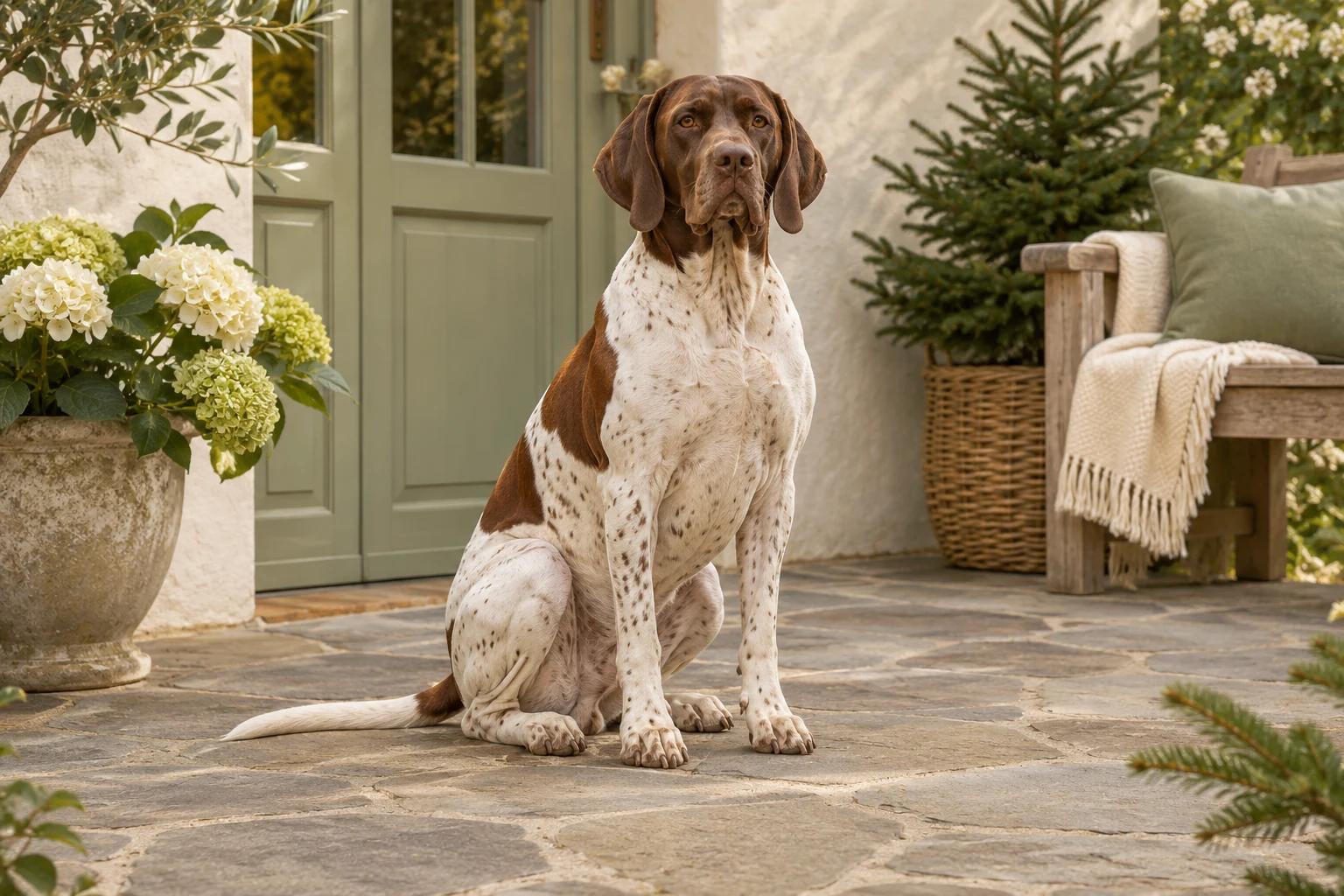
Old Danish Pointer size is best understood as a combination of adult weight, shoulder height, and a strongly built body. This is not a small dog hidden behind a gentle expression. Before choosing one, think about the space beside your desk, the entrance to your car, and who will handle the dog when plans change. Those details make size information useful rather than merely interesting.
The Old Danish Pointer breed profile provides the broader ownership picture. This guide focuses on practical scale, not on predicting a puppy’s exact adult measurements.
Old Danish Pointer size at adulthood
The UKC standard gives mature males a weight of 66–77 pounds and mature females 57–68 pounds. Those ranges agree with the breed profile. They describe a reference population, not a target that every dog should be fed toward.
The FCI standard describes a strong, slightly rectangular dog with a substantial chest. For prospective owners, that means height alone leaves out an important part of the picture: the dog also needs room to turn, lie fully extended, and pass comfortably through everyday spaces.
Old Danish Pointer height is measured at the withers, the highest point around the shoulders, not the top of the head. The live breed profile lists males at 21.5–23.5 inches and females at 19.5–22 inches. A head held above shoulder level still matters when you consider a low table or car opening.
What the weight range does and does not tell you
Old Danish Pointer weight helps establish the broad scale of ownership. It does not tell you whether a specific dog is carrying an appropriate amount of body fat or how strong that dog will feel on a lead. Ask your veterinarian to assess body condition rather than using the upper end of a breed range as a goal.
A heavier dog is not automatically a better example of the breed. Nor does a lighter dog automatically require less training or less room. The useful comparison is between the actual dog’s dimensions and the tasks your household must manage.
For example, can the person who usually walks the dog hold its lead while opening a communal entrance? Is there room for the dog to wait beside them rather than ahead of them? A good arrangement depends as much on learned behavior and doorway layout as it does on pounds.
If two adults will share care, include both in equipment fitting and handling practice. The person who does occasional weekend walks should not have to improvise with unfamiliar clips, cues, or loading arrangements.
Measure your home before ordering equipment
Start with the intended resting place. Mark out the dimensions of a proposed bed using towels or paper, then walk around it as you normally would. A bed that technically fits but blocks a cupboard will soon be moved, perhaps into a less suitable location.
Watch an adult dog lie on its side and stretch. A curled sleeping photograph can make almost any dog look compact. Allow room for several resting positions rather than buying only for the neatest one.
For a crate, use the individual dog’s standing and lying measurements and follow the maker’s fitting guidance. The dog should be able to stand, turn, and rest comfortably. A product labeled for a particular weight category is a starting point, not a substitute for checking its internal dimensions.
Harnesses deserve the same care. Measure the actual chest and neck as the manufacturer directs, then assess the fit on the dog. The Old Danish Pointer’s substantial front does not translate neatly into a universal “large” label across brands. Check adjustable equipment again as a youngster grows.
The car test matters more than the boot volume
Vehicle specifications can be misleading for dog travel. The space may look generous on paper while the opening, wheel arches, or sloping rear window make it awkward in practice. Measure the usable area and the entrance rather than relying on overall cargo capacity.
Plan an appropriate restraint arrangement and check its fit with the vehicle. If using a travel crate, test whether its door can open without requiring luggage to be unloaded first. Include the space needed for your own hands when attaching a lead before the dog exits.
Think through wet-weather travel, too. Keep towels and a washable cover accessible, rather than buried under bags. A substantial dog returning from an outing is easier to manage when the next step is already prepared.
Discuss any lifting or mobility concerns with your veterinarian. Do not build your entire transport plan around being able to lift a puppy forever. The adult may require a different arrangement, and practicing that arrangement early is easier than introducing it during a stressful trip.
Puppy growth is not a precise forecast
If you are asking how big do Old Danish Pointers get, adult relatives provide useful context, but they cannot promise a final number. Ask about the parents’ actual measurements and whether the breeder has records from earlier related litters. Avoid treating a single puppy weigh-in as a reliable adult calculator.
Keep a simple growth record that you can bring to veterinary appointments. Dates and measurements are more useful than trying to remember whether the dog looked larger last month. Let the veterinarian interpret growth alongside body condition and health history.
Build manners before size makes mistakes inconvenient. Waiting at the car, keeping feet on the floor during greetings, and standing for a harness all become more valuable as a dog grows. A puppy does not need to be physically large before these routines can be introduced gently.
Do not confuse adult size with exercise prescription. Neither a weight range nor a height figure tells you how long a particular puppy, adult, or older dog should exercise. Plan activity around the individual and seek veterinary guidance when needed.
Make the final decision with the adult in mind
A useful pre-arrival checklist includes resting space, transport, equipment fit, handling cover, and a backup plan if the usual caregiver is unavailable. Ask a potential sitter whether they can accommodate the adult, not just the puppy they have met.
The breed’s working-pace article explores a separate feature of its heritage. For household matching, the dog match quiz can help you compare the size commitment with your daily routine. The best size decision is one you can still live with when the dog is fully grown.
FAQ
How much does an adult Old Danish Pointer weigh?
The UKC standard lists mature males at 66–77 pounds and females at 57–68 pounds. These are reference ranges, not feeding goals or guarantees of an individual dog’s adult weight.
Is shoulder height enough to choose a crate?
No. Measure the dog’s length and standing dimensions as well, then check the crate’s usable interior. The dog needs to stand, turn, and rest comfortably, not merely fit below its roof.
Can puppy weight predict exact adult size?
No. A puppy’s current weight is only one observation. Adult relatives and growth records can provide context, while a veterinarian can assess whether growth and body condition are appropriate for that individual.
Sources behind this article
Article source checked: November 15, 2026. Source checked 2026-11-15
Keep reading
Old Danish Pointer temperament: living with a steady gundog
Read article →