Ocicat Shedding: What a Short Spotted Coat Needs
Understand Ocicat shedding, choose gentle coat care and separate normal household hair from changes that need veterinary advice.
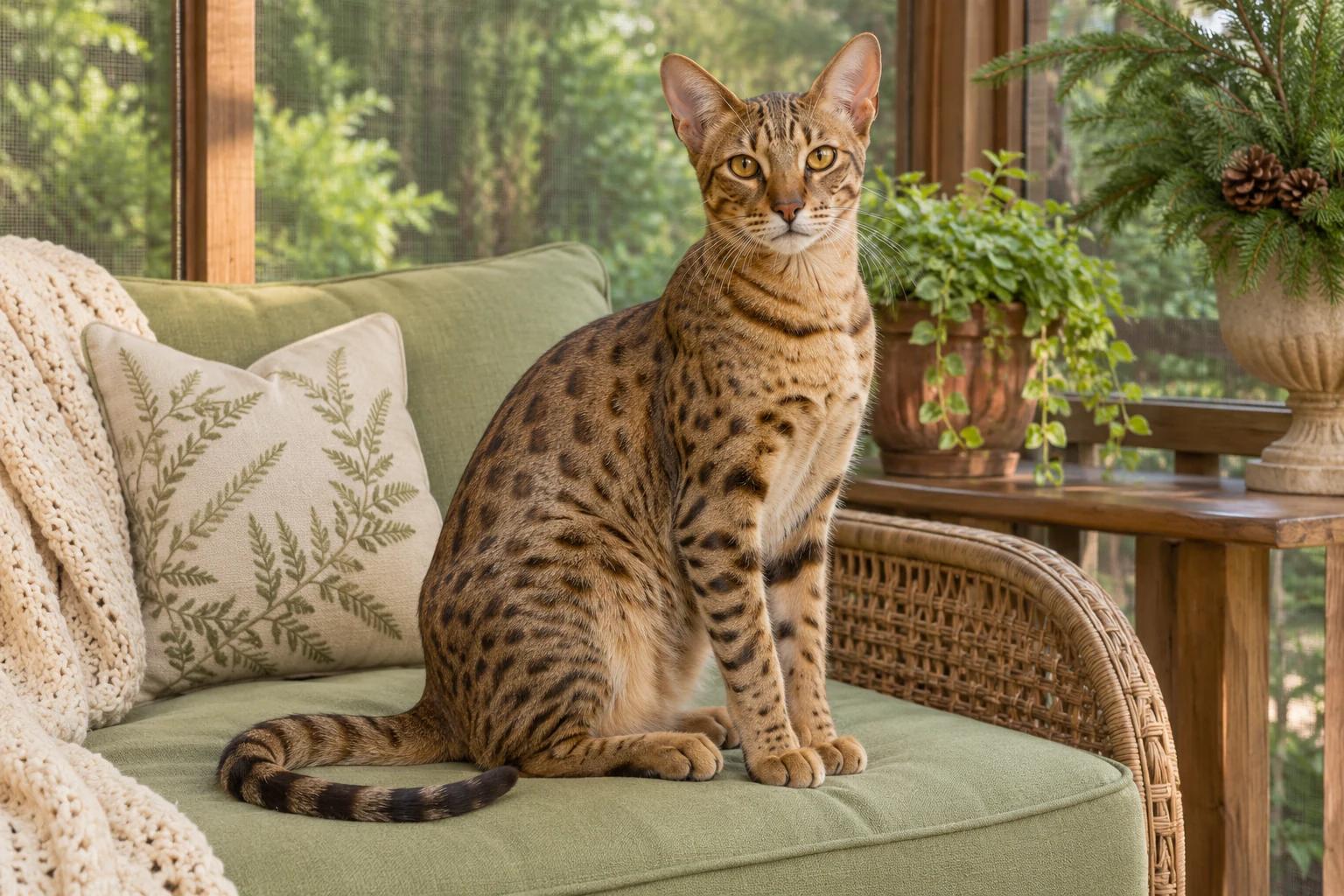
Ocicat shedding is usually modest rather than absent. CFA describes the breed as a light shedder with limited grooming demands, while the site's profile still calls for regular gentle coat care. Those statements can both be useful: a sleek coat may need less work than an abundant long coat, but it still deserves attention. The aim is to remove loose hair comfortably and notice changes, not to make an Ocicat shed nothing at all.
This guide explains how to organize ocicat coat care around the animal in front of you. It does not prescribe products or diagnose a coat problem from the amount of hair on a brush.
Ocicat shedding: set a realistic expectation
Short hairs can be easy to overlook on the cat and conspicuous on a dark cushion. The impression created by your furniture is not a reliable measurement of how much the animal sheds. When judging a change, compare the same cat in a similar setting and think about what else has changed in its routine.
CFA's breed account describes a close-lying coat and suggests modest grooming to remove loose hair. It does not provide a numerical shedding allowance for a household. Avoid treating an isolated clump or a photograph as proof that your cat falls outside a breed norm. If you are concerned about the coat or skin, your veterinarian can assess the individual rather than relying on a breed label.
The Ocicat profile keeps shedding and grooming among the wider care responsibilities. Neither a short coat nor a light-shedding description removes the need for everyday observation.
Choose tools by comfort, not by the promise on the packet
A powerful-looking deshedding tool is not automatically a better tool for a sleek coat. VCA's coat-care guidance advises gentle use and recommends asking the veterinary team which equipment suits the individual. Before buying a collection of brushes, find out what the current caregiver uses and how the cat responds.
Ask for a demonstration on a comfortable, willing cat. Notice the pressure, direction and area being groomed, and ask which situations should be left to professional help. A tool that works well for another breed, or even another Ocicat, may not be appropriate here. Stop if the cat appears sore or distressed rather than trying to finish a grooming quota.
CFA mentions rubber grooming tools and a chamois as options used for the breed. Treat those as starting points for discussion, not instructions to scrub harder or use every tool in sequence. The useful outcome is a comfortable coat check with some loose hair removed, not a dramatic pile of fur for a before-and-after photograph.
Fit grooming into the cat's actual routine
If you are asking how to groom an ocicat, first choose a quiet setting and prepare the equipment before inviting the cat. Keep the surface stable and give the animal a way to leave. An unexpected grooming attempt while it is resting in a favorite hiding place may make that place feel less secure.
Begin with the areas and handling the cat already accepts. Watch its response rather than timing the session against someone else's routine. You can separate a brief look at the coat from a longer grooming task. If a particular area repeatedly causes concern, ask for advice instead of progressively increasing restraint.
The site's existing Ocicat station-cue article concerns a separate voluntary learning task. A station cue does not give permission to continue uncomfortable grooming, and successful training does not establish that a tool or technique is suitable. Keep learning and physical comfort connected without turning either into a demand to remain still.
Keep household hair management separate from skin care
Washable covers and a practical cleaning routine can make ordinary loose hair easier to live with. Choose arrangements you can maintain rather than expecting grooming to replace cleaning. If several people share the home, agree who cleans resting surfaces and where grooming tools are stored.
Do not put furniture-cleaning products on the cat or use a household lint remover as a grooming tool. Products intended for fabric serve a different purpose. Keep the work area clear so that a curious Ocicat cannot investigate open containers while you clean.
Consider what you are actually trying to solve. A layer of short hairs on a cushion is a household cleaning issue. Redness, discomfort, bare patches or a newly neglected-looking coat call for veterinary advice. Treating both situations as a need for more vigorous brushing can obscure the distinction and leave the animal uncomfortable.
Notice changes without inventing a cause
VCA explains that coat condition can reflect more than grooming. If the amount or appearance of loose hair changes, describe what you noticed and when. Include whether the cat is grooming differently, whether an area seems sensitive and whether a new product has been used. Avoid choosing a diagnosis from a checklist of possibilities.
A consistent photograph of a concerning area may help you describe a change to the practice, provided taking it does not distress the cat. Ask the veterinary team what information would be useful. Do not delay contact in order to collect a series of pictures, and do not apply a new treatment simply to improve the photograph.
Keep any professional instructions available to everyone who helps with care. If one person changes the grooming tool while another changes the cleaning product, it becomes harder to explain what the cat experienced. Simple records protect clarity without turning normal shedding into a daily measurement project.
Do not add baths just to chase loose hair
CFA does not describe routine bathing as necessary for every pet Ocicat. VCA also distinguishes ordinary grooming from individual reasons a cat might need bathing. If repeated baths seem necessary, discuss that with your veterinarian rather than adopting a fixed schedule from a coat photograph or a social-media routine.
Contamination, skin concerns and ordinary household hair are different problems. An unfamiliar substance on the coat needs appropriate advice, not an improvised wash with a convenient household product. Explain what the cat may have contacted and follow the guidance you receive.
Before adopting, use the cat quiz to consider your broader care preferences, then ask the current caregiver about this cat's coat. A realistic plan combines gentle attention, manageable cleaning and a clear route to professional advice when something changes.
Frequently asked questions
Do Ocicats shed at all?
Yes. A light-shedding breed description does not mean no loose hair. Expect some household hair and assess changes in the individual rather than expecting a completely hair-free coat.
Should an Ocicat be brushed harder when more hair appears?
No. Use suitable equipment gently and seek advice if shedding or skin condition concerns you. More pressure is not a substitute for understanding a change.
Does every Ocicat need regular baths?
No universal bathing schedule is established here. Ask about the individual's needs and consult your veterinarian if repeated bathing appears necessary or the coat is contaminated.
When is shedding a reason to call the vet?
Contact your veterinarian about a sudden or concerning change, discomfort, bare areas or unusual skin appearance. Describe what you see without trying to diagnose the cause yourself.
Sources behind this article
Article source checked: November 20, 2026. Source checked 2026-11-20
Keep reading

Abyssinian Cat Grooming: Care for the Short Ticked Coat
Read article →