Abyssinian Cat Grooming: Care for the Short Ticked Coat
Understand Abyssinian cat grooming through coat texture, gentle brushing, handling practice and proportionate care for an active shorthaired cat.

Abyssinian cat grooming should suit a short-coated, active individual rather than imitate the routine for a heavily furnished longhair. The current Abyssinian profile describes a short ticked coat and occasional gentle brushing or combing to remove loose hair. That modest coat-care commitment is only one part of living with this cat. Activity, handling preferences and the individual's own grooming ability still matter when deciding what a session should involve.
Abyssinian cat grooming starts with understanding the coat
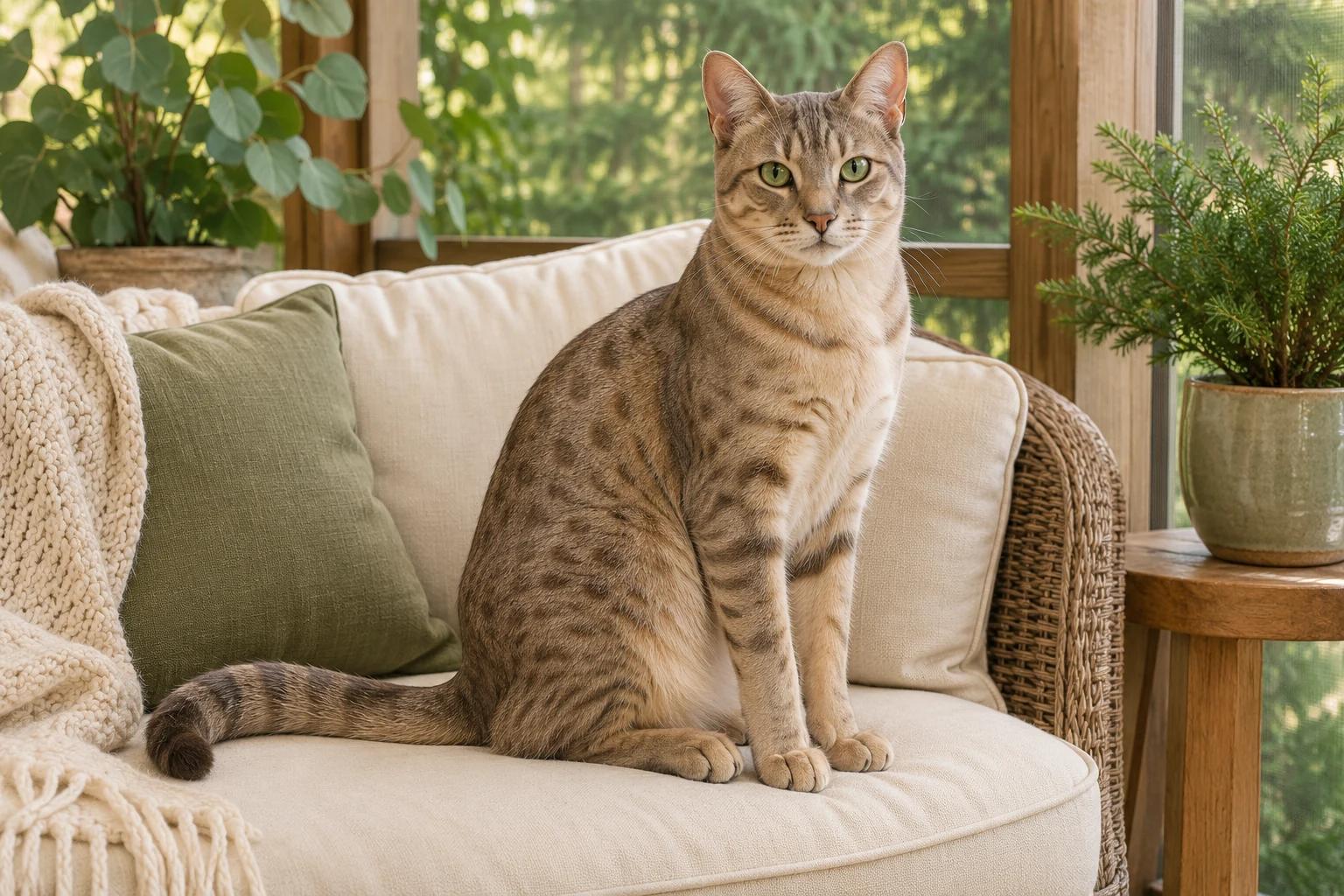
TICA explains that the Abyssinian's ticked appearance comes from alternating bands of color along each hair. The short coat has a resilient texture and an iridescent visual effect. Its discussion contrasts that coat with the Somali's softer, semi-long hair. TICA: Abyssinian.
This is a useful distinction when looking at an Abyssinian cat coat care demonstration. The objective is not to create a long, flowing finish or preserve a neck ruff. The close coat has its own appearance, which should remain recognizable after ordinary care.
Color depth is also not evidence that the coat needs more products. A ticked hair can produce several tones in one small area, especially as the cat moves in changing light. Do not confuse that natural visual variation with dirt that must be scrubbed away.
Look at the actual coat rather than choosing equipment from a photograph of a different breed. The related Somali may share an expressive face and a similar general outline, but its longer furnishings are not a model for every grooming decision involving an Abyssinian.
Use a short-coat brushing technique
The ASPCA's shorthaired-cat guidance describes working through the coat from head toward tail, following the direction the hair grows. It suggests concentrating on one section at a time and notes that a rubber brush can collect loose hair from a short coat. ASPCA: Cat grooming tips.
For an Abyssinian, follow the close coat rather than raking repeatedly across the same spot to make the brush look productive. Work gently over an accessible area and judge the result by the coat and the cat, not by the size of the collected handful.
A small section completed comfortably is useful. There is no need to turn every pass into a full-body marathon. Chest and underside access should depend on what the individual permits, not on forcing the cat into a pose copied from an illustration.
Ask a professional groomer or veterinary team to demonstrate if you are uncertain about pressure or tool use. The practical skill is a considerate pass through the coat; it does not require a complicated styling kit or an impressive quantity of removed hair.
Build acceptance of the brush itself
RSPCA Australia recommends beginning with stroking, then a few gentle brushstrokes in areas the cat likes being touched. Reward calm participation and gradually increase the number of strokes, time and areas covered. Avoid forced grooming or restraint; give the cat a break when the interaction is no longer comfortable. RSPCA Australia: grooming your cat.
That progression is especially relevant when an Abyssinian wants to investigate the brush rather than remain beside it. The early lesson can be very small: accepting a brief touch with the tool in a familiar area, then receiving a reward.
Do not increase every part of the task together. A longer session, a new area of the body and a different tool are separate changes. Progress with one while keeping the others familiar.
If the cat moves away, the session need not become a pursuit. Return to an easier, shorter interaction later. The point is to make ordinary coat care something the cat can participate in, not to win a contest over whether every planned stroke will be completed today.
Keep bathing proportionate
VCA explains that most healthy adult cats groom themselves thoroughly and rarely need baths. That feline self-care is the relevant starting point, rather than importing a dog's bathing routine. VCA: Grooming and coat care for your cat.
An Abyssinian's short coat is not a reason to add routine baths simply because a bottle is labeled for cats. A photograph with a glossy finish does not tell you that the animal was washed, or that yours needs the same intervention.
A grooming session and a bath are not interchangeable tasks. If your purpose today is ordinary maintenance, do not expand it into washing merely to make the session feel more complete. The cat's own grooming remains part of the picture even when an owner is interested in doing more. A simpler routine can be the appropriate choice; an elaborate one is not automatically more considerate.
Put Abyssinian cat shedding in the right context
The current profile places both shedding and coat-care effort at two on a five-point scale. A relatively light shedding reference is not a claim that the cat leaves no hair. Nor does low coat-care effort mean that every individual welcomes a brush without preparation. Amount of hair, time spent maintaining it and willingness to be handled are different questions.
The profile's everyday-care description emphasizes occasional gentle brushing or combing. Use the individual coat and your veterinarian's advice to judge what is appropriate rather than converting a broad rating into an inflexible schedule. The comparison with a Somali is useful mainly because the coats are different; it does not make one cat's demonstrated handling preferences a guide to the other's.
Make the routine fit an active companion
The Abyssinian profile combines modest coat maintenance with considerable interest in play and investigation. Those traits explain why an easy-looking coat should not be the sole reason to choose the breed. Someone who enjoys brushing but wants very little other engagement would be considering only a small part of its everyday description.
Ask about the individual before bringing it home: what handling does it already accept, and how does it choose to interact when activity pauses? The profile notes that affection need not mean prolonged lap sitting. A cat that likes being nearby is not automatically asking to remain on a person's lap for care.
For help weighing the whole relationship, use the cat match quiz. The Abyssinian room-safety article addresses another commitment associated with an inquisitive cat. Neither the attractive coat nor a manageable grooming routine cancels the need to enjoy the rest of this companion's day.
Frequently asked questions
Does a low shedding rating mean there will be no loose hair?
No. The current profile gives a relatively light shedding reference, not a zero-hair guarantee. It describes shedding and coat-care effort as separate characteristics.
How to groom an Abyssinian cat that is not a lap sitter?
Do not equate affection with a wish to sit on your lap. The profile recommends individual handling choices and small steps; ask your veterinary team for help with cooperative care.
Does the short coat make the Abyssinian a low-activity choice?
No. The current profile combines modest coat maintenance with active investigation and substantial interest in play. Those are separate parts of the ownership commitment.
Sources behind this article
- TICA: Abyssinian ↗
- ASPCA: Cat grooming tips ↗
- RSPCA Australia: grooming your cat ↗
- VCA: Grooming and coat care for your cat ↗
Article source checked: November 16, 2026. Source checked 2026-11-16
Keep reading

American Bobtail grooming
Read article →