Norwich Terrier training: useful skills for a busy dog
Make Norwich Terrier training practical with attention games, leave-it practice, garden boundaries, calm greetings and realistic progress.
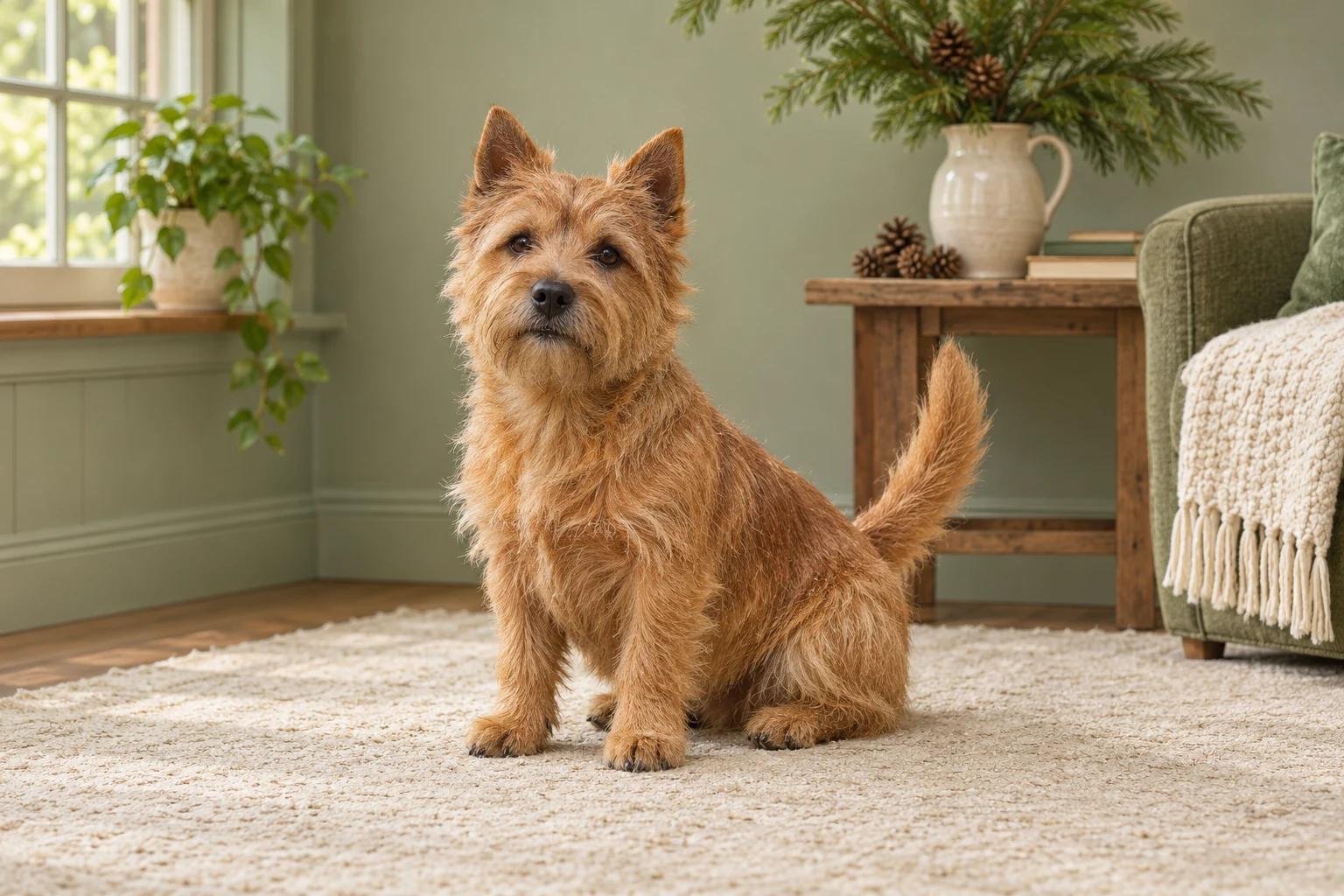
Norwich Terrier training is most useful when it gives a busy little dog clear ways to join everyday life. A good plan covers the moments that actually matter: walking away from something interesting, keeping four feet on the floor during greetings, and coming indoors when garden time ends. Start with those situations rather than measuring success by how many commands you can list.
The Norwich Terrier profile describes a breed with an appetite for activity and mental engagement. Its small stature makes some problems easier to overlook, but a habit does not become helpful simply because the dog is light enough to pick up.
Norwich Terrier training without a battle of wills
The UK Norwich Terrier Club describes an active, company-loving terrier that may be bold and sensitive at the same time. That combination is a reason to use patient, consistent teaching rather than assuming that a determined-looking dog needs rough treatment. Norwich Terrier Club breed guide.
Choose one everyday problem and describe the action you want instead. Replace stop being naughty in the garden with come to the back door when called. Replace behave for guests with stand on the floor while a visitor says hello. A visible action gives everyone in the household something they can recognise and reward.
Keep sessions small enough that you can notice the dog's choices. If you are simultaneously holding a phone, moving furniture and calling across the room, it becomes difficult to tell what the dog understood. A quiet minute with one task can be more informative than a chaotic quarter-hour.
Make your reward easy to reach
Learning how to train a Norwich Terrier includes learning where your hands should be. A small dog should not need to jump repeatedly to reach a reward held high above its head. Arrange your position so that the desired response and the reward happen at a comfortable level.
Practise beside a stable chair if bending is difficult. Have rewards ready before asking for the behaviour, and keep loose packaging away from the dog. If food is used, account for it within the feeding plan agreed with your veterinarian rather than adding an unmeasured second menu.
Notice which rewards suit which task. A toy may be useful for active play, while a quieter reward may fit settling beside a desk. The point is not to discover one magical treat. It is to understand what makes sense to the dog in that situation.
Teach leaving something alone before you need it
A leave-it cue is useful for a low-to-the-ground explorer. AKC's training guide builds the skill by preventing access to a tempting item and rewarding disengagement with a different reward. The unwanted item is not the prize. Introduce the cue once the dog understands the action, then increase difficulty gradually. AKC leave-it guide.
Practise with harmless training objects in controlled conditions, not with medication, litter or something genuinely dangerous. Your preparation should prevent the dog from reaching the practice item if the attempt goes wrong. A lead and distance remain useful management tools while the skill develops.
Keep this distinct from taking an object out of the dog's mouth. Leave it means do not take that; an item already held calls for a different plan. If your dog guards objects, seek qualified help rather than provoking a confrontation to test obedience.
Give garden time a beginning and an end
The Norwich club specifically notes an enjoyment of digging. You can plan around that interest without allowing every flower bed to become available. Decide which areas the dog can enter, use barriers for protected planting, and supervise while you learn its habits.
Make returning indoors an enjoyable, rehearsed event. Practise from a short distance when the dog is not deeply occupied, reward arrival, and sometimes return outside together. If every call ends all outdoor enjoyment, you have made the cue predict a loss.
Check boundaries and gates independently of training progress. A reliable response yesterday does not make an open gate a sensible test today. Use secure space for practice and reserve more difficult situations for work with an instructor who can see the dog and environment.
Useful obedience includes doing less
Norwich Terrier obedience can include resting while nothing interesting happens. Put a comfortable mat near, but not in, the household's main traffic route. Reward the dog for choosing it and build the duration in small steps before expecting it to last through a meal or video meeting.
Separate that lesson from a high-energy game. A dog that has just been encouraged to chase a toy may not understand an immediate demand for a long still position. Make the transition clear: put equipment away, offer a quieter environment, and begin with an achievable pause.
For greetings, agree on one household pattern. A visitor can wait while you help the dog find a manageable position rather than rewarding jumping and then objecting when it continues. Teach the pattern with a familiar person before introducing it at a crowded doorway.
Socialization for the places you actually use
Norwich Terrier socialization should include more than meeting dogs. Think about surfaces, traffic viewed from a comfortable distance, grooming equipment, people moving with bags, and quiet time in unfamiliar places. Choose experiences that match your life instead of collecting an impressive number of encounters.
A small dog may find a busy pavement very different from how it appears at human eye level. Leave room around feet and moving equipment. You can watch a scene from farther away rather than requiring the dog to walk through its busiest point.
Introduce handling in easy pieces as well. Standing comfortably on a nonslip surface for a brief brush stroke is a useful lesson in its own right. The separate article on Norwich Terrier ears at attention and rest explains a visual feature; do not turn handling practice into an effort to manufacture a particular pose.
Evaluate the plan, not just the dog
Keep a record of a few skills and the settings where they work. Kitchen, quiet garden and busy path are three different entries, not one pass-or-fail verdict. If progress stalls, reduce the difficulty or ask a reward-based trainer to review your timing and setup.
For someone still choosing a companion, the dog match quiz can help clarify whether daily teaching is an enjoyable commitment. A Norwich is small enough to fit into many homes, but training still needs a deliberate place in the day.
FAQ
Are Norwich Terriers too stubborn to train?
A determined response does not make a Norwich untrainable. Use clear tasks, suitable rewards and manageable distractions. If an exercise repeatedly fails, change the setup and seek help rather than escalating pressure on the dog.
What is a useful first Norwich Terrier cue?
An attention cue is a practical start because it opens the way to other skills. Useful early projects also include approaching a resting mat, returning over a short indoor distance and calmly allowing equipment to be attached.
Can training stop all digging?
Training can help establish routines and alternatives, but management still matters. Protect planted areas with barriers, supervise garden time, and practise coming away before the dog is deeply engaged. Do not rely on a cue alone to protect boundaries.
Sources behind this article
- Norwich Terrier Club UK: Is a Norwich the Right Dog for You? ↗
- American Kennel Club: Teaching Leave It ↗
Article source checked: November 15, 2026. Source checked 2026-11-15
Keep reading

Affenpinscher Training: Build Useful Everyday Habits
Read article →