Norfolk Terrier training: make attention worth offering
Build Norfolk Terrier training around attention, exploration, useful rewards and small daily tasks instead of endless repetition.
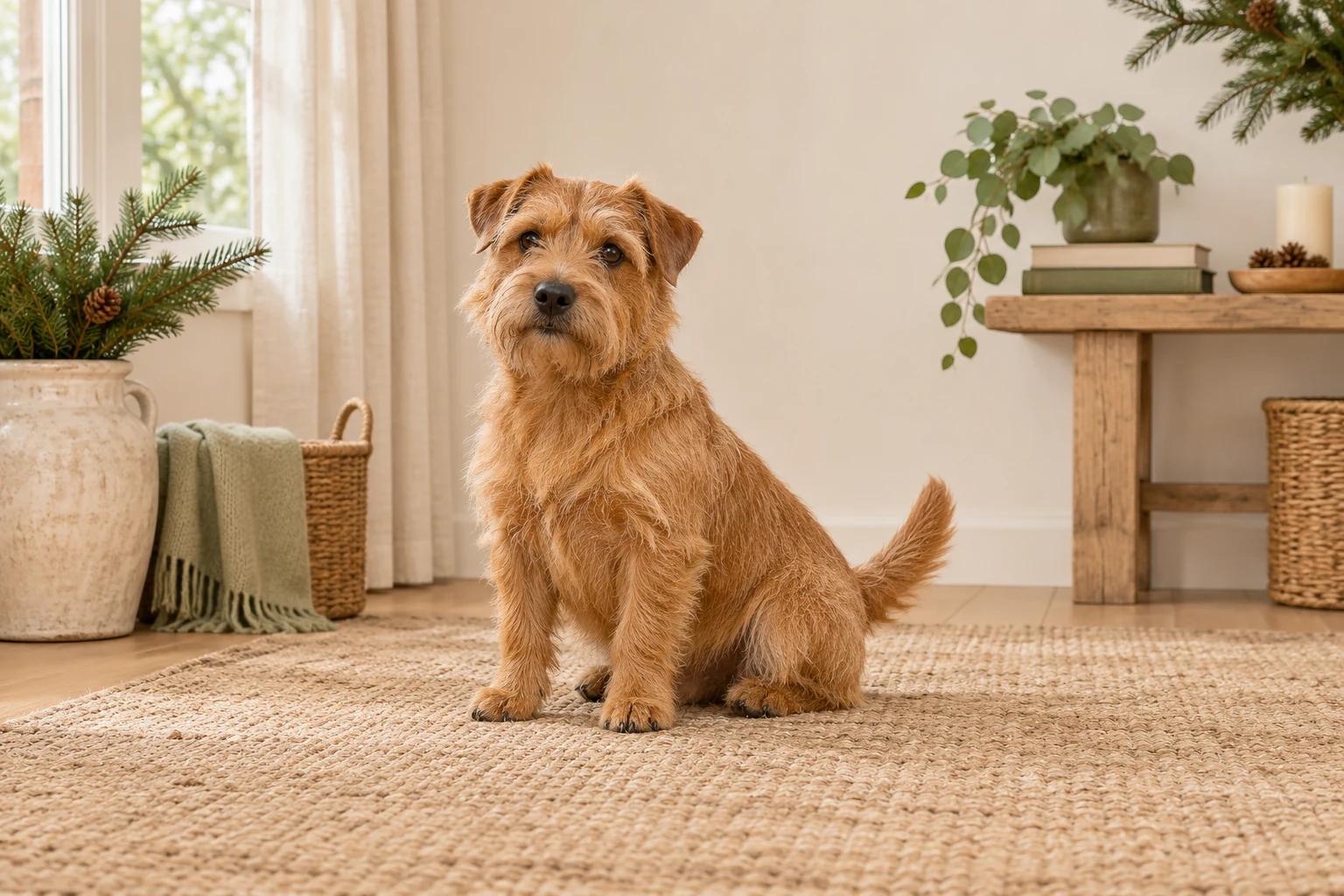
Norfolk Terrier training works best as a conversation with an interested, busy little dog. You are not trying to remove curiosity. You are teaching the dog when to check in, how to follow familiar cues and how to enjoy exploring without making every outing a contest between the lead and the next interesting smell.
Begin with a few tasks that solve real problems. A return of attention near the gate, a comfortable pause while you prepare dinner and a reliable response in a quiet room are useful foundations. They also give you clear ways to notice progress before asking for the same skills in more exciting places.
Norfolk Terrier training: make the task clear
The Norfolk Terrier Club of Canada's training guidance describes an intelligent, independent learner and recommends patient, consistent, reward-based teaching. That combination suggests an approach built around understandable tasks and worthwhile outcomes rather than repeated demands.
Choose the behavior before choosing the cue. If your goal is attention, decide whether you mean a glance toward you, coming closer or remaining beside you. Those are different tasks. Rewarding one while expecting another can make practice confusing for both of you.
Keep the early setup simple enough that you can recognize success immediately. A quiet part of the house is often more useful than a garden full of movement and smells. You can make the setting more challenging later; the first goal is establishing what the game actually is.
Use exploration as part of the plan
The AKC Norfolk Terrier introduction describes a confident, sturdy terrier with an appetite for adventure despite its small appearance. A training plan that ignores exploration is unlikely to match what you hoped to enjoy about the breed in the first place.
During an ordinary outing, choose some places where sniffing is part of the walk and others where you need a little more cooperation. For example, you might move together through a narrow entrance and then allow time to investigate a suitable patch farther along the route.
The distinction should be understandable to the dog. Use a consistent release cue when a short period of walking together is finished. Avoid changing your expectations every few steps while the dog tries to guess whether stopping is welcome this time.
Keep the lead or a secure enclosure as the boundary. Interest in a scent is not the moment to test an unproven recall beside a road or an open exit. Training and physical management support each other; neither has to pretend to do the whole job alone.
How to train a Norfolk Terrier to check in
Start when little else is happening. Notice a voluntary glance toward you and reward it promptly. After several easy successes, you can use a familiar attention cue before rewarding the response. Keep the task small instead of immediately demanding a long stare.
Your position matters with a short dog. Arrange yourself so that delivering a reward does not require looming over the terrier or making it jump to reach your hand. A quiet, comfortable setup lets you focus on timing rather than awkward bending and fumbling.
Then change one part of the scene. Practice in another quiet room or a calm part of the garden, rather than adding distance, visitors and outdoor distractions all at once. If attention disappears, return to an easier version. That gives you information about the difficulty of the setting instead of a reason to repeat the dog's name indefinitely.
Give alert behavior an alternative destination
The Norfolk profile highlights an alert voice. If your dog tends to announce movement outside, think about what you would like it to do afterward. A useful goal might be moving away from the window to join you in another part of the room.
Teach that movement when there is nothing to announce. Reward coming toward you or going to a familiar resting place, then gradually practice around manageable everyday distractions. Avoid waiting for a full burst of barking before introducing an entirely unfamiliar task.
The room can help. Move a resting place away from a constantly busy window if that view makes settling difficult. Let visitors know the arrival routine so they do not add excitement while you are asking the dog to disengage. For persistent distress or behavior you cannot manage comfortably, seek individual advice from a veterinarian and a qualified reward-based professional.
Make Norfolk Terrier obedience more than repeated sits
Useful obedience can be woven into the objects and routines already in your day. Practice waiting briefly while a food bowl is prepared, returning to you from a short distance in a secure space or moving onto a familiar mat. Keep each task distinct enough that you can reward the exact action you wanted.
Introduce a little variety without making every session unpredictable. You might practice one known skill in a different room, then finish with an easy favorite. Constantly adding new cues can be as confusing as drilling the same cue after the dog has lost interest.
If you want a shared hobby, ask a club about beginner opportunities such as scent work, rally or trick training. Choose an instructor who can adapt the work to the individual dog and handler. You do not need to enter a competition for a structured activity to provide a satisfying learning routine.
Plan socialization around manageable encounters
Norfolk Terrier socialization is not a requirement to greet every person or dog you pass. Watching an ordinary event from a comfortable distance can be enough for one outing. Leave room to move away rather than committing to a narrow space with no easy exit.
Ask the current caregiver what the dog already knows. A puppy's previous experiences, an adult's established routine and a recent change of home create different starting points. For puppies, discuss suitable exposure arrangements with the veterinarian during the vaccination period.
Try to finish with useful information: which setting was comfortable, what captured the dog's attention and when a break helped. That record is more valuable than counting how many strangers touched the dog. Build the next outing from what you observed.
The Norfolk Terrier profile covers wider ownership needs, while the older breed-name article explores historical terminology. Use the dog match quiz if you are still deciding whether this kind of daily terrier engagement suits you.
FAQ
Are Norfolk Terriers difficult to train?
Norfolk Terriers can learn readily, but curiosity and independence make clear rewards and manageable practice important. Focus on a specific task, choose a suitable setting and judge progress by what the dog understands rather than expecting instant responses everywhere.
How long should a training session last?
Keep practice brief enough that the dog can stay engaged and you can reward accurately. A few useful repetitions in a real routine may be better than a long formal session. Stop or simplify when either of you becomes frustrated.
Can socialization make a Norfolk Terrier greet every dog?
That should not be the goal. Socialization can include observing other dogs without approaching them. Plan encounters around the individual's comfort and experience, and keep distance and management available rather than forcing greetings.
Sources behind this article
- Norfolk Terrier Club of Canada: Training Your Norfolk Terrier ↗
- American Kennel Club: Norfolk Terrier ↗
Article source checked: November 15, 2026. Source checked 2026-11-15
Keep reading

Affenpinscher Training: Build Useful Everyday Habits
Read article →