A Mudi’s smooth face and wavy body belong together
The Mudi’s coat changes texture across the body. A smooth face does not contradict the waves that make the breed’s outline distinctive.
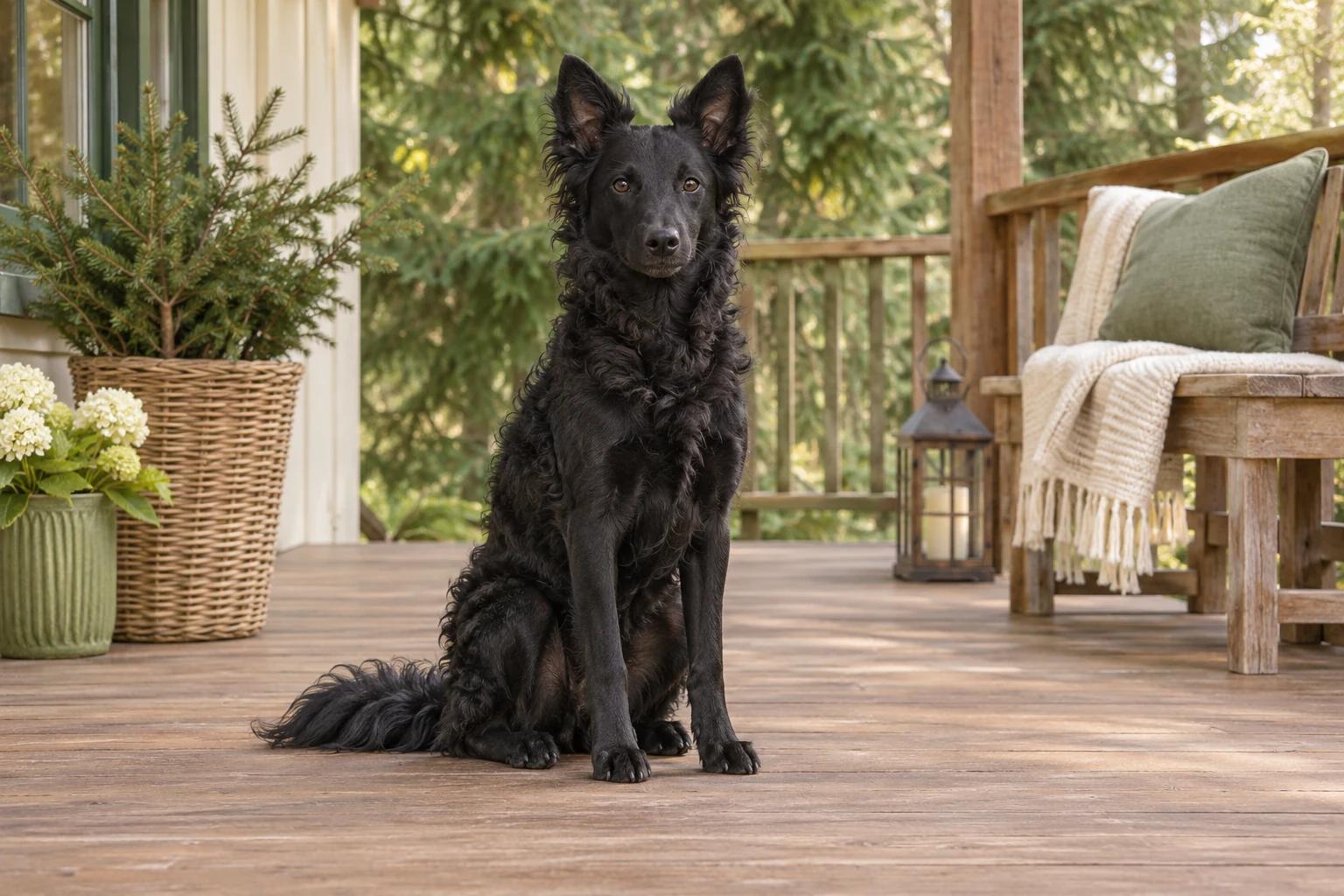
Two textures in one coat
A close portrait of a Mudi can hide one of the breed’s most recognizable features. The FCI standard describes short, straight, smooth hair on the head and front of the limbs, while the body coat is very wavy or slightly curled. The body hair is about 3 to 7 centimeters long, with longer feathering in particular areas.
A face photograph and a side view can therefore give quite different impressions. Neither should be used as the whole description of the coat.
Describe the area you mean
When discussing grooming with an experienced keeper, identify the part of the dog you are talking about. Ask to see the body waves, the smoother foreleg fronts and the longer hair behind the forearms and on the upper thighs. The standard also allows cowlicks and ridges in some places.
This small vocabulary change makes a practical conversation clearer. Instead of saying the coat looks uneven, describe where the texture changes and ask what care that area needs. The source supplies the coat pattern, not a universal tool list or grooming interval.
Keep your reference photographs useful
Save a whole-body view alongside any close portrait, with the owner’s permission. Together they explain why calling the Mudi simply short-haired or curly-haired leaves out part of the picture.
Sources behind this article
Article source checked: October 20, 2026. Source checked 2026-10-20
Keep reading
Mudi vs Pumi: two herders, different daily details
Read article →