Miniature Bull Terrier training: make practice worthwhile
Build Miniature Bull Terrier training around useful rewards, clear household goals and practical progress you can recognise.
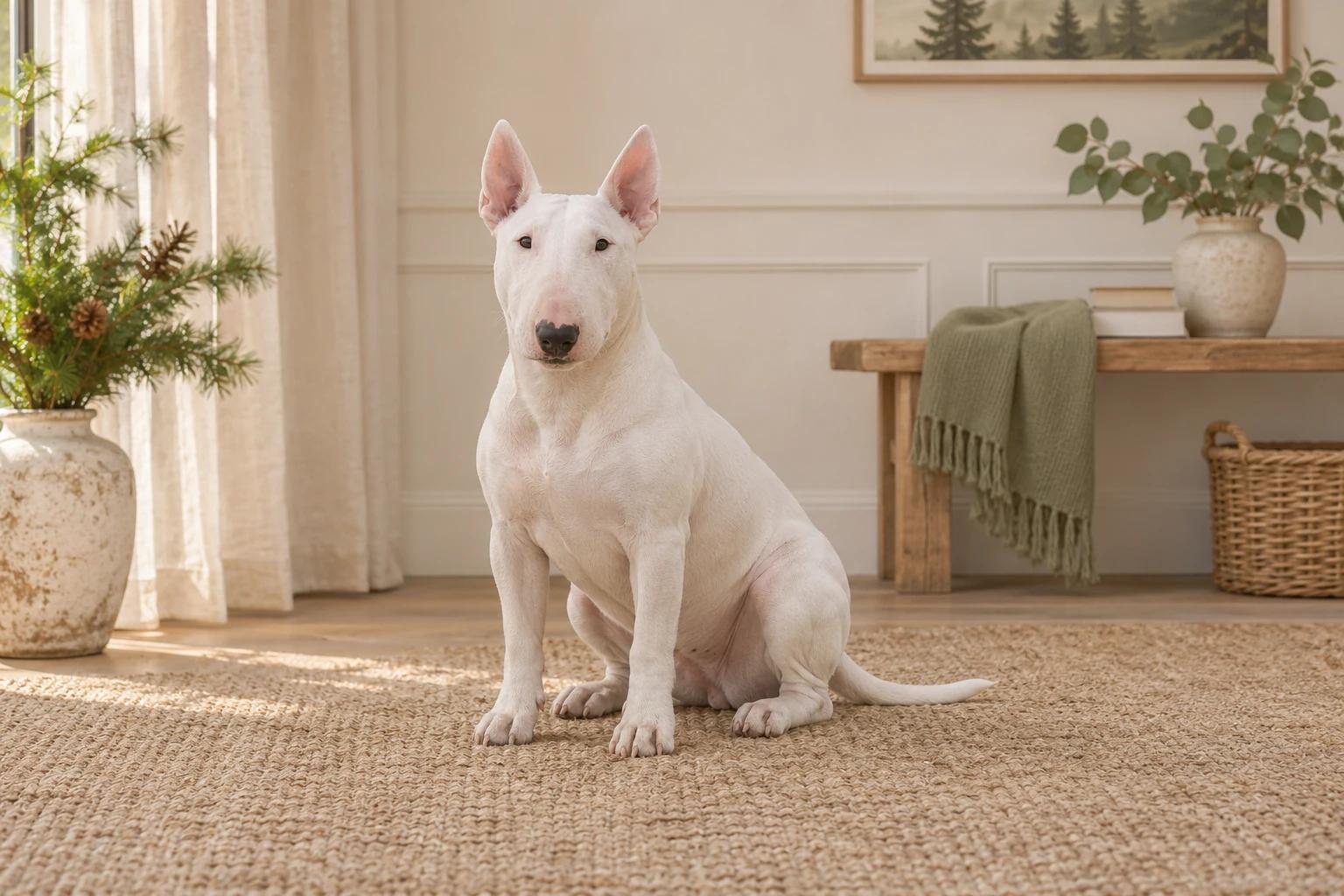
Miniature Bull Terrier training works best as a shared activity with a clear point, not a contest over who is more determined. Decide what you want the dog to do in an everyday situation, make that action understandable, and notice whether your reward is actually worth working for.
A useful starting goal might be turning toward you before a doorway, returning from a garden sniff or waiting while equipment is attached. These are concrete skills. “Be less mischievous” is not an instruction a dog can follow.
Miniature Bull Terrier training begins with motivation
The Miniature Bull Terrier Club of America describes boldness, persistence and independence as relevant to training, and highlights food, toys and games as useful motivators. Those traits suggest a practical question for the owner: what makes participation worthwhile for this dog today?
Try observing rather than guessing. Does the dog readily join a toy game? Does it respond to a small food reward in a quiet room? Does it choose to stay engaged after a brief break? Keep notes about what actually happened instead of deciding that every Miniature has the same favourite reward.
VCA's guidance on training rewards supports positive reinforcement and notes that food preferences differ. Rewards should be included in the dog's overall intake; ask your veterinarian about appropriate choices and quantities. A reward plan should be practical for both learning and everyday feeding.
Choose three jobs before adding tricks
If you are wondering how to train a Miniature Bull Terrier, begin with the moments that repeatedly cause friction. Write down three jobs the dog can learn instead of listing three things you dislike.
For example, replace “stop crowding the cupboard” with “stand on the mat while I open it.” Replace “stop charging into the hall” with “turn back toward me when I say your name.” Replace “stop making dressing difficult” with “stand beside me while I attach the lead.” These are examples for planning, not a requirement to teach every dog the same sequence.
Give each job a location and a plain description of success. The mat may belong beside the kitchen doorway, not in the middle of cooking traffic. The lead station might be a clear section of hallway rather than the cramped space behind an opening door. A little household design can make your teaching task much clearer.
Keep a practice card instead of a vague intention
A small card for each skill can record the cue, the desired action and the reward you intend to use. Add a note about the setting where the dog can already perform it. Everyone helping with the dog can then work from the same instructions.
For a turn-toward-you exercise, your record might say: kitchen, no visitors, dog turns its head when called, reward delivered beside the handler. That is more informative than “recall going well.” It also shows that success in the kitchen is not yet evidence of the same response beside a busy park gate.
Note what changed when practice became difficult. Was a toy lying nearby? Had another person entered? Were you farther away? Adjust the setup rather than immediately adding a louder cue. If you cannot see a manageable next step, a qualified reward-based trainer can help turn the problem into a teachable exercise.
Give play a clear beginning and ending
For a playful Miniature, the organisation around a game can be as useful as the game itself. Store the toy where you can reach it without a scramble, choose an area with space to move and decide how you will finish before you start.
You might end a short game by putting the toy away and moving to a quieter shared activity. Keep the sequence predictable enough that other household members can repeat it. Do not ask one person to encourage frantic play while another tries to make the same moment calm.
Watch the individual rather than chasing an exhausting session. If the game becomes hard to manage, pause and review the equipment, space and level of excitement with your trainer. The goal is an activity you can enjoy together and repeat comfortably, not a daily attempt to wear out every trace of energy.
Obedience should solve real-life problems
Miniature Bull Terrier obedience can include formal exercises, but household usefulness is a good early measure. Can you prepare an outing without searching for the dog? Can a caregiver use the same cues? Can the dog participate in a familiar routine when you are not holding its favourite toy in plain view?
Make a handover sheet for anyone providing regular care. Include cue words, where rewards are kept, how outings begin and which situations still require management. Avoid writing “knows everything” or “can be stubborn.” Neither phrase tells the next person what to do.
Celebrate specific progress. A dog that now waits in the chosen place while you reach for a coat has learned something useful, even if a different doorway is still difficult. Keeping the achievement precise also prevents an ambitious next step from erasing your sense of progress.
Socialization is not a popularity contest
Miniature Bull Terrier socialization deserves a plan based on the individual, not a target number of greetings. Ask a qualified trainer to help select appropriate experiences, and ask your veterinarian about health considerations for a puppy's outings.
Describe your real environment: a lift, delivery trolleys, a busy pavement, visiting relatives or another animal at home. Prioritising those situations is more useful than taking the dog everywhere at once. Keep a record of what the dog encountered and how the outing went, including what would make the next attempt easier.
If fear, distress or concerning behaviour appears, seek professional help rather than forcing another meeting. Training is not a substitute for veterinary assessment when behaviour changes unexpectedly.
The Miniature Bull Terrier profile places learning within the wider care commitment. Before choosing a dog, use the dog match quiz to consider your available time. For a different perspective on the breed, read its comeback history.
FAQ
Are Miniature Bull Terriers impossible to train?
No. Treat training as a practical learning process rather than a judgment about stubbornness. Choose a clear action, find rewards the individual values and seek qualified help when you cannot identify a workable next step.
What rewards should I use?
Food, toys and games are options worth exploring. Observe which rewards engage your dog in the current setting. Discuss food choices and the overall treat allowance with your veterinarian rather than adding unlimited extras.
Does obedience class replace practice at home?
No. A class can provide instruction and feedback, but your household routines still need their own practice. Tell the instructor which situations matter most so exercises can connect with the life you actually share.
Sources behind this article
- Miniature Bull Terrier Club of America: Training an MBT ↗
- VCA: Using Food and Treats for Training Dogs ↗
Article source checked: November 15, 2026. Source checked 2026-11-15
Keep reading

Affenpinscher Training: Build Useful Everyday Habits
Read article →