Manx cat temperament: companionship and everyday choices
Explore Manx cat temperament through household involvement, soft communication and hunting interest, plus a practical introduction to gentle contact.
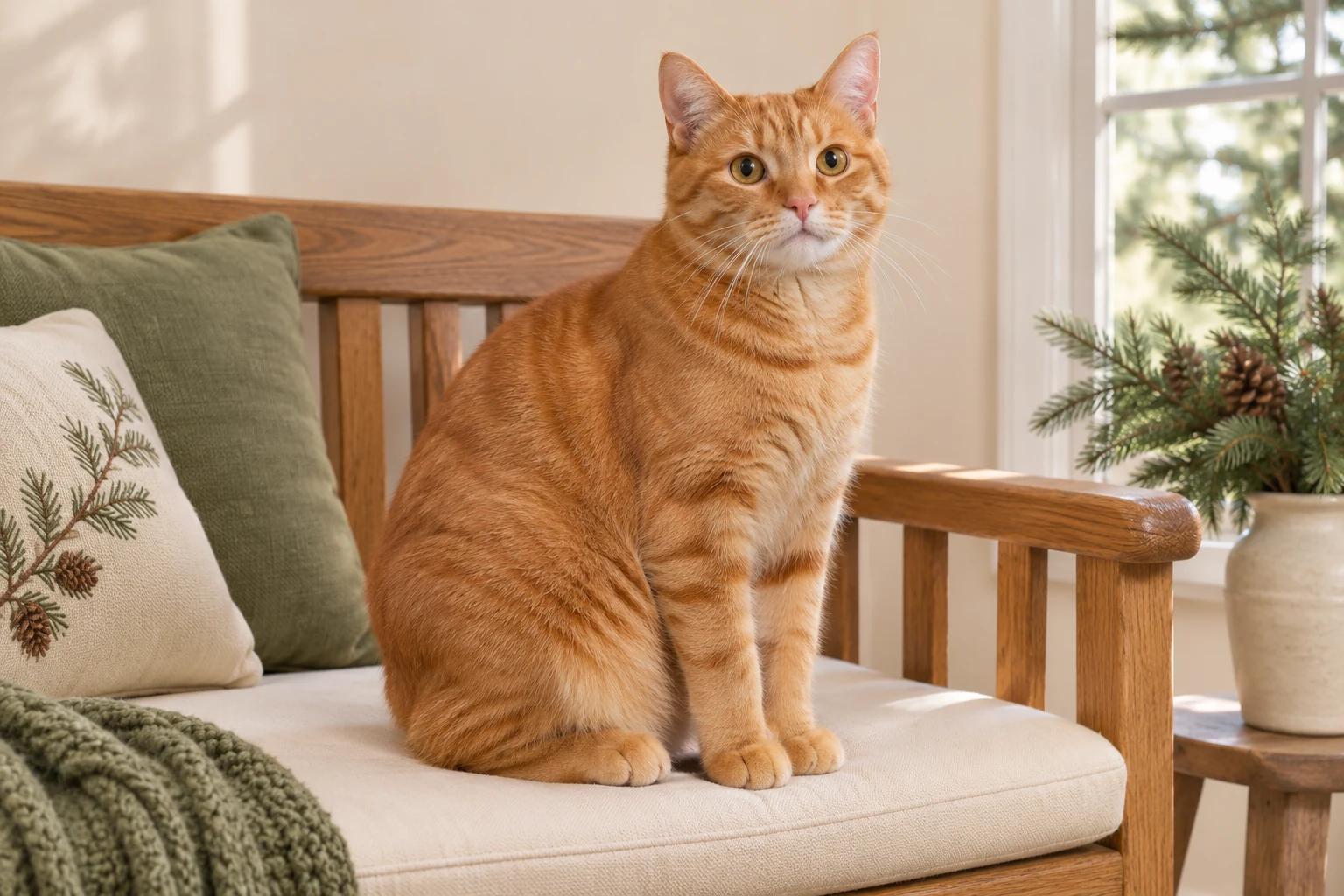
Manx cat temperament deserves more attention than the breed's silhouette. Choosing a companion involves understanding how an actual cat spends time with people, not just recognizing it in a photograph. Useful descriptions of Manx cat behavior connect a broad term to an ordinary situation that you can understand without turning that situation into a test.
The Manx profile is the starting point for the breed's wider ownership context. Here, breed descriptions and general advice about interacting with cats are kept separate. The registry accounts describe tendencies; the practical contact method is general feline guidance, not a procedure proven to work differently in Manx cats. Neither a breed name nor a pleasing first meeting can supply a complete account of an individual.
Manx cat temperament can include household involvement
VCA's Manx account describes a cat that likes participating in daily activities. Its concrete examples include joining a person at a computer keyboard and vocalizing while someone is on the telephone. The same account notes a liking for household routines.
This is more specific than simply calling the Manx friendly. An involved cat may want access to the place where something is happening, not necessarily a prolonged cuddle. If the cat arrives while you are typing, its interest in that activity and your wish to finish work are two separate things.
Think about what participation would mean in your own home. A cat beside the working area presents a different practical situation from a cat standing directly on the keys. The breed description explains why involvement may be part of daily life; it does not mean every interruption must become an elaborate event.
A familiar routine is not an exact timetable the cat has promised to follow. These are preferences, not permanent availability from either participant.
A soft voice is still communication
The FIFe Manx and Cymric profile describes a soft voice and a strong interest in human company. It gives following someone between rooms and waiting for their return as examples of that social orientation.
Those details suggest two separate things to notice when considering Manx cat personality: where the cat chooses to be and how it communicates there. A nearby cat does not have to make a loud announcement to be participating in the household.
Following also does not establish what should happen next. The cat may remain in the room without asking to be lifted or placed on a lap. Describe the actual sequence rather than automatically treating proximity as a request for the most intensive form of contact.
For a person meeting a Manx, a quiet interaction can be informative in its own right. The profile's account is a description of a social tendency, not evidence that every Manx will greet every person in the same way or require the same amount of contact.
A hunting interest is not a verdict on affection
The GCCF Manx account connects the breed's hunting reputation with its working origins. It also describes modern Manx cats as companions that enjoy interactive play. These are not contradictory descriptions of an animal.
The practical point is that a close relationship with people does not make interest in pursuing other moving things disappear. Calling a Manx affectionate is not a reason to assume that every small animal will be treated as a companion. A breed description cannot establish the outcome of a particular encounter.
GCCF mentions a catio when discussing the breed's outdoor hunting interest. That is a way to think about outdoor access without assuming that unrestricted roaming is necessary to express a hunting tendency. It is an option to assess for the household, not an obligation attached to the breed's history.
Avoid making Manx cat characteristics into moral labels. A hunting-oriented action does not mean that the cat has stopped being a companion, and a quiet period indoors does not mean its history was imaginary. The useful distinction is between a tendency, the opportunity to express it and the conditions you provide.
Begin contact with an invitation, not a scoop
Cats Protection's petting guide offers a concrete general method: approach slowly at the cat's level, leave room for it to move away and hold a hand still for it to investigate. If the cat approaches, gentle strokes around the cheeks or chin can be tried.
For a Manx owner, the first step is not picking up the cat to see whether it is affectionate. Give it a chance to approach a stationary hand instead. That creates a smaller, clearer interaction than reaching over the body and beginning several kinds of handling at once.
The guide recommends stroking in the direction of the fur rather than patting. Keep the movement gentle and notice the cat's response. If it moves away, stop rather than following it with your hand.
This method can help distinguish an offered interaction from one the person has simply imposed. It is not a test that a Manx must pass to deserve a sociable description. Nor does accepting a chin stroke establish permission for every other kind of contact. Keep the next interaction responsive to the cat in front of you.
For a separate veterinary-preparation topic, read the Manx kitten movement and toilet questions. Use the cat breed quiz to compare broader ownership preferences.
Frequently asked questions
Does Manx household involvement always mean lap time?
Manx household involvement can include interest in a person's activity, such as VCA's keyboard example, rather than a cuddle.
Can a quiet Manx still be socially involved?
A Manx can communicate softly and stay near people; FIFe describes both behaviors.
Is a Manx temperament description an individual guarantee?
A Manx temperament description concerns breed tendencies, not a complete prediction of one cat's behavior in every setting.
Sources behind this article
Article source checked: November 16, 2026. Source checked 2026-11-16
Keep reading

American Bobtail cat temperament
Read article →