Manchester Terrier (Standard) training: daily skills
Plan Standard Manchester Terrier training around attention, secure outings and rewarding practice, with practical goals for home and class.
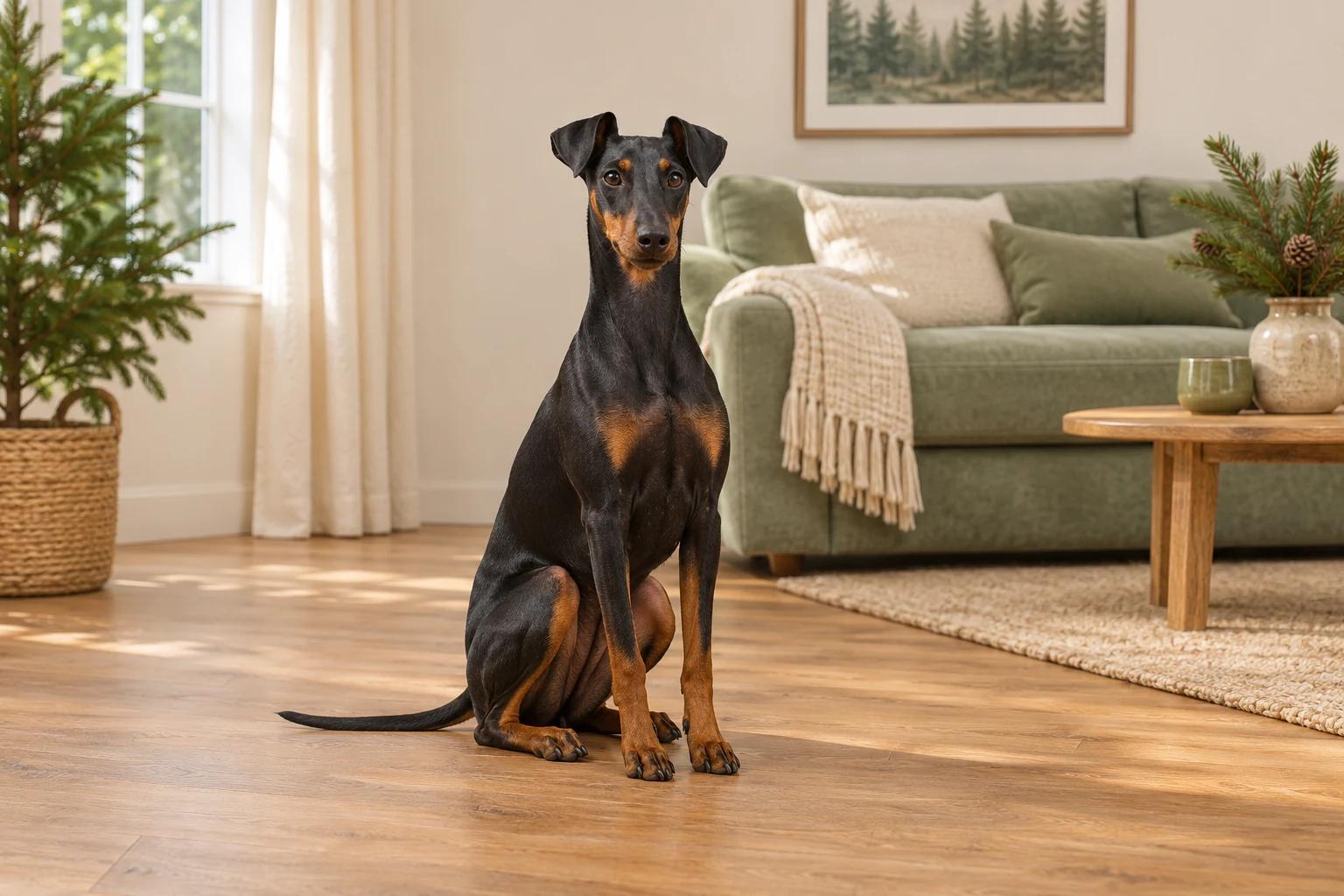
Explore the
Manchester Terrier (Standard)
Background, care, and everyday considerations.
View breed profile →Manchester Terrier (Standard) training should give an observant, active dog something clear to do, not merely a list of things to stop doing. Start with the moments that matter: leaving the house, noticing movement on a walk and returning to a resting place after activity. Those skills make ordinary days easier to organize.
A sleek, compact dog can still be quick to investigate an opportunity. Good preparation lets you teach without turning every outing into a test. Use appropriate physical management while learning develops, and choose practice settings where the requested response is within reach.
Manchester Terrier (Standard) training needs an outlet and a plan
The American Manchester Terrier Club describes a responsive breed that enjoys positive, consistent training and activities such as rally and scent work. It also highlights interest in pursuing small animals. That makes attention and secure handling especially relevant, rather than assuming intelligence will override everything the dog notices.
Write down what you want during a common situation. At the garden gate, perhaps the dog waits behind a barrier while you check outside. On a walk, perhaps it turns toward you before you change direction. Describe the action so another caregiver could recognize it.
Then separate teaching from necessity. A rushed departure is not the best moment to introduce an unfamiliar cue. Practice its easy version when you have time, and use the established management arrangement when you need to leave promptly.
Make checking in worth noticing
Begin in a familiar, low-distraction space. Notice moments when the dog looks toward you, and make that interaction worthwhile. Keep your response clear rather than launching into a long stream of instructions.
Choose one cue for an invited check-in and make sure everyone uses it the same way. A phrase repeated continuously during a walk can become background noise. If the dog cannot respond, the next useful decision is often to change the setting or make the task easier.
Record where the response is reliable. “In the quiet garden” is a meaningful achievement. It is not evidence that the same cue will work beside a moving squirrel or a busy road. Keep the leash and secure boundaries appropriate to the real level of training.
Build a walking route with room to think
Before setting out, identify places where you can turn away or pause without blocking others. A narrow path with no room to create distance may be a poor choice for early practice, even if it is your usual shortest route.
Start with a manageable stretch and one clear objective, such as moving together past a familiar driveway. A walk need not become a continuous obedience drill. Allow ordinary exploration where appropriate, then use brief practice opportunities rather than asking for uninterrupted attention.
When something unexpected appears, prioritize management over proving the cue. Move to a workable distance and reassess. Afterward, note what happened: the type of movement, distance and setting. That information helps a trainer suggest a useful next step.
Manchester Terrier (Standard) obedience can include a home station
A designated mat or bed gives the household a clear destination during everyday activity. Choose a place away from the door swing and kitchen traffic, with enough room for the dog to rest rather than perch.
Teach approaching the place before expecting a long stay. Once that is familiar, add a small ordinary event, such as someone taking a coat from a hook. Do not combine every departure cue, visitor and bag of shopping in the first rehearsal.
Use a consistent release cue so the end of the exercise is understandable. The point is not to keep the dog immobile throughout the evening. It is to create a practical option when people need a clear route or a few moments to organize themselves.
Choose a class that teaches the owner, too
The AKC's obedience introduction explains that classes require practice at home and recommends frequent short sessions with play and rewards. A weekly lesson is a place to learn how to teach, not a replacement for the work between visits.
Before enrolling, ask whether you can observe. Look at how the instructor explains exercises, how much space dogs have and what happens when a dog finds the activity difficult. Ask specifically about reward-based methods and how the class adapts to an alert terrier.
Bring a notebook with one practical question. For example: “How can I help my dog turn toward me when movement appears across the path?” That is easier to address than “How do I make him obedient?” Request a manageable exercise you can repeat in your own environment.
Give learning a purpose beyond repetition
If you are exploring how to train a Manchester Terrier (Standard), think about activities you would enjoy together. Rally foundations or an introductory scent-work class may offer a structured project. Discuss the dog's age, fitness and suitability with the relevant professionals before choosing more physically demanding work.
At home, rotate a few simple goals rather than drilling one cue until interest fades. You might practice a short approach on one occasion and a calm equipment routine on another. Keep a record of what changed so you are not starting from scratch each time.
Avoid using more intense exercise as the automatic answer to every training difficulty. Ask whether the dog understands the task, whether the setting is too busy and whether the humans are being consistent. The missing piece may be clarity rather than another activity.
Manchester Terrier (Standard) socialization should allow observation
Describe the situations your dog will encounter regularly: visitors, transport, shared entrances or a sitter. Arrange manageable exposure rather than assuming every introduction should involve direct contact.
For a puppy, discuss suitable outings with your veterinarian. Give the dog room to observe and move away, and avoid making a crowded greeting the measure of success. A qualified reward-based trainer can help if uncertainty or fear persists.
The Standard Manchester profile provides broader care context. For a separate visual-reference question, see the existing portrait article. The dog match quiz can help prospective owners weigh the daily involvement this kind of training requires.
FAQ
What training matters most for a Standard Manchester Terrier?
Prioritize attention, a short secured recall, manageable departures and a resting place at home. Choose the skills that address your real surroundings, then build them in easy settings before expecting them around strong distractions.
Does a quick learner need less practice?
Not necessarily. Understanding a cue in one room is different from responding around movement outdoors. Use short, consistent practice and judge progress in the specific situation rather than assuming intelligence makes every response reliable.
Can training replace secure boundaries around small animals?
No. Maintain appropriate physical separation and secure handling. Interest in pursuit is relevant to this breed, and an unfinished or familiar cue should not be treated as a guarantee around small animals.
Is an obedience class enough on its own?
A class can teach you how to work with your dog, but home practice remains important. Choose a reward-based instructor, ask for exercises suited to your circumstances and keep sessions manageable between lessons.
Sources behind this article
- American Manchester Terrier Club: Meet the Manchester Terrier ↗
- American Kennel Club: Obedience, Take Your First Steps ↗
Article source checked: November 15, 2026. Source checked 2026-11-15
Keep reading

Affenpinscher Training: Build Useful Everyday Habits
Read article →