Maltese training: small skills for everyday life
Plan Maltese training around clear cues, handling, walks and practical routines, with ways to keep progress understandable and consistent.
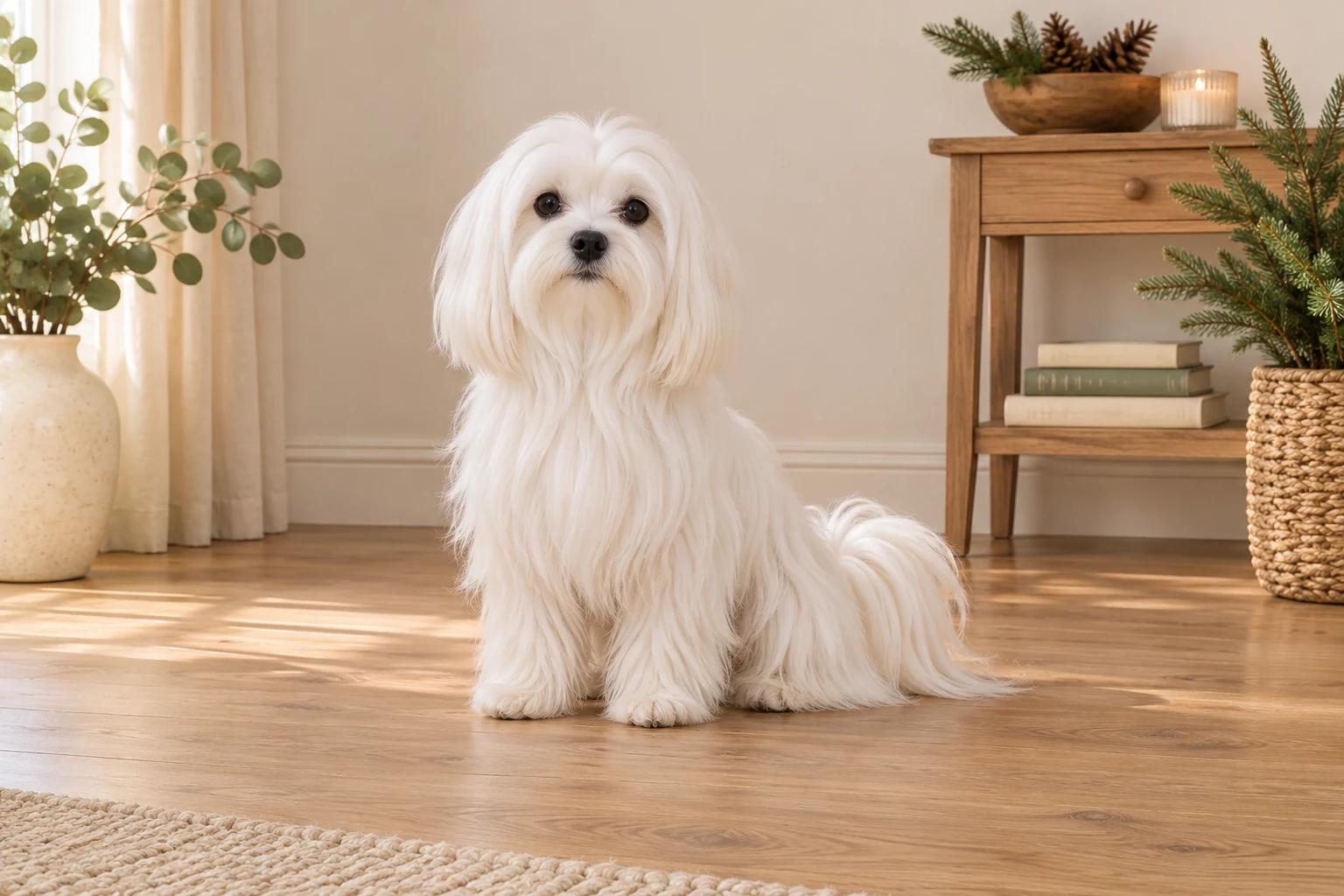
Maltese training works best when the skills matter to the dog's actual day. Coming away from an open doorway, standing for a harness and resting beside a chair are more useful starting points than an impressive string of tricks. Decide what you want those moments to look like, then teach one small piece at a time.
A Maltese is easy to carry past a difficulty, which can hide gaps in learning. Lifting may sometimes be necessary, but it does not teach the dog what to do next time. Give this small companion opportunities to understand the household rather than relying on its portability.
Maltese training starts with clear household agreements
The AKC's Maltese guide emphasizes consistent, reward-based training. Apply that principle by agreeing on a small vocabulary before you begin. If one person says “here” and another repeatedly says “come over,” decide which cue everyone will use for the same action.
Write down three priorities in observable terms. “Be good” is too broad; “walk to the mat beside the desk” is something everyone can recognize. “Stop being difficult” tells you little; “stand while the harness is fastened” identifies a skill you can break into manageable parts.
Start in a quiet familiar area with a surface that gives the dog secure footing. Keep the arrangement simple enough that you can see what is happening. If a session becomes confusing, reduce the task rather than repeating a louder version of the cue.
Teach a response to the name before relying on recall
Say the dog's name when it is nearby and likely to notice you. Acknowledge and reward the turn toward you. Avoid using the name as a continuous background soundtrack while the dog is busy with something else.
Once that response is familiar, invite a short approach from only a few steps away. Keep the first destinations worthwhile: a brief game, a reward or a pleasant interaction. Do not make every successful approach end something the dog was enjoying.
Practice in more than one easy room before expecting the same response in a distracting setting. A Maltese that comes across the kitchen has learned something useful, but not necessarily how to leave an exciting smell outdoors. Keep outdoor practice secured rather than using an open space to discover what the dog does not yet know.
Make the doorway a small, teachable sequence
An exterior door combines movement, interesting smells and people in a hurry. Separate those events. Choose a waiting spot away from the opening, then practice going there when nobody is leaving. Add ordinary door-related movements gradually rather than introducing the entire departure at once.
For example, first walk toward the door and return. On another repetition, touch the handle without opening it. Keep a physical barrier or other appropriate management in place; training practice is not a reason to risk an escape.
Assign the person handling the door a clear role. Visitors should not have to guess whether they may step inside while the dog is underfoot. A simple household agreement, such as securing the dog before unloading shopping, can make the routine more predictable while learning continues.
Maltese obedience should include standing and waiting
Sitting is familiar to many owners, but a calm stand is useful for fitting equipment and routine care. Ask the groomer which position would make home maintenance easier, and practice that position separately from a full grooming session.
Present the harness, allow a brief investigation and work toward ordinary fastening in small steps. Avoid making a long wrestling match the daily rehearsal. If the fit seems awkward, check the equipment rather than assuming the dog is refusing the lesson.
VCA's Maltese overview describes a fine-boned small companion that benefits from gentle handling and consistency. For the owner, that makes setup important: work at a comfortable height for yourself without placing the dog somewhere it could fall, and keep tools within reach so the lesson is not repeatedly interrupted.
Build an outdoor routine you can repeat
When considering how to train a Maltese for walks, start before leaving the building. Can you attach the leash without rushing? Is the route to the exit clear? Are rewards accessible without setting bags on the floor?
Choose a short, familiar practice route. Mark places where you can pause out of the flow of people. Rather than judging the outing only by distance, note whether the dog could check in with you, move through the entrance and return indoors without a frantic finish.
For toilet learning, keep factual records of successful trips and accidents, and offer regular opportunities appropriate to the dog's age and needs. Do not use a breed-wide timetable as proof that the dog ought to manage longer. Ask your veterinarian about toileting changes or concerns, especially if a previously established pattern changes.
Maltese socialization is not a greeting quota
Think of socialization as learning about everyday surroundings, not collecting contact with every passing dog or person. Discuss suitable outings with your veterinarian, especially for a puppy whose preventive-care plan is still in progress.
Prepare a list of situations your dog will genuinely encounter: a lift, delivery carts, a quiet waiting area or a regular sitter. Begin with manageable versions and leave room to step away. The useful question is whether the experience stayed comfortable enough for learning, not how many events you completed.
Keep notes about the setting. If a busy entrance was overwhelming, a quieter visit offers more information than immediately repeating the same crowded experience. For continuing fear or difficulty, ask a qualified reward-based trainer for help designing the next step.
Review progress without turning practice into an exam
At the end of the week, choose one skill that became easier and one that needs a simpler setup. Record the circumstances: “came across the quiet living room” is more useful than “recall finished.” That wording preserves what the dog actually demonstrated.
The Maltese profile gives broader ownership context. Read the existing Maltese coat guide for a separate care topic, and use the dog match quiz if you are still deciding whether this daily teaching commitment fits your life.
FAQ
What should I teach a Maltese first?
Start with responding to its name, approaching from nearby and moving to a designated resting or waiting spot. Choose skills that solve ordinary household situations, then practice them in easy settings before adding distractions.
Can I train a Maltese without long lessons?
Yes. Brief practice woven into ordinary routines can give you clear opportunities to teach. Finish while the task remains understandable, and keep the cue and reward arrangement consistent across the people involved.
Why does my Maltese respond indoors but not outside?
The outdoor setting adds distractions and may be much harder than the room where the cue was learned. Return to a simpler secured setting and build the skill gradually rather than assuming the indoor response transfers automatically.
Should I carry my Maltese whenever training is difficult?
Carrying may be needed to manage a situation, but it does not replace teaching. Plan easier practice separately and ask a qualified trainer for help if the difficulty continues. Handling should remain gentle and appropriate for the individual dog.
Sources behind this article
Article source checked: November 15, 2026. Source checked 2026-11-15
Keep reading

Affenpinscher Training: Build Useful Everyday Habits
Read article →