Lhasa Apso training: small skills for everyday life
Build a practical Lhasa Apso training plan around clear cues, useful rewards, grooming cooperation and calm everyday routines.
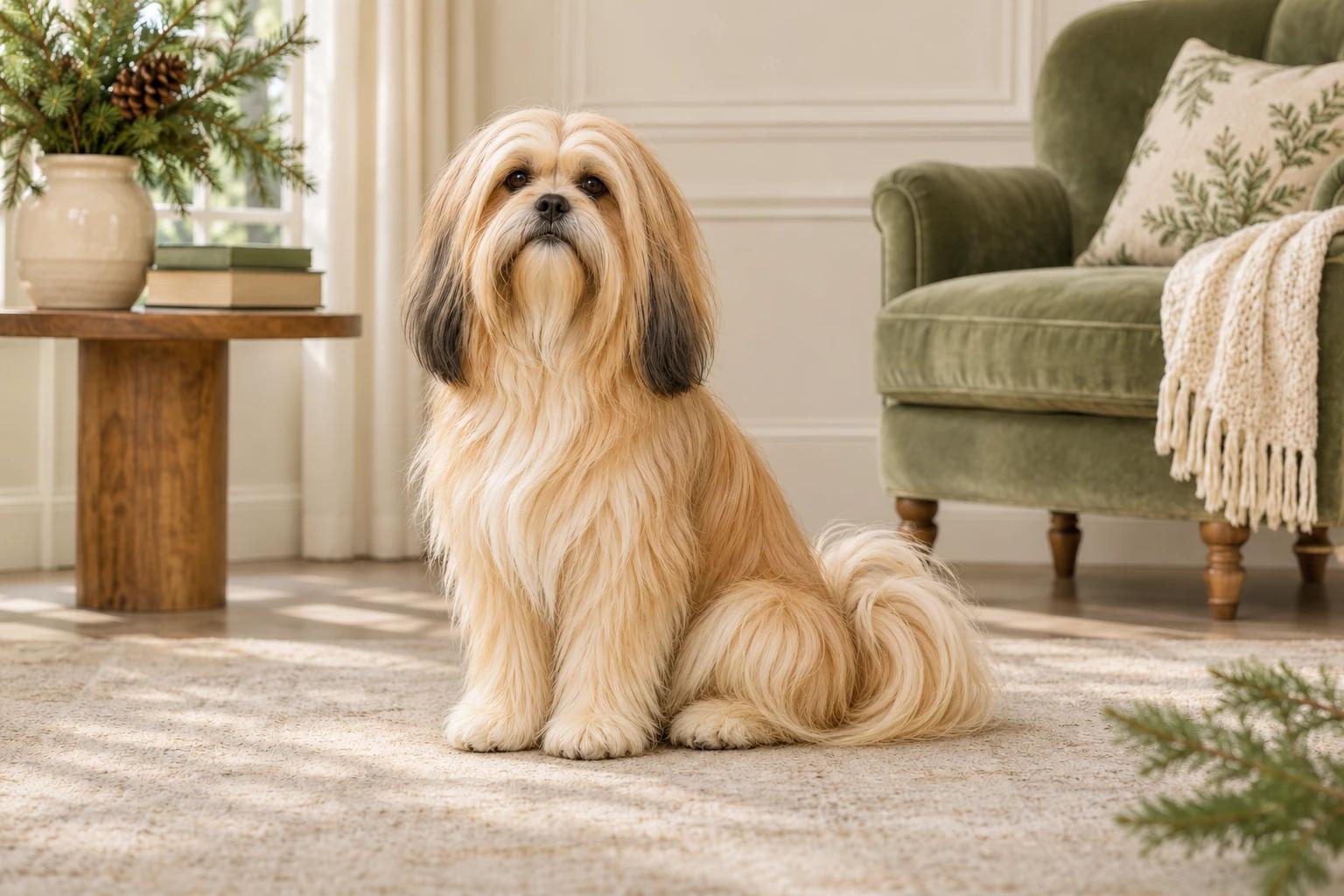
Lhasa Apso training works best as a collection of useful conversations, not a daily argument about obedience. Start with the things you actually need: coming away from the doorway, moving onto a mat, walking with you and participating in coat care. A small dog needs understandable rules just as much as a large one.
For this breed, a polished trick is less valuable than a repeatable routine that everyone in the house can use. Choose a few skills, decide what success looks like and make practice easy enough that you can both finish without frustration.
Lhasa Apso training begins with a shared language
The AKC breed introduction describes a confident, intelligent dog that may be reserved with unfamiliar people. That makes it worth teaching the household’s expectations clearly instead of interpreting every pause as defiance. A cue should tell your Lhasa what to do, not merely announce that you dislike the current behavior.
Write down the words your household intends to use. If “down” means lying down for one person and leaving the sofa for another, choose separate cues. Put the list where everyone can see it. Consistency here means giving the same information, not demanding an instant response everywhere.
Pick a practice space with room for a small dog to move and a surface that is comfortable underfoot. Keep distracting activity elsewhere at first. The kitchen during meal preparation may be convenient for you but an unnecessarily complicated classroom for the dog.
Choose a first skill you will use today
A hand target is one possible starting point: the dog moves toward an offered hand rather than being picked up whenever you want to change position. A mat cue is another, especially if the doorway is busy. Choose one rather than introducing a whole vocabulary in a single evening.
VCA’s puppy training guidance recommends brief initial sessions, rewarding the desired response and beginning where distractions are limited. It also explains that confusion, competing interests and discomfort can all affect a response. Those principles are useful when planning practice, including for an adult learning a new household routine.
For a mat exercise, decide where the mat belongs before bringing the dog over. Reward an easy first step toward the goal, then stop while the task still feels manageable. Keep the first version separate from real arrivals. A doorbell, visitor, moving coat and opening door introduce several challenges at once.
Use a notebook with three columns: location, what you asked for and what happened. “Went to mat in kitchen” is more useful than “good today.” The note tells you where the skill is established and where it still needs practice.
Make grooming cooperation part of obedience
Lhasa Apso obedience should include the everyday handling that accompanies a long-coated dog. Ask a groomer to show you an appropriate resting or standing position, then practice that position separately from a full grooming appointment. Your first aim is a familiar setup, not completing every task.
Place the same non-slip mat in the same quiet spot. Bring out one tool, allow a brief introduction and put it away again. Keep your own hands predictable. If you cannot comfortably manage the dog and the equipment together, simplify the task or ask for a demonstration rather than improvising around moving scissors.
Record what is already familiar: brushing the back, having a harness put on or resting while a leg is touched. This creates a useful handover for the groomer. Describe difficulty plainly rather than saying the dog is “bad.” Persistent distress or a sudden change in tolerance needs professional guidance, with a veterinarian involved where discomfort could be contributing.
Build a doorway routine before you need it
A Lhasa’s alert attention makes arrivals an obvious training project, but the goal is not to erase all communication. Decide what happens after you notice someone at the door. Perhaps one person handles the visitor while another invites the dog to a resting area away from the entrance.
Rehearse without a visitor first. Practice moving together from the living room to the chosen spot, then add a quiet knock made by someone already inside. Increase only one part of the rehearsal when the earlier version is familiar. A real delivery is not the time to demand the finished routine for the first time.
A physical arrangement can help while learning continues. Think about where packages are placed and whether a gate keeps the entrance separate from the dog’s space. Training is easier to maintain when the house does not require perfect timing from everyone every day.
Socialization is not a greeting quota
Lhasa Apso socialization can include watching ordinary life without meeting everyone in it. A calm view of a person carrying an umbrella may be more useful than being passed between several excited strangers. Ask your veterinarian how to plan a puppy’s outings appropriately, and choose settings where you can leave easily.
For an adult, begin with what the caregiver says is familiar. Change the environment gradually: a quieter street before a crowded entrance, a known visitor before a party. Let a reserved dog have room rather than turning a social meeting into a compulsory performance.
When thinking about how to train a Lhasa Apso, include the skills you need to end an interaction. Moving back toward you, changing direction or going to a familiar resting place gives you options. An introduction that ends calmly is a complete training opportunity even if nobody pets the dog.
Judge progress by everyday usefulness
Select one small goal for the week, such as responding to the mat cue in two quiet rooms. Avoid a calendar that demands mastery regardless of what happens. If a task deteriorates, return to the last manageable version and look at the circumstances.
Bring your notes to a reward-based trainer if you are stuck. A clear description of the situation is more helpful than a verdict about stubbornness. The Lhasa Apso profile provides broader care context; the dog match quiz helps examine how teaching fits your household. Read the separate Lhasa watchdog history article for background without making ancestry an excuse to skip practical learning.
FAQ
Is a Lhasa Apso too independent to train?
Independence does not prevent learning. A Lhasa Apso needs clear information, suitable motivation and practice at a manageable level. Judge a response in context rather than assuming the dog understands a cue equally well in every situation.
Which skill should a Lhasa Apso learn first?
Choose a skill your household will use immediately, such as moving toward your hand or going to a mat. Start in a quiet place, define a small first success and agree on the same cue across the household.
Should training include brushing and handling?
Yes. Familiarity with a grooming setup and brief handling routines belongs alongside walking and recall skills for a Lhasa Apso. Ask an experienced groomer to demonstrate suitable technique, and seek professional guidance when the dog shows distress or discomfort.
Sources behind this article
Article source checked: November 15, 2026. Source checked 2026-11-15
Keep reading

Affenpinscher Training: Build Useful Everyday Habits
Read article →