Leonberger Training: Everyday Skills for a Giant Dog
Make Leonberger training practical with grooming cooperation, comfortable greetings, useful household cues and a realistic socialization plan.
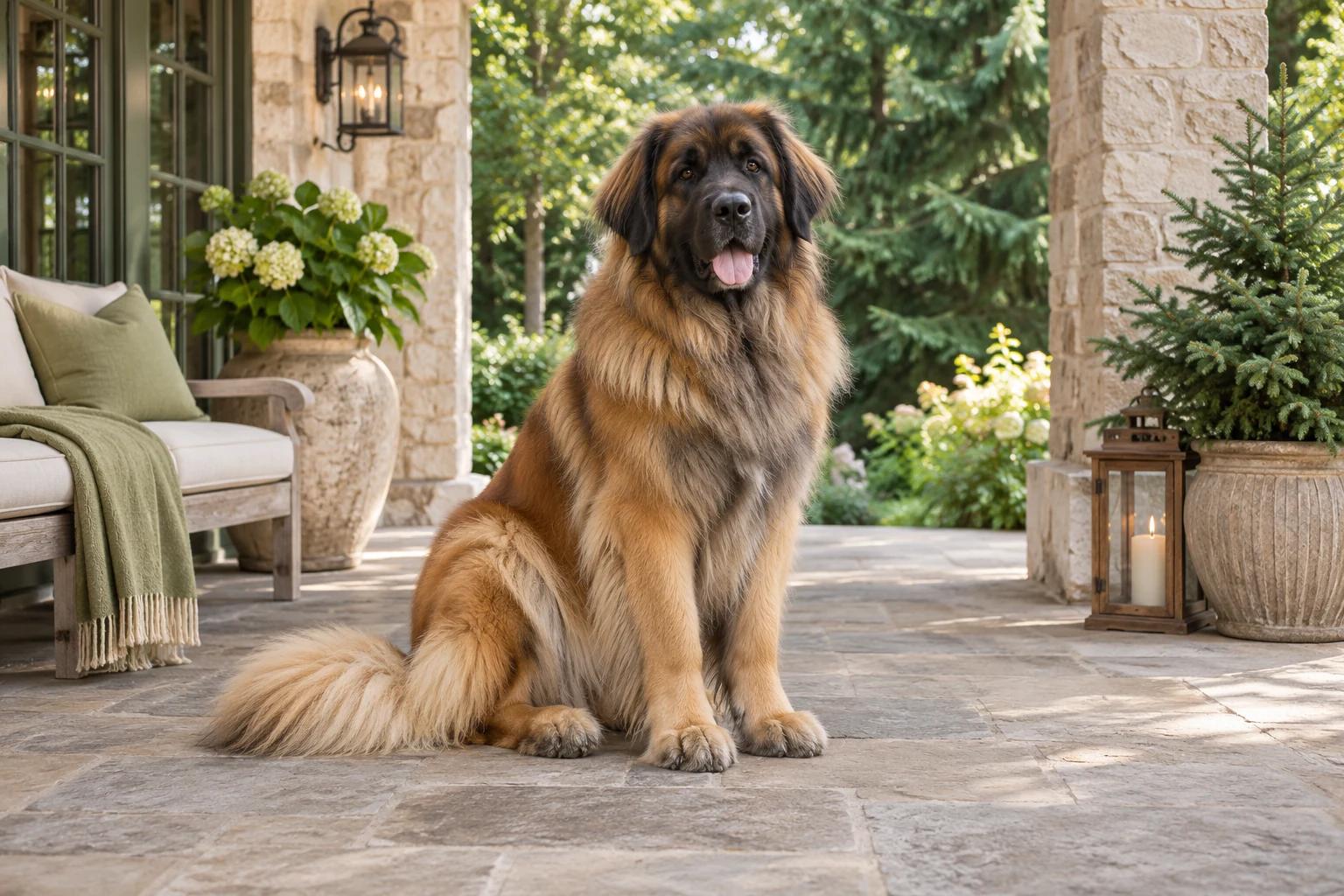
Leonberger training is especially valuable when it makes ordinary care easier: standing for a coat check, moving aside in a hallway and keeping four paws on the floor while someone arrives. These skills may look modest beside a competition routine, but you will use them constantly. Teach them while your dog is learning the household pattern rather than waiting until its size makes every misunderstanding harder to manage.
Leonberger training that earns its place in your day
The Leonberger Club of America recommends patient, consistent, positive training and early classes. Its owner leaflet also emphasizes carefully introduced experiences with people, places and other animals. Those are useful priorities for a breed whose adult size makes practical cooperation important. Leonberger Club of America owner leaflet.
Choose a few outcomes you can describe clearly. You might want your dog to stand while you arrange its harness, follow you through a turn without crowding, or rest beside rather than across your work chair. Describe what the dog should do, not simply what you want it to stop doing.
Then decide where each behavior will be useful. A resting place in the farthest room may not solve crowding while you work if the dog is expected to remain nearby. A stand cue taught only in the garden will need practice in the grooming area too. Match the lesson to the real location without making the first attempt unnecessarily difficult.
Teach a stand before you need a long grooming session
Standing on cue can help with harnessing and routine care. One teaching option is to guide a sitting dog forward with a reward, mark the moment it stands and reward while it remains standing. Gradually replace the visible food lure with a hand signal, then add a word once the movement is familiar. Keep the first holds brief. AKC guide to teaching stand.
For a Leonberger, organize the space before inviting the dog onto it. Choose a stable, nonslip floor area large enough for its body and for you to move around without stepping over paws. Have your tools ready but do not introduce every tool at once.
Treat standing and accepting handling as separate achievements. A dog that understands the position may still need gradual practice with a brush or a hand near its feet. Begin with a small, comfortable interaction and finish without trying to complete an entire grooming job. Ask a qualified trainer or experienced groomer to help if the dog consistently moves away or becomes distressed.
Keep the reward accessible to your hand. If you spend several seconds searching a pocket, the dog may already have sat down or walked off before you deliver it. Practicing your own movements without the dog can expose clumsy parts of the setup before they interrupt the lesson.
Give greetings enough room
A giant dog's greeting needs space for both dog and visitor. Before opening the door, arrange the environment so that the visitor is not immediately squeezed between a moving dog and the coat rack. A suitable barrier or lead arrangement can help you manage the situation while teaching develops.
Ask a willing visitor to follow a simple plan rather than improvising. Choose where the person stands and where you will reward your dog. If everyone starts talking, reaching and giving different instructions, simplify the visit instead of expecting the dog to interpret the confusion.
The goal is not to rehearse a theatrical entrance. It is to make the arrival of a parcel, friend or relative manageable. Practice with the least complicated version first: one familiar person, no bags and an uncluttered room. Later you can account for the ordinary variations that matter in your home.
Make movement cues solve actual obstacles
When asking how to train a leonberger, owners often think first of sit and stay. Also consider the moments when a large body occupies the exact place you need to use. You may need your dog to follow you away from a cupboard, move to a mat before a chair rolls back or turn with you in a narrow passage.
Set up practice with room to succeed. Begin away from the tightest doorway and keep your route clear. Reward cooperation in a generous space before using the same cue where movement is constrained. Avoid making a blocked corridor the first lesson.
Walk through your home and note three recurring bottlenecks. Choose one to address this week. For example, if the dishwasher door opens into the dog's usual resting spot, moving the resting spot may solve more than repeatedly asking the dog to move. Training and room layout should support each other.
Socialization is preparation, not a crowded itinerary
Leonberger socialization should reflect the life you expect your dog to lead. Think about the people who will handle it, the entrances it will use and the settings where it will need to wait. Discuss age-appropriate outings and health precautions with your veterinarian before taking a puppy into unfamiliar environments.
Make the first visit easy to leave. At a training venue, ask where you can stand away from the busiest arrival point. At a grooming business, ask about an introductory visit rather than assuming a full appointment must be the first experience. Keep the aim specific enough that you can tell whether the visit helped.
Do not count encounters as if a larger number automatically means better preparation. Record what the dog found comfortable, what was difficult and what you would change next time. A quiet observation from a suitable distance can be more useful than being passed from person to person.
Choose instruction that fits the dog and the handler
A leonberger obedience class should give you adequate working space and an instructor who can adapt exercises to the individual. Before enrolling, describe your dog's age, current experience and any handling difficulties. Ask how the class manages arrivals and whether you can observe a session first.
Bring practical goals to the instructor, not just a request for general obedience. A clear example such as difficulty standing during harness attachment gives you something concrete to work on. If a behavior changes suddenly or movement seems uncomfortable, consult your veterinarian rather than assuming that more repetition is the answer.
Review the Leonberger profile for the broader ownership picture and use the breed quiz to consider your routine. The neurological DNA-report article covers a separate records question; test paperwork is not a substitute for assessing a current concern.
FAQ
What should I teach a Leonberger first?
Prioritize skills you use daily, such as comfortable lead or harness attachment, moving with you and resting in a practical place. Choose a few clear behaviors and teach them in an uncluttered, familiar setting.
Is standing still the same as accepting grooming?
No. A stand cue establishes a position. Brushes, touch and other care procedures may need their own gradual introduction. Keep early handling practice manageable and seek help if the dog is uncomfortable.
How can I prevent training from becoming a strength contest?
Use clear setups, appropriate management and rewards for the behavior you want. Change the environment when possible and get instruction before handling becomes difficult, rather than relying on physical force to move a giant dog.
Should every outing include meeting strangers?
No. An outing can involve observing from a comfortable distance or practicing a familiar routine in a new place. Choose experiences according to your dog's response and the situations it will encounter in everyday life.
Sources behind this article
Article source checked: November 15, 2026. Source checked 2026-11-15
Keep reading

Affenpinscher Training: Build Useful Everyday Habits
Read article →