Large Munsterlander Training: From Home to Field
Build a practical Large Munsterlander training plan with household manners, cooperative retrieving, controlled outings and clear progress checks.
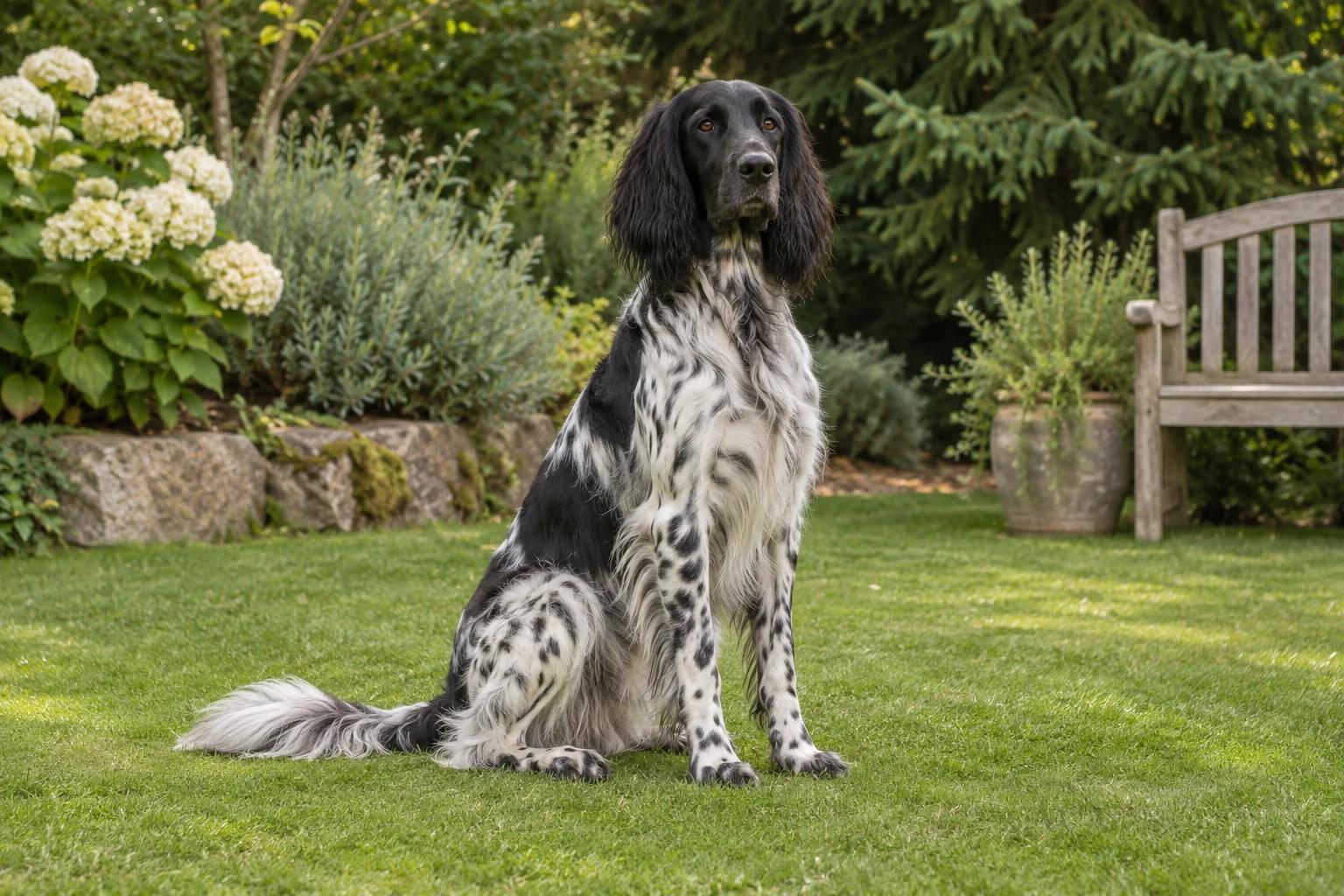
Large munsterlander training should connect everyday cooperation with the activities you intend to share. A promising retrieve does not teach waiting at a gate, and a neat indoor sit does not establish attention beside an interesting scent. Build those pieces deliberately. The UKC standard's emphasis on a trainable, intelligent working gundog is a reason to offer clear learning opportunities, not a reason to skip foundations. UKC Large Munsterlander standard.
Large Munsterlander training begins with a shared vocabulary
Before arranging a demanding outing, agree on the words everyone will use. Choose cues for returning, releasing an object and moving to a resting place. Give each cue one meaning. If one person uses “come” for approaching while another uses it to mean stop sniffing, the dog's task becomes unnecessarily confusing.
Make a short household list with the cue, the behavior you want and the reward you can deliver. “Wait at the back door while I clip on the lead” is clearer than “be polite.” The list is for the humans, not a timetable that the puppy must complete by a certain age.
Teach in a place where you can control interruptions. Put away unrelated toys, choose suitable footing and prepare rewards before inviting the dog over. End the session while you can still recognize useful progress. An extra repetition is not valuable merely because it fills the remaining time on a clock.
Build a cooperative retrieve, not a throwing contest
The AKC's fetch guide breaks retrieving into small parts: interest in an object, taking and holding it, then collecting it from increasing distances. Rewarding those pieces lets you teach the return rather than repeatedly throwing something and hoping the dog supplies the missing steps. AKC fetch training guide.
For a Large Munsterlander owner, this is a useful distinction between excitement about an object and cooperation with a handler. Start with an appropriate toy close enough that you can see exactly what the dog does. If the dog takes it but turns away, the next task is not a longer throw. Work on the small exchange that is not yet clear.
Keep a note of the point where the exercise changes. Perhaps the dog collects a placed toy but loses focus when it is thrown. Perhaps returning works in the kitchen but not on grass. Those observations help you set up a simpler attempt instead of declaring that the dog knows the task and is choosing to ignore it.
Avoid turning a training error into a chase around the house. Put tempting household objects out of reach before you start. Use your planned equipment so that practice has a consistent context and an ordinary slipper does not become the most entertaining object available.
Take attention outdoors in manageable steps
A useful outdoor session can be modest: a familiar entrance, a quiet route and a few opportunities to reconnect with you. Do not judge it by distance covered. Your aim may be to leave the car calmly, walk a short section together and return without the whole outing becoming a struggle.
Choose a controlled setting and suitable lead equipment while teaching. Identify an exit route before beginning. If the area becomes busy, moving away is a practical adjustment, not a failed test. The session should give you information about the next workable step.
When considering how to train a large munsterlander around distractions, write down the distraction precisely. A bird moving nearby is different from an old scent on a fence. A dog passing across the street is different from one approaching head-on. Change the setup to address the actual difficulty rather than repeating the same cue more loudly.
Plan social experience around ordinary life
Large munsterlander socialization should prepare the dog for the settings it will actually encounter. Make a list that includes your vehicle, grooming location, entrances, visitors and the places you expect to train. Ask your veterinarian about appropriate arrangements for a puppy's age and vaccination status.
At an unfamiliar location, you do not need a long itinerary. A short visit with room to observe may give you more useful information than several crowded stops. Let the dog's response determine whether you remain, create more distance or leave. An outing is not successful merely because you reached the destination.
If you intend to work with a club, ask whether the first visit can be an introduction to the environment rather than immediate participation in a full session. Tell the instructor what your dog already finds comfortable. This allows the next lesson to begin from the dog in front of you, not an assumed level of readiness.
Connect household obedience to specialist instruction
Large munsterlander obedience is more useful when it solves real transitions. Practice the route from the resting area to the door, the pause while equipment is arranged and the return to quiet time afterward. Those moments are repeated far more often than a polished demonstration in a training hall.
The Large Munsterlander Association of America describes work across pointing, retrieving and tracking, with hunting tests central to its program. If those activities are your goal, seek experienced instruction rather than treating general household lessons as a complete working-dog curriculum. Large Munsterlander Association of America.
Bring your instructor a clear account of what works at home. Mention the places where responses change and the rewards your dog actually values. Ask how to preserve your household cues while learning specialized ones. A coherent plan is easier to maintain than several unrelated sets of rules.
Review one practical outcome at a time
At the end of the week, choose one ordinary improvement to assess. Can you attach the lead with less fuss? Does the dog complete a short toy exchange in the same quiet location? Can you put equipment away without immediately restarting play? Record the setup as well as the result.
The Large Munsterlander profile and breed quiz can help connect training plans to broader ownership needs. For historical background separate from teaching, see the foundation-list article.
FAQ
Should retrieving come before household manners?
Neither needs to replace the other. Use small retrieving exercises alongside practical routines such as lead attachment, waiting at entrances and resting after activity. Each teaches a different part of living together.
Why does my dog listen indoors but not outside?
The setting may be much harder even when the cue is familiar. Identify the specific distraction and simplify the situation. A quiet indoor response does not establish the same skill beside wildlife, moving dogs or new smells.
Does a Large Munsterlander need specialist training?
Specialist instruction is appropriate when you plan hunting work or another structured activity. A knowledgeable, reward-based instructor can connect foundation skills to that activity without assuming that breed instincts replace teaching.
What should I do when training stops progressing?
Record the exact point where the exercise breaks down and ask a qualified trainer to review the setup. Sudden changes in willingness, movement or usual behavior should also be discussed with your veterinarian.
Sources behind this article
- United Kennel Club: Large Munsterlander ↗
- American Kennel Club: How to Teach Your Dog to Fetch ↗
- Large Munsterlander Association of America ↗
Article source checked: November 15, 2026. Source checked 2026-11-15
Keep reading

Affenpinscher Training: Build Useful Everyday Habits
Read article →