Working with a LaPerm’s curls without pulling through knots
Distinguish your LaPerm’s natural curls from a grooming concern, and plan gentle checks and professional help without pulling or cutting through knots.
Let curls remain curls
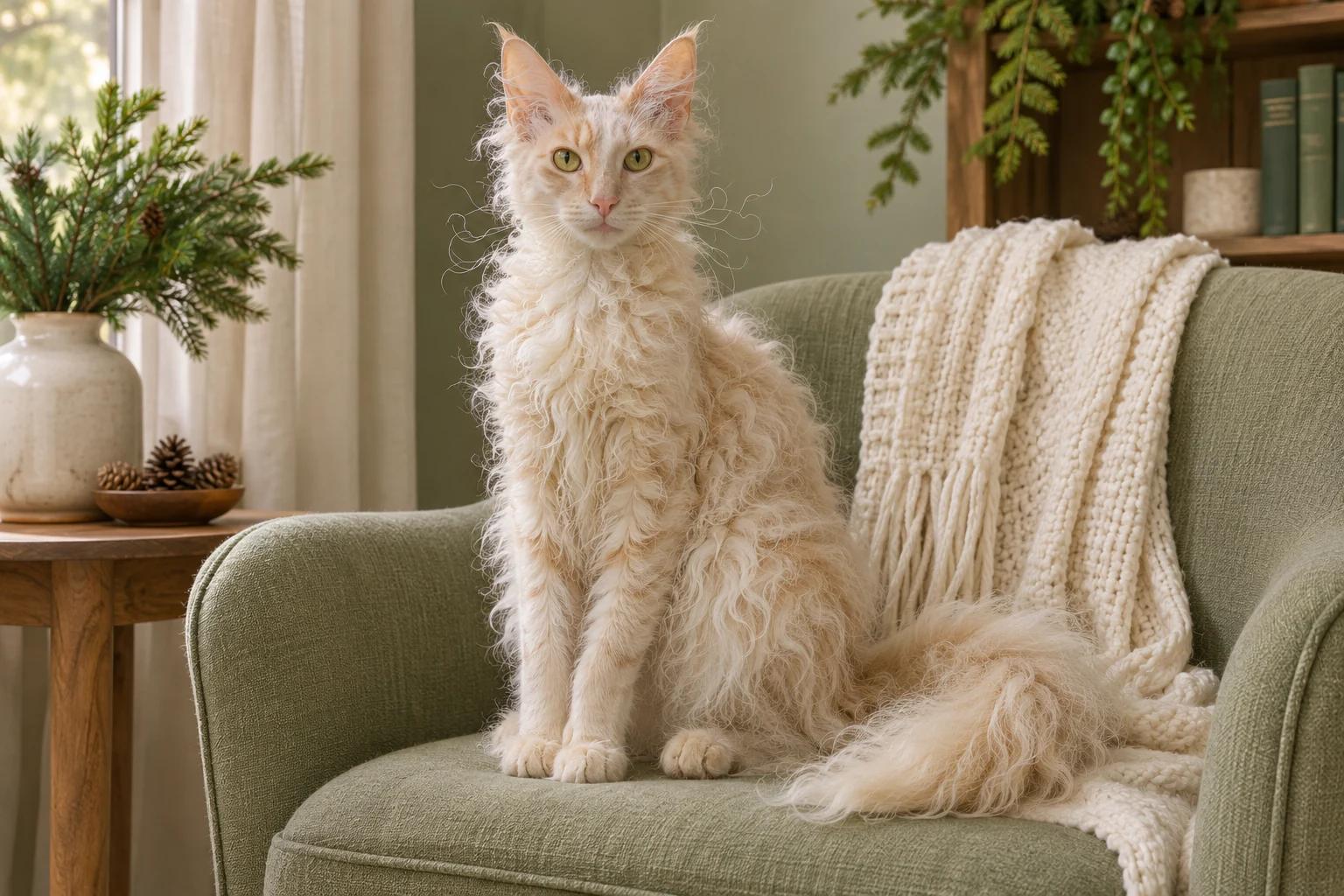
CFA describes the LaPerm as a curly-coated breed with both longhair and shorthair varieties. A coat does not need to look straight to be cared for appropriately. Before reaching for a comb, learn what the individual’s ordinary texture feels like and ask a professional to show you how to check it without pulling.
Note the question you want answered: loose hair, a suspected knot or a change in comfort. These are different reasons for seeking help. A photograph of another LaPerm’s finish is not a care instruction for yours. Keep the coat’s natural character separate from a problem that needs assessment.
Notice resistance without forcing a way through
If a tool catches, pause rather than applying more force. VCA recommends professional help for severe or extensive tangles and warns against using scissors on mats. This guide does not supply a cutting or clipping technique. A knot close to skin can be difficult for an owner to judge, especially when the cat is moving.
Describe the area to your veterinary practice or an experienced cat groomer and ask who should assess it. Do not repeatedly comb the same spot to see whether it will loosen. If there is soreness or a skin concern, contact the vet. Getting help early is more useful than making the cat tolerate a long attempt that does not resolve the problem.
Ask for a demonstration of routine checks
For ordinary maintenance, ask which equipment and approach suit this LaPerm’s coat and handling preferences. Have the professional show you the difference between expected curl texture and a tangle you should report. Do not assume that a tool working on another curly breed will behave the same way here.
Keep the first home checks brief and voluntary. Record which areas the cat accepts and which remain difficult so you can discuss them at the next care conversation. If another caregiver helps, show the agreed approach rather than simply handing over a brush. The purpose is comfortable monitoring, not finding every possible imperfection in one session.
Review the reason knots are recurring
If tangles keep returning or the cat’s own grooming changes, speak to the veterinary team rather than treating each occurrence as an isolated styling task. VCA notes that coat appearance and reduced grooming can accompany health concerns. Your notes should describe the pattern without attempting to diagnose its cause.
After advice, keep a practical routine the household can maintain and an identified contact for anything beyond your confidence. A LaPerm’s curls can be part of its normal coat while a particular knot still needs help. Protecting comfort and asking the right professional is a better care goal than forcing a tool through resistance or trying to reproduce a show photograph.
Sources behind this article
Article source checked: October 22, 2026. Source checked 2026-10-22
Keep reading
How often should you groom a Maine Coon?
Read article →