Lakeland Terrier Training: Small Lessons That Travel
Build practical Lakeland Terrier training around clear cues, short lessons, leash skills, socialization, and progress beyond the living room.
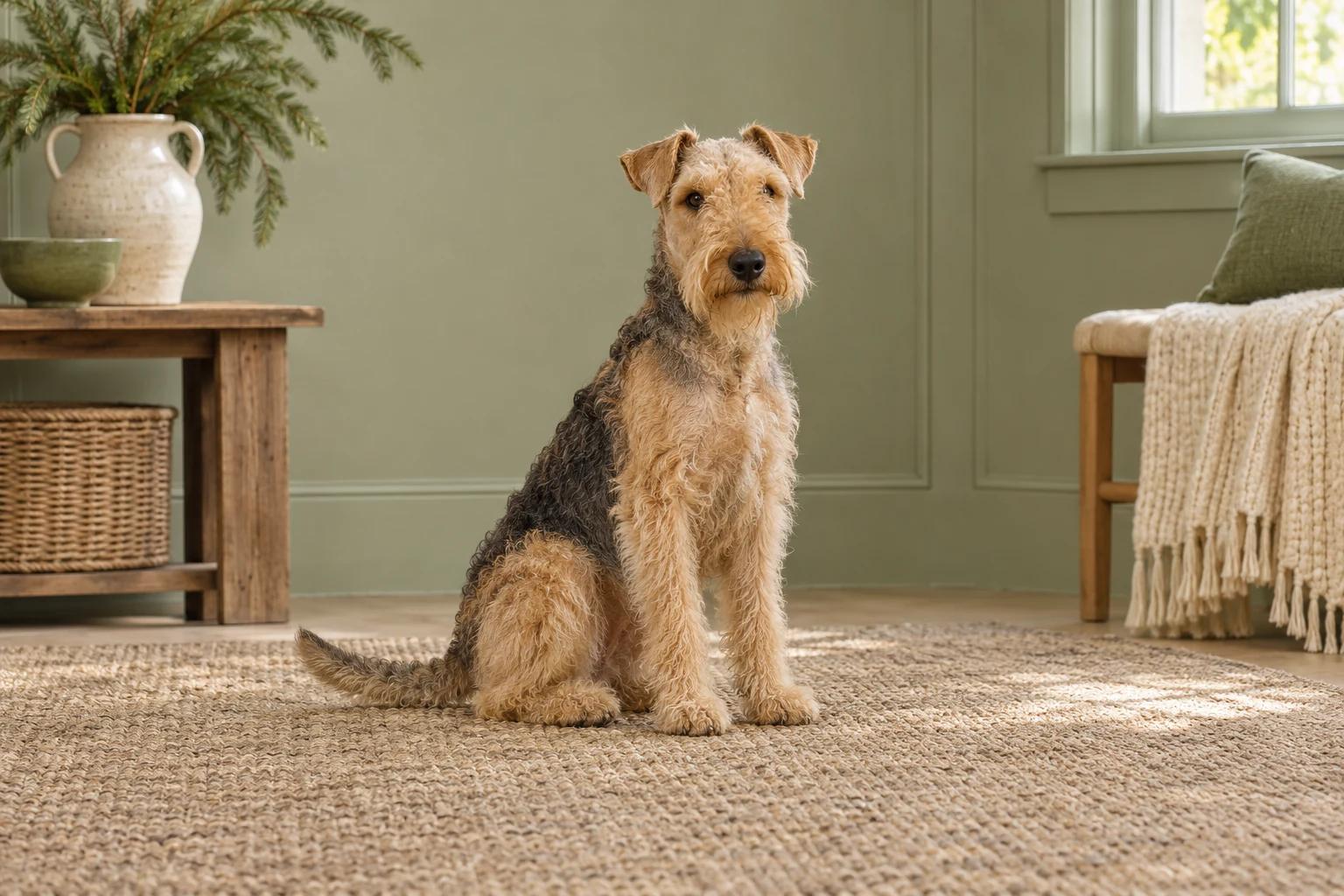
Lakeland Terrier training is most useful when it prepares the dog for the moments you actually share: clipping on a lead, leaving an interesting corner, waiting while a door opens, or walking past something without a wrestling match. Start with a small set of understandable tasks. You do not need a long command list before you can make everyday life more cooperative.
The Lakeland's alert, determined character is part of its UKC breed description. Treat that as a reason to make your lessons worth noticing, not as an excuse to label every missed cue stubbornness.
Lakeland Terrier training starts with a clear destination
Before teaching a behavior, describe what success would look like on a silent video. “Be polite” is too broad. “Stand beside me while I attach the lead” is observable. “Do not chase everything” is a wish; “turn toward me when I use this cue in a quiet place” is something you can begin practicing.
Choose three priorities for the first stage. For example, you might select coming toward you indoors, moving with you on a loose lead, and resting in a designated area while you sit nearby. Avoid trying to solve every future problem in the first week.
Keep the wording consistent between people. A shared note on the fridge can list the cue, the desired action, and the reward. This is especially useful if one person uses “down” for lying down and another means getting off furniture.
Make a lesson easy to start and easy to finish
Prepare before inviting the dog to work. Put distractions away, choose the reward, and decide on one small step. If you spend the first half of the session finding equipment, the Lakeland may already be occupied elsewhere by the time you begin.
Use a few achievable repetitions rather than making the dog repeat an exercise until interest disappears. Finish with an action the dog understands, then clearly change activities. The point is not to create a rigid timetable. It is to make the beginning and ending recognizable.
When considering how to train a Lakeland Terrier, ask what the dog has actually learned so far. A response beside the kitchen counter may depend on your position, the visible food container, and the familiar room. Moving outdoors changes several pieces of the picture at once.
A practical leash lesson
The AKC leash-training guide distinguishes comfortable loose-leash walking from formal heeling. It recommends rewarding attention and staying nearby, beginning in an easy setting before adding outdoor distractions. That is a useful starting point for an exploratory terrier.
Set up a short route across a clear room or quiet enclosed area. Reward the dog for being near you with the lead slack. Take a few steps, acknowledge the desired position, and reward again. Practice a gentle change of direction with a clear cue rather than suddenly towing the dog around.
For your own planning, use landmarks rather than ambitious distances. The first goal might be reaching the end of the hallway together. Next, repeat near the closed front door. Later, choose a quiet patch outside. A successful hallway lesson is not permission to expect the same performance beside a busy hedge.
Do not turn every outing into a precision test. Decide which stretches need close walking and where the dog can investigate within the lead's reach. That division helps you maintain realistic expectations while continuing to practice.
Socialization is not a greeting quota
Lakeland Terrier socialization should give you information about how the dog experiences the world, not simply a growing list of encounters. Keep a record of settings as well as people: a quiet street, a vehicle heard at a distance, a person wearing a bulky coat, or a different walking surface.
Choose one manageable experience at a time. If a location is too busy for the dog to attend to you, move to a quieter position rather than pushing closer to complete an outing. You can leave before a planned interaction happens.
For puppies, discuss suitable locations and timing with your veterinarian. A reward-based trainer can help you design introductions and interpret responses. Avoid classes that make every dog greet every other dog as the price of participation.
Write down what happened, not just that you went. “Watched a bicycle across the road and then resumed exploring” is a better record than “bicycles done.” It helps you choose the next sensible practice setting.
When obedience breaks down outside
Lakeland Terrier obedience can look different beside an interesting scent than it does indoors. Before repeating a cue more loudly, check the setup. Is the dog looking in your direction? Have you practiced at this distance from distractions? Are you asking for a response you can reward promptly?
Make the next attempt easier. Move farther from the distraction, shorten the requested behavior, or return to a familiar task. Avoid changing all three at once if you want to understand which adjustment helped.
A useful training note has four parts: location, task, distraction, and result. For example, record that the dog walked with you near the empty car park but could not respond near the hedge. This gives your trainer a practical starting point and prevents the whole outing being dismissed as a failure.
Build cooperation around care and doors
Include handling and household movement in your priorities. Arrange a calm introduction to the brush and let a groomer demonstrate appropriate handling for the Lakeland's coat. Practice approaching the grooming area separately from completing a full appointment.
At doors, decide where the dog should be before the handle moves. A barrier can manage access while you teach the routine. Do not use a busy open entrance as the first training location. The desired skill is useful precisely because it is rehearsed away from pressure.
For breed context, visit the Lakeland Terrier profile. The existing nose-color article addresses appearance rather than training ability. If you are still comparing ownership demands, the breed quiz helps put daily time and preferences together.
FAQ
Should Lakeland Terrier training use long sessions?
A focused lesson with a clear objective is more useful than extending practice after attention has gone. Prepare the reward and task first, work on a small step, and finish before the session becomes a struggle.
Why does my Lakeland respond at home but not outside?
The outdoor setting introduces new sights, smells, and movement. Practice the skill in progressively more demanding places instead of assuming that success in one room automatically transfers everywhere.
Is formal heeling necessary for daily walks?
No. Everyday loose-leash walking and formal heeling are different goals. Teach a comfortable walking arrangement that avoids pulling, and clearly distinguish close-walking stretches from permitted exploration.
Sources behind this article
Article source checked: November 15, 2026. Source checked 2026-11-15
Keep reading

Affenpinscher Training: Build Useful Everyday Habits
Read article →