Lagotto Romagnolo Training: Focus, Walks and Scent Games
Plan Lagotto Romagnolo training around attention, comfortable walks, everyday manners and guided scent work without rushing progress.
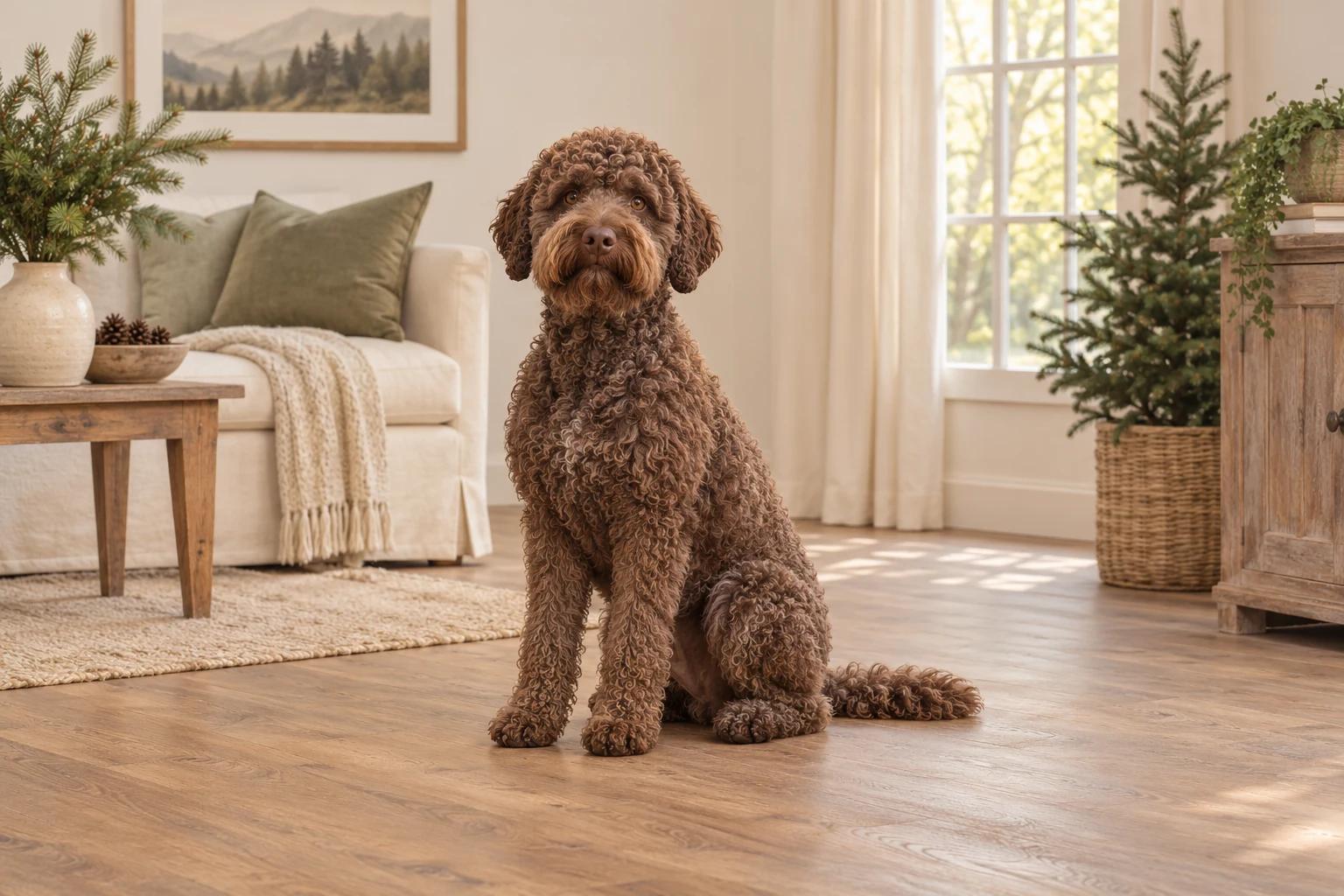
Lagotto Romagnolo training is a chance to work with an inquisitive dog, not a contest to defeat an interesting smell. The breed's searching background makes the relationship between exploration and attention especially useful to think about. You want a dog who can enjoy investigating and also respond when you need to move together. Build that partnership with clear cues, rewards and manageable practice, then choose activities that make learning enjoyable for both of you.
Lagotto Romagnolo training starts with getting attention
The breed standard describes a keen, trainable dog with a searching aptitude. That does not mean a Lagotto automatically knows when you want its attention or what your words mean. Official Lagotto standard.
The Lagotto Romagnolo Club of America's attention guide recommends teaching a clear attention cue and rewarding the response before asking for another behavior. LRCA attention guide.
Choose a quiet practice area first. Decide what word you will use and make sure everyone understands its purpose. Attention is not necessarily a recall, a sit or a demand for prolonged staring. It is a way to open communication before the next request. A class instructor can help you establish the cue without turning it into a repeated background noise.
For your notes, record where the response is easy. The kitchen, garden and pavement are separate settings, not interchangeable exams. If the dog responds indoors but misses the cue beside a fascinating hedge, return to an easier outdoor setup and work from there.
Separate walking practice from the need to reach a destination
The club's loose-leash guidance distinguishes teaching from simply getting somewhere. It recommends rewarding comfortable walking and avoiding progress driven by pulling, while keeping lessons manageable. LRCA loose-leash guide.
That is particularly useful for a Lagotto whose nose has found more interesting information than the route you planned. Before leaving, decide whether this is a training outing or a necessary trip. When you must reach an appointment, leave enough time and choose a manageable route rather than expecting a new skill to appear under pressure.
During practice, start somewhere you can change course without entering traffic or crowding other people. Reward the useful moments you see, and keep the lead from becoming a means of dragging the dog into position. Ask a reward-based trainer to help if you cannot maintain safe control or if the dog becomes distressed.
An exploration walk can still include clear communication. You might use a familiar cue for moving together past a narrow entrance, then allow time for investigation in a suitable space. Plan those transitions deliberately instead of alternating unpredictably between unrestricted wandering and frustrated demands.
Give the nose a task with a clear beginning and end
Scent work can provide a structured way to explore searching with your Lagotto. AKC describes it as a dog locating a target scent and communicating the find to the handler. Beginner classes are one way to learn how to organize that partnership. AKC getting started in scent work.
Ask an instructor what you should practise before buying specialist supplies. Find out how targets are handled, what the dog is expected to indicate and how sessions are kept manageable. Do not assume a strong interest in smells means the dog already understands which one you want found.
A useful beginner goal is learning to observe. Watch what changes when your dog becomes interested in an area, and discuss those observations with the instructor. Resist the urge to point repeatedly toward the answer. You are learning how to work together, not merely helping the dog complete a puzzle as quickly as possible.
Keep training materials separate from ordinary household objects. Have a deliberate start and finish so the activity does not become an invitation to investigate every cupboard. Searching can be one part of the week rather than the entire answer to exercise, companionship and rest.
Household manners need their own practice
When asking how to train a Lagotto Romagnolo, include the unglamorous skills. Comfortable handling, waiting while a lead is attached and moving away from an open doorway matter as much as an impressive search. A clever dog does not infer those rules from success in another activity.
Choose one small household problem at a time. If the dog rushes toward the grooming equipment, first work on approaching the area calmly. If the dog avoids the equipment, investigate what makes that situation difficult with qualified help instead of insisting that the routine must be completed. The goal is useful cooperation, not collecting commands.
For a curly-coated dog, handling practice belongs in the plan from the beginning. Ask the groomer which positions and equipment the dog will encounter. Then arrange gentle familiarization at a level the dog can manage. Keep the training conversation separate from medical questions, which should go to your veterinarian.
Lagotto Romagnolo socialization is not a crowded calendar
List the surroundings your dog will actually encounter: the street outside your home, visiting friends, car travel, grooming and perhaps a training venue. Plan introductions around comfort, not the number of people or places you can collect. For a puppy, discuss suitable settings and health precautions with your veterinarian.
If an outing proves too difficult, give the dog room and revise the next attempt. Record what happened without assuming every hesitation is a permanent trait. An experienced reward-based trainer can help you choose a simpler version of the situation and understand the dog's response.
Social experiences should leave room for ordinary rest. A weekend filled with classes, visitors and unfamiliar places is not automatically more productive than a quieter schedule with a few well-chosen opportunities. Decide what you want the dog to learn from each outing before adding another one.
Measure cooperation rather than speed
Lagotto Romagnolo obedience progresses more clearly when goals are observable. Write attention cue worked beside the quiet gate or walked comfortably across the driveway. Avoid broad judgments such as stubborn today, which offer no useful next step.
Include your own choices in the notes. Were rewards ready? Was the location too busy? Did you ask for something the dog had never practised there? Those questions make adjustment possible without blaming either partner.
Explore the Lagotto Romagnolo profile and breed quiz for the wider ownership fit. The separate truffle and mushroom safety article covers an important boundary of the breed's traditional work. Everyday training is broader: helping this dog understand your life while making room for the interests that attracted you to the breed.
FAQ
Is a Lagotto Romagnolo easy to train?
A trainable reputation does not remove the need for clear teaching. Begin in manageable settings, use rewards and define small goals. The individual dog's experience and your setup matter more than expecting every skill to arrive quickly.
Does a Lagotto need scent-work competitions?
No. Guided scent activities can be enjoyed without entering competitions. Ask an instructor how to begin appropriately and choose goals that fit your dog and interests. Competition is an option, not a requirement of owning the breed.
Why does my Lagotto ignore me while sniffing?
An interesting environment can make an unpractised attention cue difficult. Teach and reward the response in easier settings, then build experience gradually. Keep necessary management in place rather than relying on a cue that is not yet reliable there.
Should every walk be an obedience lesson?
No. Make room for suitable exploration as well as specific practice. A clear purpose helps you judge the outing fairly. Short sections of familiar skills can sit alongside opportunities to investigate without turning the entire walk into a demanding test.
Sources behind this article
- American Kennel Club: Official Lagotto Romagnolo Standard ↗
- Lagotto Romagnolo Club of America: Attention ↗
- Lagotto Romagnolo Club of America: Loose Leash Walking ↗
- American Kennel Club: Getting Started in Scent Work ↗
Article source checked: November 15, 2026. Source checked 2026-11-15
Keep reading

Affenpinscher Training: Build Useful Everyday Habits
Read article →