Jagdterrier Training: Foundations for Everyday Life
Build a practical Jagdterrier training plan around clear cues, manageable distractions, recall practice, transitions, and useful daily records.
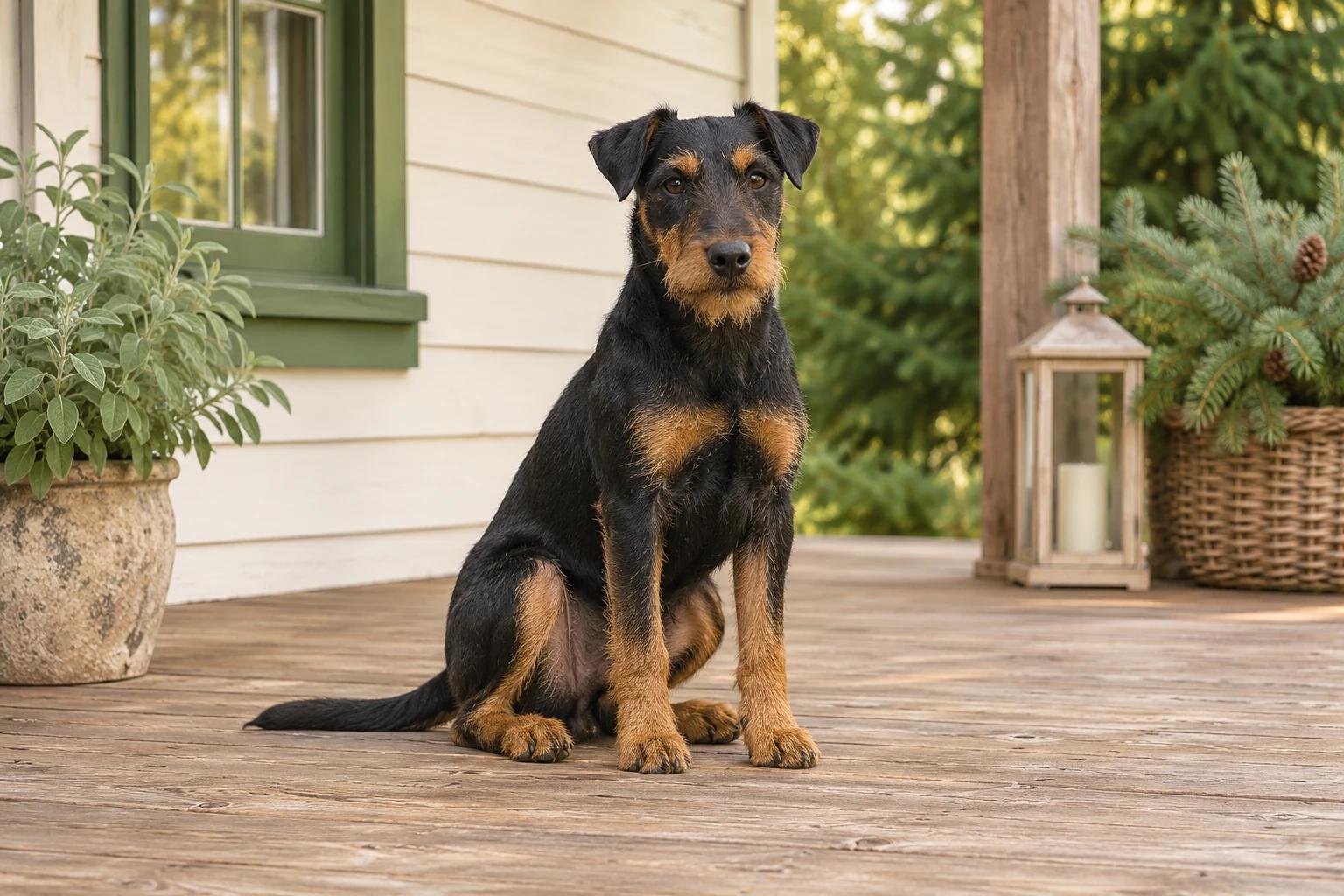
Jagdterrier training works best as a collection of useful daily skills rather than a contest over who is more determined. Choose a few situations you want to improve, arrange them so the dog can succeed, and teach a clear action for each. A compact working terrier still needs a thoughtful learning plan.
The Jagdterrier profile supplies background for that plan. Start with the skills the individual already knows, then identify the gaps that affect your household most often.
Jagdterrier training: choose the first three jobs
A practical starting list might be following a change of direction, waiting while a door is managed, and settling after an activity. These jobs address everyday transitions rather than collecting impressive tricks before the basics are usable.
For each job, write down the location, cue, desired action, and reward. “Turn with me in the hallway” is easier to teach and assess than “listen better outside.” Keep the first version small enough that the dog is likely to understand what earns the reward.
The UKC Jagdterrier standard describes a hunting dog with persistent quarry interest. That background makes it especially sensible to establish communication away from exciting outdoor situations before expecting it to work there.
Do not test a new skill at the hardest moment of the day. Successful practice is preparation for distractions, not proof that distractions can be ignored immediately.
Make rewards part of the preparation
Before a session, have suitable rewards ready and decide where you will deliver them. If your hands are occupied or you spend a long time searching a pocket, the sequence becomes less clear.
Try a brief exercise in a quiet space: invite the dog a few steps toward you, acknowledge the response, and reward beside you. Pause before repeating. Watch whether the dog returns willingly or begins looking elsewhere, then adjust the task rather than extending the session automatically.
Food, access to a familiar game, and opportunities to investigate can have different value in different settings. Observe what your own dog chooses. Do not assume a reward that works indoors will compete with every outdoor interest.
If you are learning how to train a Jagdterrier for the first time, ask a reward-based trainer to demonstrate timing and setup. Seeing one clear repetition can be more helpful than memorizing a long list of commands.
Teach a turn before you need an escape route
Practise a change-of-direction cue in an uncluttered indoor area. Say the chosen cue, turn smoothly, and reward the dog for moving with you. Avoid tugging it through a turn it has not yet learned.
When the movement is familiar, practise somewhere quiet outdoors using suitable walking equipment. Keep enough room that neither you nor the dog is forced toward a distraction. Add difficulty gradually rather than moving directly from the hallway to a busy path.
A useful walking record might say: “Followed the turn in the driveway; needed more space near the hedge.” That tells you where the next practice belongs. It also prevents treating every missed cue as a failure of willingness.
For equipment selection, consult the Jagdterrier measurement guide. Fit should be assessed separately from training progress; an item that is the wrong size is not fixed by more practice.
Recall practice needs a controlled setting
Begin coming-when-called work where the dog cannot wander into danger. Use a secure space and professional guidance on long-line handling when appropriate. Never attach your first recall experiment to an opportunity to chase wildlife.
Call when the task is achievable, reward arrival, and sometimes allow a return to the previous suitable activity. If coming back always ends everything interesting, your practice may be less inviting than you intended.
Separate three questions: Does the dog recognize the cue? Can it perform the response in this setting? Have you practised around this level of distraction? A confident answer to the first does not settle the other two.
Keep management in place even when practice improves. A good response on several familiar walks is not a guarantee for unfamiliar environments or sudden movement nearby.
Jagdterrier obedience includes finishing a game
The Continental Kennel Club breed overview connects foundation training with boundaries and purposeful outlets. In a companion home, one useful application is teaching the transition from an activity to a quieter period.
Choose a clear finishing cue. After a brief familiar game, give the cue, put the equipment away, and guide the dog toward a predictable next activity, such as resting in its usual area. Keep your own behavior consistent with that transition instead of restarting the game whenever the dog asks.
Practise an exchange with an appropriate toy rather than grabbing possessions away. Offer the trade, reward the release, and keep the exercise simple. If guarding, conflict, or unsafe handling appears, stop experimenting and get qualified help.
The objective is not a dog that never becomes excited. It is a sequence both of you understand when an enjoyable activity starts, pauses, and finishes.
Socialization is more than collecting greetings
Jagdterrier socialization should include learning to observe ordinary surroundings without being pushed into every encounter. Plan experiences the dog can handle, with enough distance and a clear route away.
For a puppy, discuss suitable outings and exposure timing with your veterinarian. For an adult, begin with what the caregiver already knows about unfamiliar people, dogs, traffic, and different environments.
One outing might focus on watching a quiet entrance from a comfortable distance. Another might involve walking on a different surface. You do not need to combine visitors, busy traffic, unfamiliar dogs, and a new training exercise into the same session.
Write down what the dog actually did. Comfortable observation is a useful outcome even without physical interaction. If the dog struggles, simplify the next attempt instead of trying to finish an arbitrary checklist.
Review progress by situation
At the end of a week, compare your notes with the three jobs you chose. Did the doorway routine become clearer? Can the dog follow your turn in another quiet place? Is finishing a game less confusing?
Keep the skills that matter and adjust the ones that are too ambitious. Ask a trainer to observe recurring difficulties, and consult a veterinarian about sudden changes that do not fit the usual pattern. The breed match quiz can also help prospective owners consider whether daily teaching is a commitment they want to make.
FAQ
What should a Jagdterrier learn first?
A Jagdterrier's first lessons can include responding to a simple cue, moving with the handler, and waiting during door management. Choose achievable versions in quiet places before introducing outdoor distractions.
Does recall training mean a Jagdterrier can run anywhere?
Jagdterrier recall practice does not establish unrestricted off-lead reliability. Use appropriate containment and walking equipment, and judge each environment separately. Wildlife, traffic, and unfamiliar distractions require continuing management.
How do I know when training is getting too difficult?
Repeated missed responses or loss of engagement during Jagdterrier training can signal that the setup needs simplifying. Reduce distractions or simplify the task, and seek qualified help when the same problem persists.
Sources behind this article
Article source checked: November 16, 2026. Source checked 2026-11-16
Keep reading

Affenpinscher Training: Build Useful Everyday Habits
Read article →