Irish Water Spaniel Training: Useful Everyday Skills
Build Irish Water Spaniel training around clear rewards, retrieving manners, calm handling, and comfortable introductions in everyday settings.
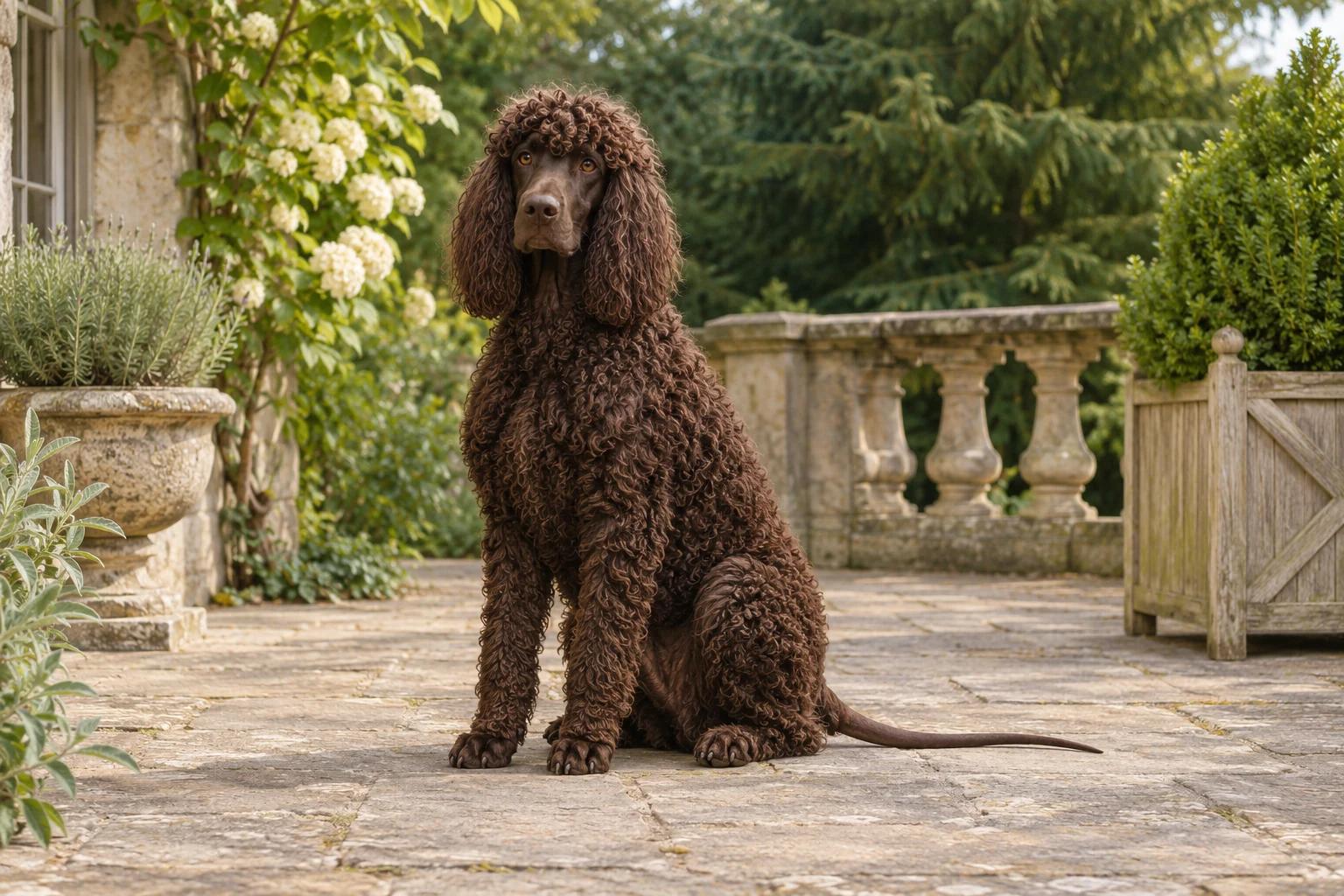
Irish Water Spaniel training works best when cleverness becomes something you share rather than something you argue about. Begin with small, useful skills that make life together easier: checking in on a walk, releasing an object, standing for coat care, and waiting before an exciting activity starts.
The Irish Water Spaniel profile introduces the breed's general tendencies. Your training plan should begin with what your dog already knows and the situations in which you need help.
Irish Water Spaniel training starts with a clear bargain
VCA's breed profile describes a quick learner and identifies treats and games as useful rewards. The UKC standard also notes initiative. Put those ideas into practice by making the desired action easy to recognize and worthwhile to repeat.
Choose one cue for one task. If “come” sometimes means approach, sometimes stop investigating, and sometimes accept the end of all fun, the lesson becomes muddled. Agree on wording with everyone who handles the dog and decide what happens after a successful response.
Prepare before you start. Have the reward available, clear distracting objects from the immediate area, and choose a moment when you can concentrate. An improvised lesson while carrying shopping through a busy doorway is harder for both participants.
Keep a clear ending as well. Put training objects away and move to another activity rather than continuing until the dog loses interest. You want the next lesson to feel like a fresh opportunity.
Teach the retrieve as several separate skills
A retrieving background can make carrying games appealing, but a neat delivery is a sequence, not one instinctive package. Picking up an object, turning toward you, approaching, and releasing it are different actions.
Begin with an appropriate toy in a quiet, enclosed space. Reward the part you are currently teaching. If the dog happily picks up the toy but then wanders away, work on approaching at a short distance rather than throwing farther and hoping speed will solve the missing step.
A second suitable toy or another reward can help make releasing an object worthwhile. Avoid chasing the dog to get it back. If a possession problem involves stiffening, guarding, or conflict, pause the exercise and seek a qualified reward-based trainer rather than experimenting with confrontation.
Decide what a finished repetition looks like. You might accept the toy beside your feet before asking for a more precise delivery later. Consistency matters more than an impressive performance in the first session.
Build attention before the interesting thing happens
An Irish Water Spaniel may have plenty to investigate outdoors. Practise checking in before reaching the most exciting part of the outing, not only after attention has disappeared.
At home, reward a voluntary glance toward you. On a quiet walk, acknowledge the same behavior and allow the dog to continue exploring when appropriate. This makes contact with you part of the outing rather than a signal that the outing is over.
Add difficulty in small steps. A familiar garden, a quiet pavement, and the edge of a busy park are separate learning environments. If the dog cannot respond in one setting, move to a less demanding place and rebuild the exercise.
Keep appropriate lead or enclosure management while skills develop. A successful return in the kitchen is not evidence that recall will work beside wildlife or open water. Teach the cue without turning a risky setting into an examination.
Make grooming cooperation a training project
The breed's curls create a useful reason to teach calm handling early. The goal is not to complete a whole grooming session while the dog endures it; it is to build understandable, manageable participation.
Start on a stable, comfortable surface. You might reward standing near the grooming equipment before introducing brief contact with the tool. Practise one small part of the routine, then finish while you can still work calmly.
Ask a groomer to demonstrate technique on the individual coat so training does not become uncomfortable because of the way a brush or comb is used. If the dog suddenly objects to handling, consult your veterinarian rather than assuming it is a training failure.
Keep appearance questions separate from these lessons. The Irish Water Spaniel coat-pattern article explains the distinctive tail; cooperation training is about the dog's experience of being handled.
Irish Water Spaniel socialization without a greeting quota
Socialization should help the dog become comfortable with ordinary life, not collect the largest possible number of encounters. VCA highlights the value of positive early experiences with people and new situations.
Plan observations that fit your actual routine. A dog living in a building may need practice hearing a lift, watching a cleaner pass, and waiting while another resident opens a door. A dog travelling regularly may need gradual experience around luggage and transport equipment.
Allow distance and an easy exit. If an interaction becomes overwhelming, make the next attempt simpler instead of insisting that the dog stay until it gives up reacting. For a puppy, ask your veterinarian how to arrange outings appropriately for its vaccination status and local conditions.
Visitors can help by following a simple plan: enter calmly, avoid crowding the dog, and let you manage the introduction. The success measure is comfortable behavior, not whether every visitor gets immediate attention.
Use household problems to choose the next lesson
Irish Water Spaniel obedience need not begin with an elaborate list of formal positions. If drying after walks is difficult, teach a drying station. If preparing the lead causes a scramble, teach waiting in a particular spot while you pick it up.
Describe the problem precisely. “Gets excited” is less useful than “grabs the lead when I lift it from the hook.” The second description suggests a smaller teaching task and a clear place to practise.
When considering how to train an Irish Water Spaniel, keep a short record of what worked, where it worked, and the next modest step. Share it with other caregivers. For persistent difficulties, bring those observations to a trainer who can watch the actual interaction.
If you are still weighing whether this kind of daily involvement suits you, use the breed quiz to examine your preferences before choosing a companion.
FAQ
Does an intelligent Irish Water Spaniel need less training?
An Irish Water Spaniel's intelligence does not replace teaching household rules. A quick learner still needs clear cues, useful rewards, and practice in the places where the behavior matters. Build the routine you want rather than assuming the dog will infer it.
Should training always involve a retrieve?
Irish Water Spaniel lessons do not always need to involve retrieving. Retrieving is one possible activity, not a requirement for every lesson. Teach handling, walking, waiting, and settling as separate skills, using rewards that suit the individual dog and the task.
What if my dog succeeds at home but not outside?
If an Irish Water Spaniel succeeds at home but not outside, treat the outdoor setting as a harder version of the task. Reduce distractions, shorten the distance, and reward easier successes. Maintain suitable management while you teach; do not test an unfinished cue where a missed response would create danger.
Sources behind this article
Article source checked: November 16, 2026. Source checked 2026-11-16
Keep reading

Affenpinscher Training: Build Useful Everyday Habits
Read article →