Irish Terrier Training: Practical Skills and Motivation
Make Irish Terrier training useful with rewards, thoughtful management, attention games, walking skills, and gradual socialization without confrontation.
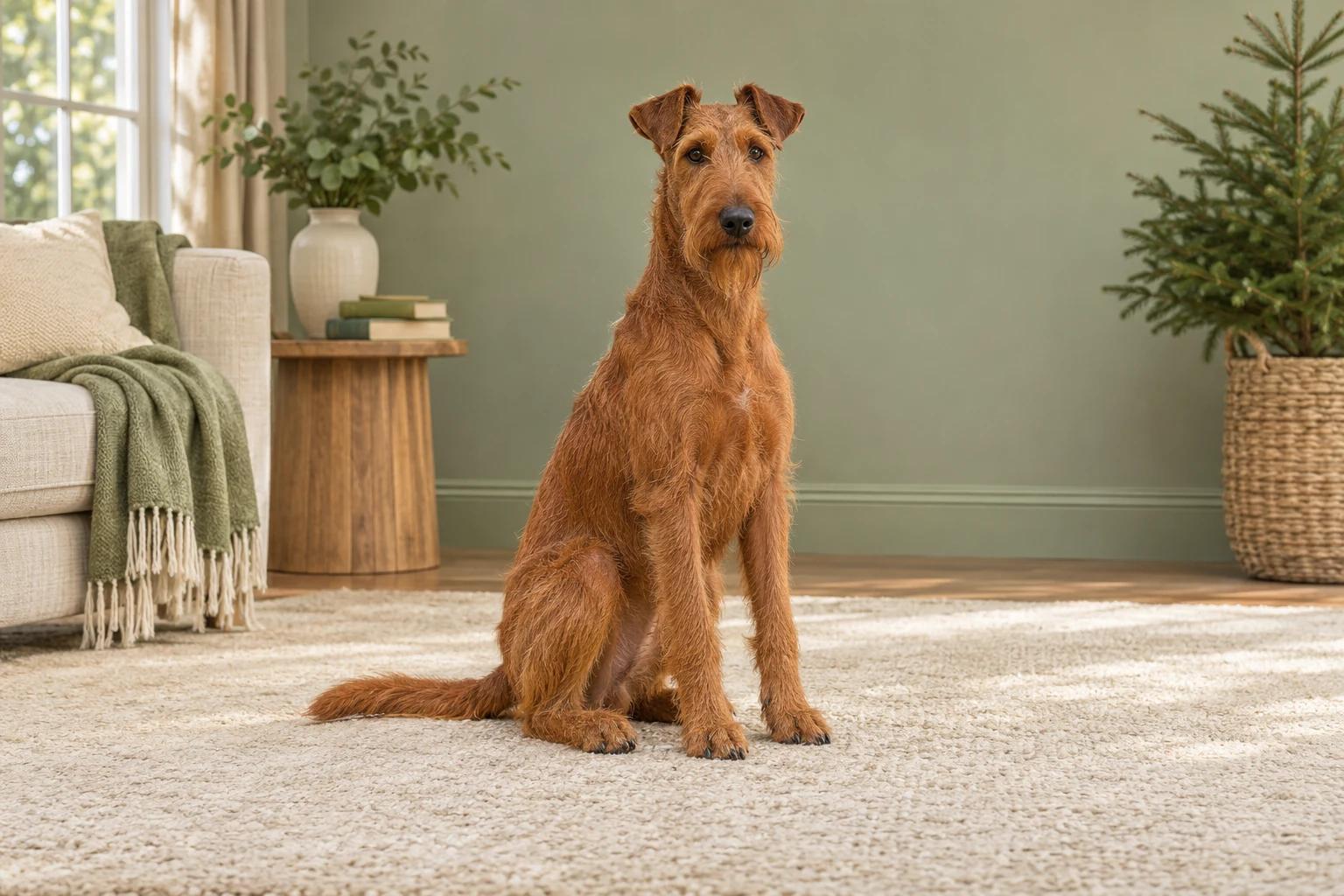
Irish Terrier training is more useful when it begins with a question: what would you like the dog to do instead? Turning away from a distraction, returning to your side, waiting while a gate opens, and resting during a household task are teachable actions. Calling the dog stubborn does not tell either of you what the next step should be.
The Irish Terrier profile emphasizes mental engagement alongside daily care. Think of training as a shared activity with practical results, not a contest that starts only when the terrier finds something more interesting than you.
Irish Terrier training begins with a worthwhile exchange
VCA's breed discussion describes an independent learner that responds to positive rewards. It also flags the challenge of maintaining attention around attractive outdoor distractions. Begin where your dog can participate before asking for a harder version of a skill.
Try a simple attention game in a quiet room. Wait for the dog to turn toward you, acknowledge that choice, and deliver a reward it values. Move to another spot and repeat. You are building a reason to notice you, not demanding a long performance immediately.
Choose rewards through observation. A food reward may work well for one task, while a brief game suits another. Have the reward ready before beginning so your feedback is clear rather than delayed by a search through pockets.
If you are deciding how to train an Irish Terrier, look first at the conditions for learning. Is the task clear? Is the reward relevant? Is the surrounding activity too difficult to ignore? These questions offer adjustments you can make without escalating pressure.
Management keeps the lesson from being undermined
The AKC's effective-training guidance recommends rewarding desired behavior and arranging the environment so unwanted behavior is less easily practised. For a curious terrier, that means thinking about access as well as cues.
If the dog repeatedly investigates a cupboard, secure the cupboard while teaching an alternative activity. If an open door creates an opportunity to rush out, manage the doorway while practising a pause. Training and sensible physical arrangements can support each other.
Make one simple entrance routine everyone understands. Attach walking equipment in a clear space, approach the door together, and reward a brief pause before opening it. Practise first when no delivery, visitor, or waiting taxi is adding urgency.
Do not use an unsecured gate as a test of whether the lesson has worked. Maintain a reliable boundary while the behavior develops. A good rehearsal should not make a mistake unnecessarily costly.
Give outdoor attention a gradual route
Start a walk with a few easy exchanges in a quiet location. Reward turning toward you or moving with you for a short stretch, then allow an appropriate exploration break. The dog can learn that cooperation and investigation both have a place.
When the terrier notices another animal, distance may be more useful than repeated instructions. Move to a position where it can still respond and reward a manageable action, such as turning with you. Do not wait until the dog is fully absorbed and then treat failure as a surprise.
Keep recall practice separate from risky tests. Work in a secure area or with suitable equipment, beginning at a short distance. Reward coming close enough for you to attach the lead, not merely running past at speed.
Sometimes return the dog to an appropriate activity after the reward. Coming back should not always predict the end of every enjoyable outing. Still, no training exercise removes the need for sound judgment about boundaries, wildlife, roads, and other animals.
Socialization can mean calmly passing by
Irish Terrier socialization is not an obligation to greet every dog. The breed profile warrants care around other-dog relationships, so ask about the individual's experience and seek a thoughtful plan rather than collecting as many encounters as possible.
A useful session might involve watching another dog from a comfortable distance and leaving calmly. That can be more constructive than a close introduction neither dog needs. Choose spaces where you have room to move away rather than narrow entrances with no easy exit.
Include people and everyday surroundings too: someone wearing unusual clothing, a trolley heard at a distance, a different walking surface, or a quiet visit to a new place. Let the dog observe without forcing contact.
For a puppy, discuss suitable experiences and local health considerations with your veterinarian. For an adult, begin with the history available and the behavior you can see. If fear, lunging, or conflict is present, work with a qualified reward-based professional rather than arranging improvised tests.
Teach an indoor job that is not chasing attention
Irish Terrier obedience can include settling on a chosen mat while you complete a short task. Introduce the mat when the room is quiet, reward interest in it, and gradually build the behavior you want there.
Begin with something modest, such as remaining nearby while you fold one towel. A full meal preparation session is a much harder assignment. Add duration in small increments and give a clear release so that the exercise has an understandable ending.
If the dog leaves, review whether the step was too long or the environment too busy. Do not turn the mat into a place associated with repeated scolding. You are teaching a usable alternative, not assigning a punishment location.
Also offer appropriate activities that let the terrier investigate. A supervised search for a familiar toy can provide a defined task with a beginning and end. Keep objects suitable for the individual and put them away when the activity is over.
Judge progress by situations, not labels
Keep short notes: which skill, where, and what made it harder. “Returned in the enclosed garden with no other animals present” is a useful record. “Recall finished” suggests a reliability you may not have tested and should not assume.
Share those notes with everyone who handles the dog. Consistent cues and realistic expectations prevent one person's careful practice from becoming another person's much harder experiment.
If training suddenly changes or the dog seems uncomfortable, contact your veterinarian. For a persistent learning difficulty, ask a trainer to observe a real example. Specific evidence is more helpful than a breed stereotype.
The article on Irish Terrier historical records covers a separate breed question. If you are still deciding whether you enjoy this kind of daily engagement, consider that preference in the dog quiz.
FAQ
Are Irish Terriers impossible to train?
Irish Terriers can learn with suitable motivation and a clear training setup. Use rewards, manageable tasks, and consistent practice rather than treating mistakes as a contest. Seek professional help when you cannot identify why a task is failing.
Should socialization include frequent dog greetings?
Irish Terrier socialization need not involve frequent close dog greetings. Comfortable observation and calm passing are useful goals. Plan introductions around the individual dogs and their histories, and do not force close contact simply to increase the number of encounters.
When can I rely on recall everywhere?
Irish Terrier recall practice cannot establish reliability in every situation. Practise progressively while retaining suitable management, and avoid testing the cue where a missed response could put the dog or others at risk. Secure boundaries remain important.
Sources behind this article
Article source checked: November 16, 2026. Source checked 2026-11-16
Keep reading

Affenpinscher Training: Build Useful Everyday Habits
Read article →